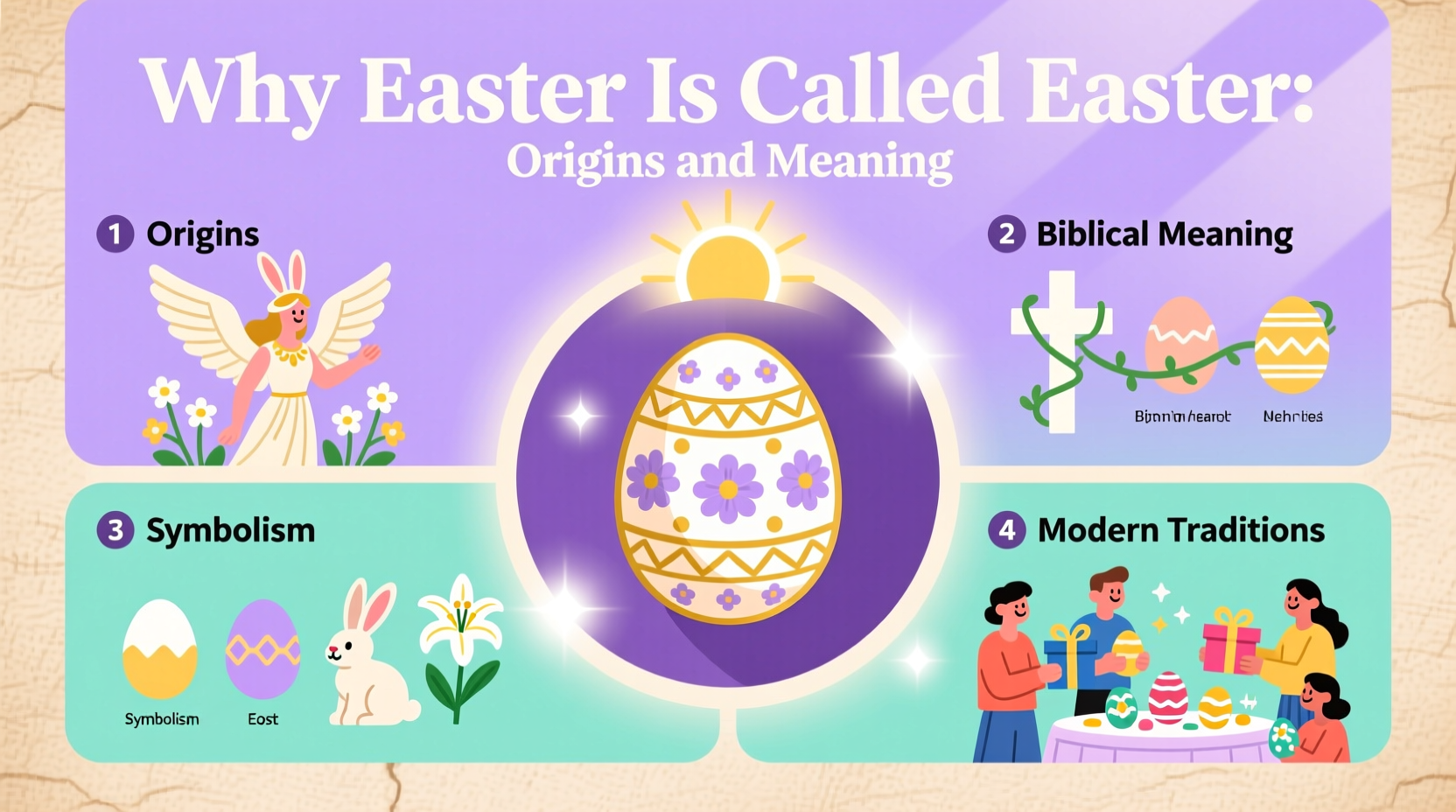
The term why Easter is called Easter can be traced back to a blend of ancient pagan traditions, early Christian adaptation, and linguistic transformation over centuries. The word ‘Easter’ most likely originates from ‘Eostre’ or ‘Ostara’, a Germanic goddess associated with spring and fertility, whose festival was celebrated around the vernal equinox. As Christianity spread through northern Europe, particularly among the Anglo-Saxons, church leaders adapted existing cultural celebrations to align with the resurrection of Jesus Christ, giving rise to the name ‘Easter’ for the most important Christian holiday. This fusion of pre-Christian customs and religious significance explains why Easter is called Easter and highlights how language and tradition evolve through cultural synthesis.
Historical Roots of the Name ‘Easter’
The earliest recorded mention of the name ‘Easter’ comes from the Venerable Bede, an 8th-century English monk and historian. In his work De Temporum Ratione (“The Reckoning of Time”), Bede explained that the Old English term ‘Ģeostre’ was used to describe the month corresponding to April, which was named after the goddess Eostre. He noted that the Christian celebration of Christ’s resurrection was placed during this springtime period and adopted the local name, thus becoming ‘Easter’ in English-speaking regions.
This etymological path is unique to English and some Germanic languages. Most other languages use variations of ‘Pascha’, derived from the Hebrew word ‘Pesach’ (Passover), emphasizing the biblical connection between Jesus’ Last Supper and the Jewish Passover feast. For example, in Spanish it’s ‘Pascua’, in French ‘Pâques’, and in Italian ‘Pasqua’. This contrast underscores why Easter is called Easter only in certain linguistic contexts, primarily English and German (‘Ostern’), while much of the world refers to the holiday using Passover-related terms.
Eostre: Myth or Misinterpretation?
While Bede’s account is widely cited in discussions about why Easter is called Easter, modern scholars debate the existence of the goddess Eostre. There are no surviving texts or archaeological records outside of Bede’s writing that confirm her worship. Some historians argue that Eostre may have been a localized deity or even a scholarly hypothesis rather than a widely venerated figure.
Despite the lack of corroborating evidence, the idea of a spring goddess resonates with broader Indo-European traditions. Deities like Ostara in Germanic folklore, Persephone in Greek mythology, and Ēostre’s possible cognates in other cultures all symbolize renewal, rebirth, and the awakening of nature in spring. These themes naturally parallel the Christian message of resurrection, making the alignment of pagan spring festivals with Easter both practical and symbolic.
Linguistic Evolution Across Cultures
Understanding why Easter is called Easter requires examining how languages absorb and transform religious terminology. In non-English-speaking Christian countries, the holiday’s name typically reflects its theological foundation. The term ‘Pascha’ comes from the Aramaic and Greek adaptations of the Hebrew ‘Pesach’, highlighting the New Testament narrative in which Jesus’ crucifixion and resurrection occur during Passover.
In contrast, English evolved separately due to the late arrival of Christianity in Anglo-Saxon England. When missionaries arrived in the 7th century, they employed a strategy known as “translation equivalence”—adopting native words and festivals to ease conversion. Rather than imposing foreign terms, they redefined existing ones. Thus, the spring festival of ‘Eostre’ became repurposed as the celebration of Christ’s resurrection, preserving cultural continuity while introducing new religious meaning.
| Language | Term for Easter | Etymological Origin |
|---|---|---|
| English | Easter | Old English ‘Ģeostre’ (spring goddess) |
| German | Ostern | Related to dawn/spring; possibly same root as Eostre |
| Spanish | Pascua | From Latin ‘Pascha’, derived from Hebrew ‘Pesach’ |
| French | Pâques | Latin ‘Pascha’ |
| Italian | Pasqua | Latin ‘Pascha’ |
| Russian | Paskha (Пасха) | Greek ‘Pascha’ |
| Arabic | Al-Fes7 al-Qudsi (Al-Fas7 al-Qudsi) | Derived from ‘Pascha’ via Greek/Latin influence |
Christian Adaptation of Pagan Festivals
The practice of integrating existing cultural celebrations into Christian observance was common during the early spread of Christianity. Church leaders recognized that replacing deeply rooted seasonal festivals outright could hinder conversion. Instead, they reinterpreted them in light of Christian doctrine. This process, known as “syncretism,” allowed converts to maintain familiar customs while infusing them with new spiritual meaning.
In the case of why Easter is called Easter, the timing reinforced this blending. The resurrection of Jesus was believed to have occurred around the time of the Jewish Passover, which itself is tied to the first full moon after the spring equinox. This astronomical alignment coincided with many pre-Christian spring festivals celebrating fertility, light overcoming darkness, and agricultural renewal. By placing Easter within this seasonal context, the Church emphasized Christ’s victory over death as a form of spiritual rebirth.
Symbols of Easter: From Hares to Hot Cross Buns
Many modern Easter symbols have roots in pre-Christian traditions, further illustrating why Easter is called Easter and how ancient customs persist in contemporary practice. The Easter bunny, for instance, likely originated from Germanic legends linking hares to Eostre. Hares were seen as symbols of fertility and new life due to their high reproduction rates in spring. German immigrants brought the tradition of the “Osterhase” (Easter hare) to America in the 18th century, eventually evolving into the Easter Bunny we know today.
Similarly, eggs have long symbolized new beginnings. Ancient Persians, Egyptians, and Greeks exchanged decorated eggs during spring festivals. Early Christians adopted this custom, viewing the egg as a metaphor for the tomb from which Jesus emerged. Today, egg hunts and chocolate eggs remain central to Easter celebrations, especially in Western countries.
Other traditions like hot cross buns also reflect this blend of old and new. The cross on the bun symbolizes the crucifixion, but the spiced bread itself resembles offerings made during spring rites. Even the practice of wearing new clothes on Easter Sunday echoes older customs of renewal and purification associated with the season.
Regional Differences in Naming and Observance
While why Easter is called Easter is largely explained by Anglo-Saxon history, regional differences in observance highlight the diversity of global Christian practice. In Eastern Orthodox churches, Easter is often referred to as “Pascha” and is calculated using the Julian calendar, resulting in a different date than Western Easter in most years. Countries like Greece, Russia, and Serbia celebrate with midnight services, candlelight processions, and red-dyed eggs symbolizing Christ’s blood.
In Latin America, Semana Santa (Holy Week) is marked by elaborate processions and passion plays. In the Philippines, some devotees participate in actual crucifixions as acts of penance. Meanwhile, in secularized societies like parts of Western Europe and North America, Easter has taken on a more commercial character, with emphasis on candy, family meals, and spring-themed decorations.
Common Misconceptions About the Name ‘Easter’
One widespread misconception is that the word ‘Easter’ has direct biblical origins. In fact, the term does not appear in the original Hebrew, Aramaic, or Greek scriptures. The New Testament uses terms related to Passover when referring to the events of Holy Week. The King James Bible does use ‘Easter’ once in Acts 12:4, but this is considered a mistranslation by most modern scholars; the original Greek word is ‘Pascha’, correctly translated as ‘Passover’ in other versions.
Another myth is that Easter was invented entirely from pagan practices. While it incorporated elements of spring festivals, the core theology—the resurrection of Jesus Christ—is firmly rooted in Christian belief and scriptural accounts. The name and some customs may have pagan associations, but the holiday’s meaning for billions of Christians worldwide remains profoundly religious.
How to Explore the Origins of Easter Further
For those interested in delving deeper into why Easter is called Easter, several resources offer valuable insights. Historical linguistics texts examine the evolution of the word ‘Easter’ across Germanic languages. Academic studies on early medieval Christianity explore how missionaries adapted local customs. Museums with collections on Anglo-Saxon culture, such as the British Museum, often feature exhibits on pre-Christian religion in England.
Visiting churches during Holy Week can also provide firsthand experience of Easter’s spiritual significance. Many parishes offer educational programs explaining the liturgical calendar, the meaning of Lent, and the symbolism of Easter rituals. Comparing how different denominations celebrate—from Catholic Mass to Orthodox vigil services—can deepen understanding of both unity and diversity in Christian tradition.
Frequently Asked Questions
- Is ‘Easter’ mentioned in the Bible?
- The word ‘Easter’ appears only once in the King James Version (Acts 12:4), but it refers to ‘Passover’. Most scholars agree this is a translation error. The original Greek uses ‘Pascha’, consistently rendered as ‘Passover’ elsewhere.
- Why do some countries call it ‘Pascha’ instead of ‘Easter’?
- Most languages use forms of ‘Pascha’ because they derive from the Hebrew ‘Pesach’ (Passover), reflecting the biblical connection. English and German are exceptions due to their unique linguistic and cultural histories.
- Was Easter originally a pagan holiday?
- Easter as a Christian celebration was never pagan, but it was timed to coincide with spring festivals honoring deities like Eostre. The Church adapted existing cultural moments to facilitate conversion, but the resurrection of Jesus is its central event.
- Does the name ‘Easter’ affect its religious meaning?
- No. For Christians, the name does not diminish the theological importance of Christ’s resurrection. The term ‘Easter’ is culturally specific and does not alter the faith-based significance of the holiday.
- Are there efforts to change the name ‘Easter’?
- Some theologians and historians have discussed the etymology, but there is no significant movement to rename the holiday. The name is deeply embedded in English-speaking cultures and widely accepted regardless of its origins.





 浙公网安备
33010002000092号
浙公网安备
33010002000092号 浙B2-20120091-4