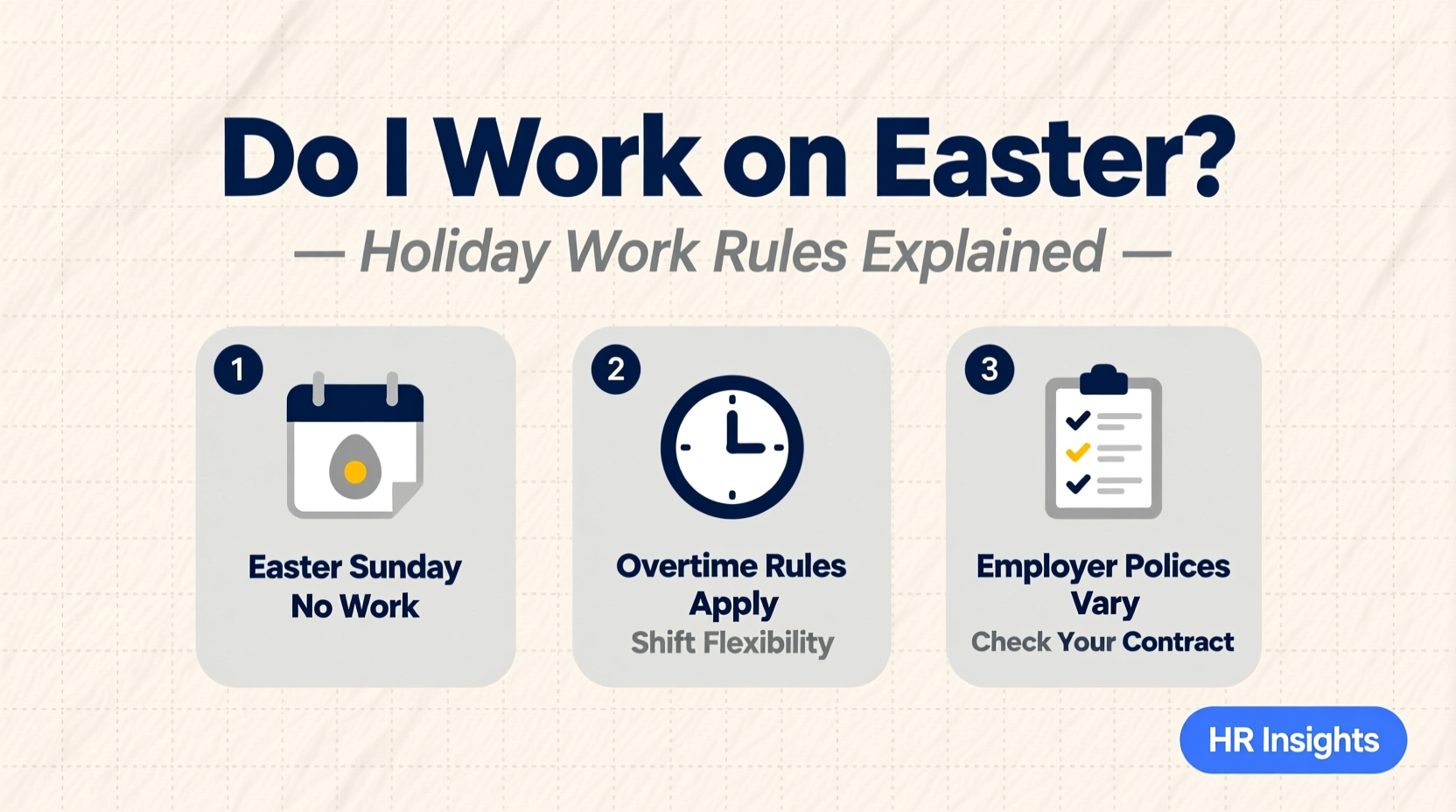
The answer to do I work on Easter depends on your country, industry, employer policies, and local labor laws. In many Western nations like the United States, Easter Sunday is not a federal holiday, so whether or not you work on Easter largely depends on your job sector and company practices. Retail, hospitality, healthcare, and transportation workers are more likely to be required to work, while office-based employees often get the day off. This article explores the nuances of working during the Easter holiday, including global variations, historical context, typical business operations, and practical tips for planning around this movable Christian celebration.
Understanding Easter: A Movable Feast with Cultural Impact
Easter is one of the most significant holidays in the Christian calendar, commemorating the resurrection of Jesus Christ after his crucifixion. Unlike fixed-date holidays such as Christmas (December 25), Easter falls on a different date each year—specifically, the first Sunday after the first full moon following the spring equinox. This means Easter can occur anywhere between March 22 and April 25. For example, in 2025, Easter Sunday will fall on April 20, while in 2026 it will be observed on April 5.
Because of its religious significance and cultural traditions—including egg hunts, family meals, church services, and symbolic decorations—many people expect time off work. However, unlike government-declared public holidays such as Thanksgiving or Independence Day in the U.S., Easter does not automatically guarantee a day off for all workers.
Country-by-Country Guide: Where Is Easter a Public Holiday?
One major factor influencing whether you work on Easter is your geographic location. While some countries recognize Easter Monday as an official public holiday, others treat only Good Friday—or neither day—as a formal break from work.
| Country | Good Friday | Easter Sunday | Easter Monday |
|---|---|---|---|
| United States | No (federal) | No | No |
| Canada | Yes (most provinces) | No | Yes |
| United Kingdom | Yes | No | Yes |
| Australia | Yes | No | Yes |
| Germany | Yes | No | Yes |
| France | Yes (since 2012, Alsace-Moselle only) | No | Yes |
| Italy | Yes | No | Yes |
| Japan | No | No | No |
As shown above, residents of Canada, the UK, Australia, and much of Europe typically enjoy a long weekend with both Good Friday and Easter Monday recognized as statutory holidays. In contrast, in the United States, no federal law mandates time off for Easter, though individual states may have their own regulations for state employees. Federal offices, banks, and post offices remain open on both Easter Sunday and Monday unless they coincide with another holiday or special closure notice.
Which Industries Are Open on Easter?
If you're wondering do I work on Easter, consider your profession. Some sectors operate normally due to customer demand or essential service requirements:
- Retail Stores: Major chains like Walmart, Target, and grocery stores often stay open, especially in the U.S., though hours may be reduced. Pharmacies and convenience stores almost always remain operational.
- Hospitality & Tourism: Hotels, restaurants, and vacation destinations usually require staff on Easter weekend due to increased travel and dining activity.
- Healthcare: Hospitals, clinics, and emergency services run 24/7, meaning medical professionals must work rotating shifts.
- Transportation: Airlines, public transit systems, and delivery services maintain modified schedules but continue operating.
- Entertainment & Recreation: Movie theaters, amusement parks, and event venues often see peak attendance and hire extra seasonal staff.
On the other hand, corporate offices, schools, and government agencies in countries where Easter is widely observed tend to close or offer flexible scheduling.
Employer Policies and Collective Agreements
In the absence of national mandates, workplace policy becomes crucial. Private employers decide independently whether to grant paid time off on Easter Sunday. Unionized workplaces often include holiday pay provisions in collective bargaining agreements. Employees covered under such contracts may receive premium pay (e.g., time-and-a-half) for working on recognized religious or cultural holidays—even if not officially public.
For non-union workers, check your employee handbook or consult HR for guidance on do I work on Easter based on your company’s operational needs and past practices. Some organizations use Easter as a floating holiday or allow personal leave requests to create a long weekend.
Religious Observance and Workplace Accommodations
Under U.S. Equal Employment Opportunity Commission (EEOC) guidelines, employers must reasonably accommodate employees’ sincerely held religious beliefs unless doing so would cause undue hardship. This means that if an employee requests time off for Easter church services or family observances, the employer should consider granting it—especially if similar requests are routinely approved.
However, accommodation does not guarantee approval. Essential businesses may deny requests based on staffing needs. To increase chances of getting Easter off, submit requests early and offer solutions like shift swaps or covering duties beforehand.
How to Find Out If You Work on Easter in 2025 or 2026
To determine your status for upcoming Easters, follow these steps:
- Review Your Company Calendar: Many organizations publish annual holiday schedules by Q4 of the previous year.
- Check Retailer Hours Online: If employed in retail or food service, search “Walmart Easter hours 2025” or “Target open on Easter?” to anticipate store operations.
- Contact HR or Supervisor: Ask directly about expectations and any planned closures.
- Monitor Local Announcements: Municipalities or regional authorities may issue proclamations affecting public-sector workers.
- Consult Union Representatives: If union-affiliated, review holiday clauses in your labor agreement.
Don’t assume uniformity—even within the same chain, store locations may vary based on local customs or foot traffic patterns.
Global Variations in Easter Work Culture
Cultural attitudes toward work on Easter differ significantly worldwide. In predominantly Catholic or Protestant countries like Italy, Ireland, or Sweden, there's strong social expectation to spend Easter with family, leading to near-total shutdowns outside essential services. Public transport runs limited routes, and even small shops close.
In contrast, in multicultural or secular societies like the U.S. or India, Easter is less universally observed. While churches hold special services, commercial life continues largely uninterrupted. In fact, Easter sales and brunch promotions make it a profitable day for businesses.
In Latin America, countries like Mexico and Brazil observe Holy Week (Semana Santa) as a major vacation period, with widespread closures and travel. Government offices, schools, and many private companies shut down for several days, effectively creating a de facto holiday week—even without formal legislation mandating it.
Common Misconceptions About Working on Easter
Several myths persist about Easter work rules:
- Misconception 1: "Easter is a federal holiday in the U.S." – False. It is not recognized by the federal government, unlike Christmas or New Year’s Day.
- Misconception 2: "All Christians get Easter off." – Not true. Many Christian employees in essential roles must work, particularly in healthcare or security.
- Misconception 3: "If stores are open, everyone gets holiday pay." – Incorrect. Only certain jurisdictions require premium pay for Sunday or holiday work, and U.S. federal law doesn’t mandate it.
- Misconception 4: "Easter Monday is a global holiday." – No. Outside Commonwealth nations and parts of Europe, it’s rarely observed.
Always verify claims through official sources rather than relying on assumptions.
Tips for Managing Work Around Easter
Whether you’re hoping to take time off or preparing to work, here are actionable strategies:
- Plan Ahead: Submit PTO requests months in advance, especially if traveling or attending religious events.
- Coordinate With Coworkers: Offer to trade shifts if someone else wants the day off.
- Use Flexible Work Options: Propose remote work or adjusted hours to balance obligations.
- Prepare for Reduced Services: Banks, postal services, and government offices may have altered hours even if not fully closed.
- Know Your Rights: Research local labor laws regarding holiday work compensation and rest periods.
Looking Ahead: Future Easter Dates and Planning
Since Easter changes annually, forward planning helps avoid surprises. Here are key dates through 2030:
- 2025: April 20
- 2026: April 5
- 2027: March 28
- 2028: April 16
- 2029: April 1
- 2030: April 21
Early Easters (like in 2027) can conflict with school terms or tax deadlines, while later ones (such as 2025) align better with spring breaks. Employers may adjust schedules accordingly.
Frequently Asked Questions (FAQs)
Do most people get Easter off work?
No, not universally. Office workers and those in countries with statutory holidays are more likely to get time off, but retail, healthcare, and service industry employees often work.
Is Easter Sunday a federal holiday in the U.S.?
No, Easter Sunday is not a federal holiday. Federal offices, banks, and most courthouses remain open.
Do retail workers get extra pay for working on Easter?
Not necessarily. The U.S. Fair Labor Standards Act (FLSA) doesn’t require holiday or Sunday premium pay, though some states or employers choose to offer it voluntarily.
Can my employer force me to work on Easter?
Yes, unless restricted by contract, collective agreement, or religious accommodation laws. Employers in essential sectors routinely schedule staff on religious holidays.
Are grocery stores open on Easter?
Most are, especially large chains like Kroger, Safeway, and Publix. However, hours may be shortened. Always check your local store’s website for exact times.





 浙公网安备
33010002000092号
浙公网安备
33010002000092号 浙B2-20120091-4