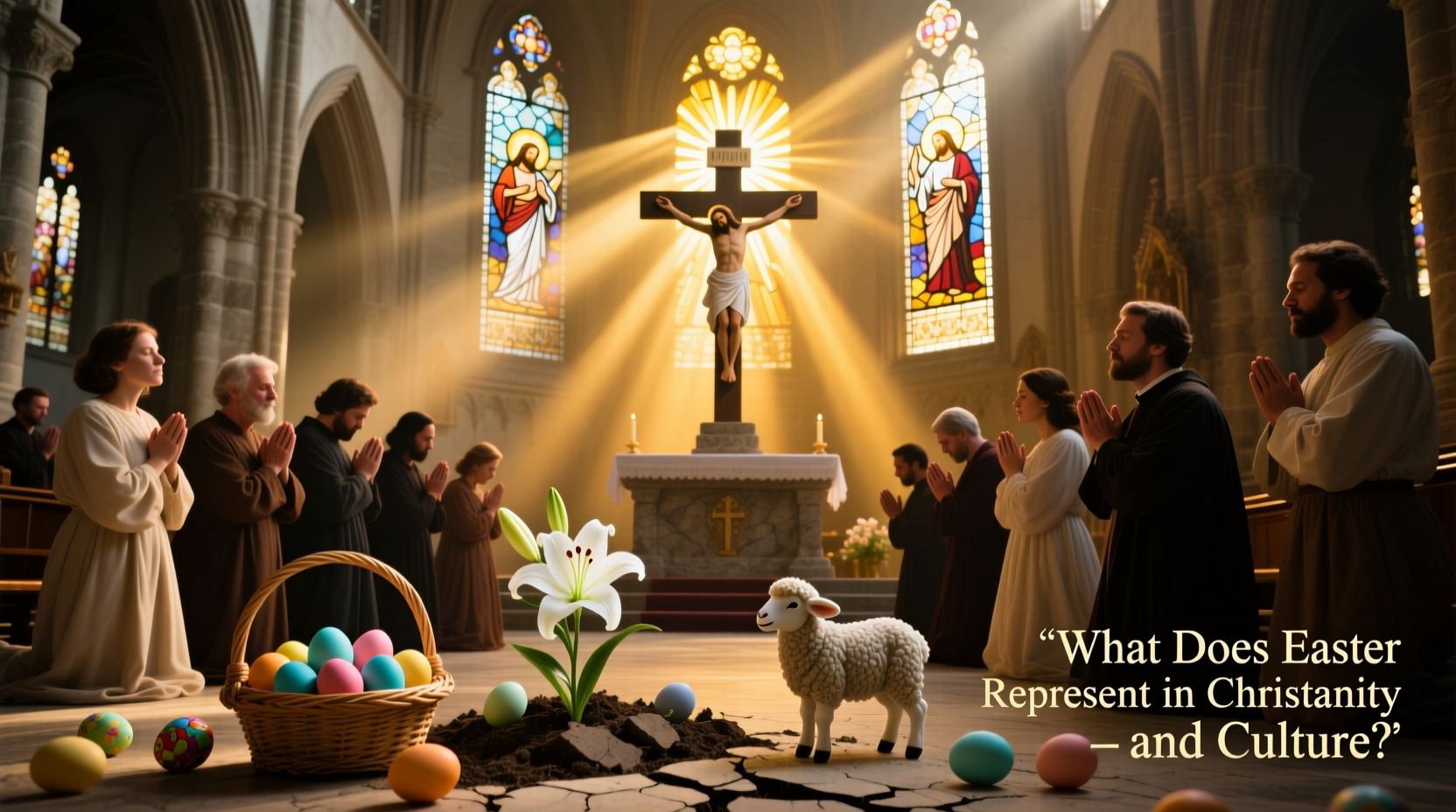
What does Easter represent? At its core, Easter symbolizes the resurrection of Jesus Christ from the dead, a foundational event in Christianity that affirms hope, redemption, and new life. This central theme—what Easter represents in both religious and cultural contexts—resonates across centuries and continents, shaping how millions observe this sacred holiday each year. As one of the most significant events in the Christian liturgical calendar, Easter commemorates the culmination of Holy Week, following Jesus’ crucifixion on Good Friday. Beyond its theological meaning, Easter also embodies themes of springtime renewal, family gatherings, and symbolic traditions like the Easter egg and the Easter bunny, which have evolved over time through a blend of pagan and Christian influences.
The Religious Significance of Easter
In Christian theology, what Easter represents is nothing less than the cornerstone of the faith. The resurrection of Jesus Christ, as described in the New Testament Gospels (Matthew, Mark, Luke, and John), is viewed as divine proof of His identity as the Son of God and the fulfillment of Old Testament prophecies. According to Scripture, Jesus was crucified, died, and was buried, but rose again on the third day—this event being celebrated annually on Easter Sunday.
For believers, Easter is not merely a historical remembrance but a living affirmation of eternal life through Christ. The Apostle Paul emphasized this in 1 Corinthians 15:17: 'If Christ has not been raised, your faith is futile; you are still in your sins.' Thus, what Easter represents in spiritual terms includes forgiveness, victory over death, and the promise of salvation. Churches around the world mark the occasion with sunrise services, special liturgies, hymns of triumph such as 'Christ the Lord Is Risen Today,' and the joyful exclamation 'He is risen!' 'He is risen indeed!'
Easter's Historical Origins and Evolution
To fully understand what Easter represents today, it’s essential to explore its historical roots. The word 'Easter' itself is believed by some scholars to derive from Eostre or Ostara, a pre-Christian Germanic goddess associated with spring and fertility. While this etymology remains debated among historians, there’s no doubt that early Christians sought to align their celebration of Christ’s resurrection with existing spring festivals, making the message more accessible to converts.
The timing of Easter is determined by a complex lunar-based calculation. It falls on the first Sunday after the first full moon following the vernal (spring) equinox in the Northern Hemisphere. This means Easter can occur as early as March 22 or as late as April 25 in the Gregorian calendar used by Western Christianity. Eastern Orthodox churches often celebrate Easter on a different date due to their use of the Julian calendar for liturgical purposes.
The Council of Nicaea in 325 CE standardized the method for calculating Easter, aiming to unify observance across the Christian world. However, differences persist between Eastern and Western traditions, illustrating how what Easter represents can vary slightly depending on denomination and region.
Cultural Traditions and Symbolism
Beyond its religious significance, what Easter represents in popular culture includes rebirth, joy, and communal celebration. Many customs observed today blend Christian teachings with older folk traditions. For example:
- Easter Eggs: Once symbols of new life in ancient cultures, eggs were later adopted by Christians to represent the empty tomb of Jesus—the hard shell symbolizing the sealed tomb and the emerging chick signifying resurrection.
- Easter Bunny: Originating in German folklore, the 'Osterhase' was a hare that laid eggs for children. Immigrants brought this tradition to America in the 18th century, where it merged with egg hunts and candy-giving practices.
- Easter Parades: Notably famous in New York City since the mid-1800s, these parades feature elaborate hats and festive attire, reflecting the holiday’s association with renewal and fashion.
- Easter Lilies: These white flowers are commonly used in church services and homes as symbols of purity and the resurrection.
These elements contribute to what Easter represents in broader society—a mix of sacred observance and secular festivity that appeals to diverse audiences.
Global Observances: How Different Countries Celebrate Easter
While Easter is widely recognized in Christian-majority nations, its expression varies significantly around the world. Understanding what Easter represents across cultures reveals both unity and diversity in practice.
| Country | Key Traditions | Religious Emphasis |
|---|---|---|
| Italy | Processions, reenactments of the Passion, large family meals | Strong Catholic focus; Vatican Easter Mass led by the Pope |
| Spain | Semana Santa (Holy Week) processions with hooded penitents | Deeply religious; dramatic public displays of devotion |
| Mexico | Burning of Judas effigies, church vigils, traditional foods | Intense focus on Good Friday and Easter Sunday rituals |
| Australia | Easter bilby instead of bunny; community fairs and chocolate | Mixed religious and commercial observance |
| Greece | Midnight Resurrection service, cracking red eggs, lamb feasts | Eastern Orthodox traditions dominate |
Even in non-Christian countries, Easter-related products and imagery appear due to globalization and commercial influence. Yet, in places like Japan or India, awareness of what Easter represents remains limited outside expatriate or minority Christian communities.
Modern Interpretations and Commercialization
In recent decades, discussions about what Easter represents have increasingly included critiques of consumerism. Major retailers promote Easter-themed merchandise—from chocolates and clothing to home decor—weeks in advance. While these offerings make the holiday more visible, they sometimes overshadow its spiritual meaning.
Nonetheless, many families find value in blending tradition with celebration. Activities like Easter egg hunts, baking hot cross buns, or attending community events provide opportunities for connection and joy. For parents, explaining what Easter represents to children offers a chance to share values of compassion, sacrifice, and hope.
Churches often respond to commercial trends by hosting alternative events—such as 'Resurrection Rolls' workshops (where kids make sweet rolls representing the sealed tomb) or outdoor worship services—to emphasize the true meaning behind the festivities.
How to Observe Easter Meaningfully
Whether you're observing Easter for religious reasons or cultural interest, here are practical ways to engage with what Easter represents:
- Attend a Worship Service: Participate in a local church’s Good Friday or Easter Sunday service to experience the liturgical significance firsthand.
- Learn the Story: Read the Gospel accounts of the crucifixion and resurrection (e.g., John 20) to deepen understanding.
- Create Symbolic Crafts: Make resurrection gardens, dye eggs with natural colors, or write personal reflections on renewal.
- Support Charitable Causes: Honor the spirit of sacrifice by donating to organizations that help the vulnerable.
- Have an Intentional Meal: Share a meal with loved ones while discussing what new beginnings mean personally or spiritually.
Common Misconceptions About Easter
Several myths persist about what Easter represents, often fueled by incomplete historical narratives:
- Misconception: Easter is purely a pagan holiday repackaged by the Church.
Reality: While some symbols have pre-Christian origins, the essence of Easter—the resurrection of Jesus—is distinctly Christian and rooted in biblical history. - Misconception: The date of Easter changes randomly each year.
Reality: The date follows a precise ecclesiastical formula tied to the lunar cycle and equinox, ensuring consistency within each tradition. - Misconception: All Christians celebrate Easter on the same day.
Reality: Due to calendar differences, Eastern Orthodox churches often celebrate Easter one to five weeks later than Western churches.
Frequently Asked Questions
Why is Easter celebrated on a different date every year?
Easter’s date depends on the first Sunday after the first full moon following the spring equinox. Because lunar cycles don’t align perfectly with the solar calendar, the date shifts annually between March 22 and April 25 in Western Christianity.
What does the Easter egg symbolize?
The Easter egg symbolizes new life and resurrection. In Christian interpretation, it reflects Jesus emerging from the tomb, much like a chick hatches from an egg.
Is the Easter bunny mentioned in the Bible?
No, the Easter bunny is not biblical. It originated in European folklore and became part of secular Easter celebrations, particularly in the United States.
How do Orthodox Christians celebrate Easter differently?
Orthodox Christians use the Julian calendar to calculate Easter, often resulting in a later date. Their services include midnight liturgies, candlelight processions, and the greeting 'Christ is Risen!' with the response 'Truly He is Risen!'
Can non-Christians participate in Easter activities?
Yes. Many Easter traditions—like egg hunts or spring picnics—are inclusive and family-oriented. However, respecting the religious roots of the holiday enhances cultural sensitivity and understanding.





 浙公网安备
33010002000092号
浙公网安备
33010002000092号 浙B2-20120091-4