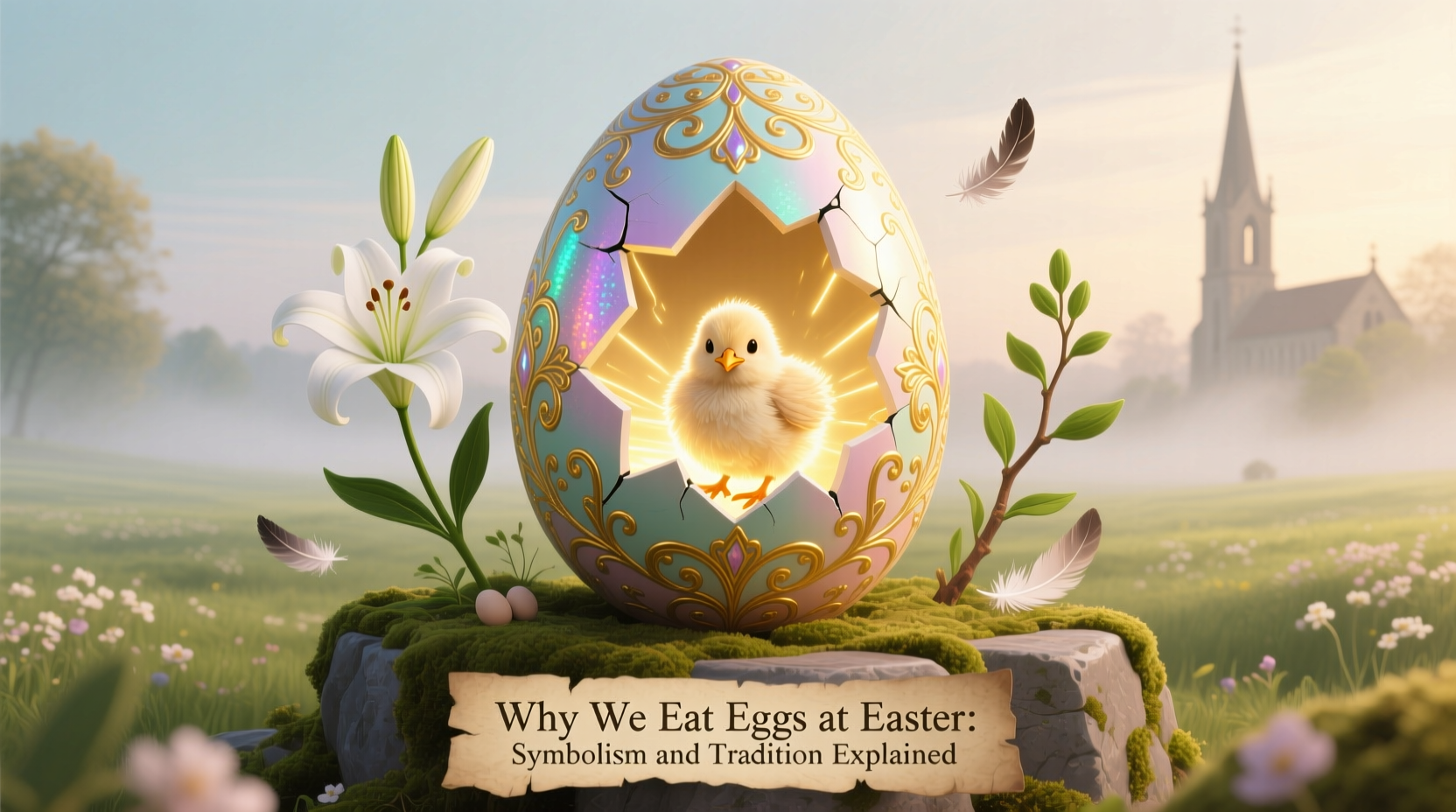
The tradition of eating eggs at Easter is deeply rooted in both religious symbolism and ancient seasonal celebrations, reflecting renewal, resurrection, and the arrival of spring. This age-old custom—why we eat eggs at Easter—originates from early Christian practices that repurposed pre-existing pagan symbols of fertility and rebirth, transforming them into a powerful metaphor for Jesus Christ’s resurrection. Over centuries, this practice evolved from simple dyed chicken eggs to elaborate chocolate confections and egg hunts enjoyed worldwide. Understanding why we eat eggs at Easter reveals a rich tapestry of cultural adaptation, theological meaning, and family-centered celebration that continues to shape modern observances.
Historical Origins of Easter Eggs
The use of eggs as a symbol predates Christianity by thousands of years. Ancient civilizations including the Persians, Egyptians, Greeks, and Romans exchanged eggs during spring festivals to celebrate the rejuvenation of life after winter. For these cultures, the egg was a natural emblem of fertility, potential, and the emergence of new life—an idea reinforced by the visible birth of chicks from seemingly inert shells.
When early Christians began establishing liturgical traditions, they adopted and reinterpreted many existing cultural symbols to convey Christian teachings more effectively. The egg became associated with the resurrection of Jesus Christ: just as a chick breaks free from its shell, Christ emerged from the tomb, bringing eternal life. By the Middle Ages, it was common for European Christians to abstain from eating eggs during Lent—a 40-day period of fasting and penance before Easter Sunday. Eggs laid during this time were saved, boiled to preserve them, and then decorated and gifted on Easter morning as part of the feast breaking the fast.
Religious Significance in Christianity
In Christian theology, the egg represents the sealed tomb of Christ. Its hard outer shell symbolizes the stone sealing Jesus’ tomb, while the hatching chick inside mirrors His triumphant resurrection. This analogy made the egg a fitting centerpiece in Easter rituals, especially among Eastern Orthodox communities where red-dyed eggs are still used to represent the blood of Christ shed on the cross.
One enduring tradition involves rolling blessed red eggs down a slope or tapping them together during Easter meals—a practice known as "egg cracking"—which symbolizes the rolling away of the stone from Christ’s tomb. In countries like Greece, Ukraine, and Russia, intricately decorated eggs called pysanky (from the Ukrainian word *pysaty*, meaning "to write") are created using wax-resist methods similar to batik. These ornate designs often include crosses, floral patterns, and geometric shapes, each carrying spiritual significance.
Pagan Roots and Cultural Syncretism
While the Christian interpretation of Easter eggs is well established, scholars recognize strong connections between Easter customs and pre-Christian spring festivals. One of the most notable is the festival of Eostre (or Ostara), a Germanic goddess of dawn and fertility whose name may have given rise to the word "Easter." According to the Venerable Bede, an 8th-century English monk, Anglo-Saxons held feasts in honor of Eostre during the month of April, often involving hares and eggs as symbols of fertility and new beginnings.
As Christianity spread across Europe, church leaders incorporated local traditions into Christian holidays to ease conversion. Thus, the timing of Easter—which is calculated based on the first Sunday after the first full moon following the vernal equinox—coincided with many existing spring festivals. The blending of these customs allowed the egg to retain its seasonal symbolism while acquiring deeper religious meaning within the context of the Paschal celebration.
Eggs in Modern Easter Celebrations
Today, the consumption and decoration of eggs remain central to Easter festivities around the world, though the forms have diversified significantly. Chocolate eggs, introduced in 19th-century Europe by confectioners such as Jules Sechaud and later popularized by companies like Cadbury and Hershey, have become a staple of secular Easter celebrations. These edible treats range from hollow milk chocolate shells to luxury truffles hidden inside elaborately wrapped packages.
Beyond candy, egg hunts are a beloved activity for children in Western countries. Organized by families, churches, or community groups, these events involve hiding plastic or real eggs filled with small toys or sweets in gardens, parks, or school grounds. The White House Easter Egg Roll, an annual event dating back to 1878, exemplifies how egg-themed activities have entered national traditions in the United States.
| Country | Easter Egg Tradition | Unique Feature |
|---|---|---|
| Ukraine | Pysanky (wax-resist decorated eggs) | Intricate folk designs passed through generations |
| Germany | Ostereier (colorful painted eggs) | Hung on trees in "Osterbaum" displays |
| United States | Chocolate eggs & egg hunts | White House Easter Egg Roll |
| Greece | Red-dyed eggs | Cracked during Easter meal for good luck |
| Australia | Chocolate bilbies instead of bunnies | Conservation-focused alternative |
Secular vs. Religious Interpretations
Over time, the meaning of Easter eggs has diverged depending on cultural and personal beliefs. For practicing Christians, especially in Catholic, Orthodox, and Protestant traditions, the egg remains a sacred symbol tied directly to the resurrection narrative. Many churches bless eggs during Easter services, and families incorporate them into special meals such as Easter breads or salads.
In contrast, secular societies often view Easter eggs primarily as festive treats disconnected from religious doctrine. Supermarkets stock shelves with chocolate bunnies, marshmallow peeps, and jelly beans months in advance, emphasizing consumerism and family fun over theological reflection. Despite this shift, the underlying theme of renewal persists, making the holiday accessible even to non-religious participants.
How to Incorporate Traditional Egg Practices Today
Families looking to deepen their understanding of why we eat eggs at Easter can adopt meaningful traditions that blend education, creativity, and spirituality. Here are several practical suggestions:
- Dye eggs naturally: Use onion skins, turmeric, beet juice, or spinach to color eggs without artificial dyes, connecting to historical methods.
- Create a resurrection garden: Combine potted plants, stones, and a small tomb model with real eggs to illustrate the Easter story.
- Tell the symbolism aloud: During meals, explain how the egg reflects Christ’s empty tomb, reinforcing intergenerational learning.
- Host a heritage egg hunt: Hide hand-decorated eggs alongside chocolates to balance tradition and fun.
- Support ethical brands: Choose fair-trade or organic chocolate eggs to align treat-giving with social responsibility.
Misconceptions About Easter Eggs
Several myths surround the origins and meanings of Easter eggs. One common misconception is that the Church invented the tradition entirely. In reality, it adapted existing cultural symbols rather than creating them anew. Another myth suggests that all Easter eggs were originally chocolate, when in fact chocolate versions only emerged in the 1800s—centuries after the practice began.
Additionally, some believe the Easter bunny delivers eggs, despite rabbits being mammals that do not lay eggs. This confusion arises from the conflation of different folk traditions: the Germanic hare (associated with Eostre) and the egg-laying symbolism of birds. Educating children about these distinctions can enhance cultural literacy and critical thinking.
Regional Variations in Egg Traditions
Easter egg customs vary widely across regions, influenced by climate, religion, and local folklore. In Mediterranean countries like Italy and Spain, hard-boiled eggs are incorporated into savory dishes such as *hornazo* (a meat-filled Easter pie) or served with olives and cheese. In Latin America, marzipan eggs flavored with fruit or liqueur are popular gifts.
In parts of Eastern Europe, entire workshops are dedicated to crafting pysanky, with strict rules about design placement and color symbolism. Meanwhile, in urban centers across Asia, where Christianity is a minority religion, Western-style egg hunts and chocolate giveaways are increasingly hosted by international schools and malls, reflecting globalization’s impact on cultural exchange.
Environmental and Ethical Considerations
Modern consumers are becoming more aware of the environmental footprint of mass-produced Easter eggs. Plastic packaging, palm oil derivatives, and excessive sugar content raise concerns about sustainability and health. To address these issues, eco-conscious families are turning to homemade alternatives such as sewn fabric eggs, wooden puzzle eggs, or plant-based chocolates.
Some organizations now promote “plastic-free” egg hunts using biodegradable materials. Others encourage planting seeds inside hollowed eggs as a way to teach children about growth and stewardship. These innovations show how the core idea behind why we eat eggs at Easter—celebrating new life—can be expressed in environmentally responsible ways.
Conclusion: The Enduring Legacy of Easter Eggs
The reason we eat eggs at Easter transcends mere culinary preference—it embodies humanity’s enduring fascination with cycles of death and rebirth, whether framed through faith, nature, or culture. From ancient spring rites to contemporary chocolate indulgence, the egg has maintained its symbolic power across millennia. Whether you observe Easter as a religious holiday or a seasonal celebration, engaging with the history and meaning behind this tradition offers a richer, more thoughtful experience. As long as people gather to mark the arrival of spring and the promise of renewal, the humble egg will continue to play a central role in Easter’s joyful legacy.
Frequently Asked Questions
- Why are eggs associated with Easter?
Eggs symbolize new life and resurrection in Christianity, representing Jesus emerging from the tomb. They also connect to pre-Christian spring festivals celebrating fertility and rebirth. - Are Easter eggs mentioned in the Bible?
No, Easter eggs are not mentioned in the Bible. Their use developed later as a symbolic tradition within Christian practice. - What does the Easter bunny have to do with eggs?
The Easter bunny comes from German folklore and is linked to the goddess Eostre. Since rabbits don’t lay eggs, the combination blends separate symbols of fertility and new life. - Can you eat real decorated Easter eggs?
Yes, if they’ve been properly refrigerated and not left out too long. However, eggs used in outdoor hunts may become contaminated and should be discarded. - When did chocolate Easter eggs start?
The first chocolate Easter eggs appeared in Europe in the early 19th century, with French and German chocolatiers leading the innovation. Mass production began in the late 1800s.

Get support
Trade Assurance
Source on Alibaba.com
Sell on Alibaba.com
Get to know us




 浙公网安备
33010002000092号
浙公网安备
33010002000092号 浙B2-20120091-4