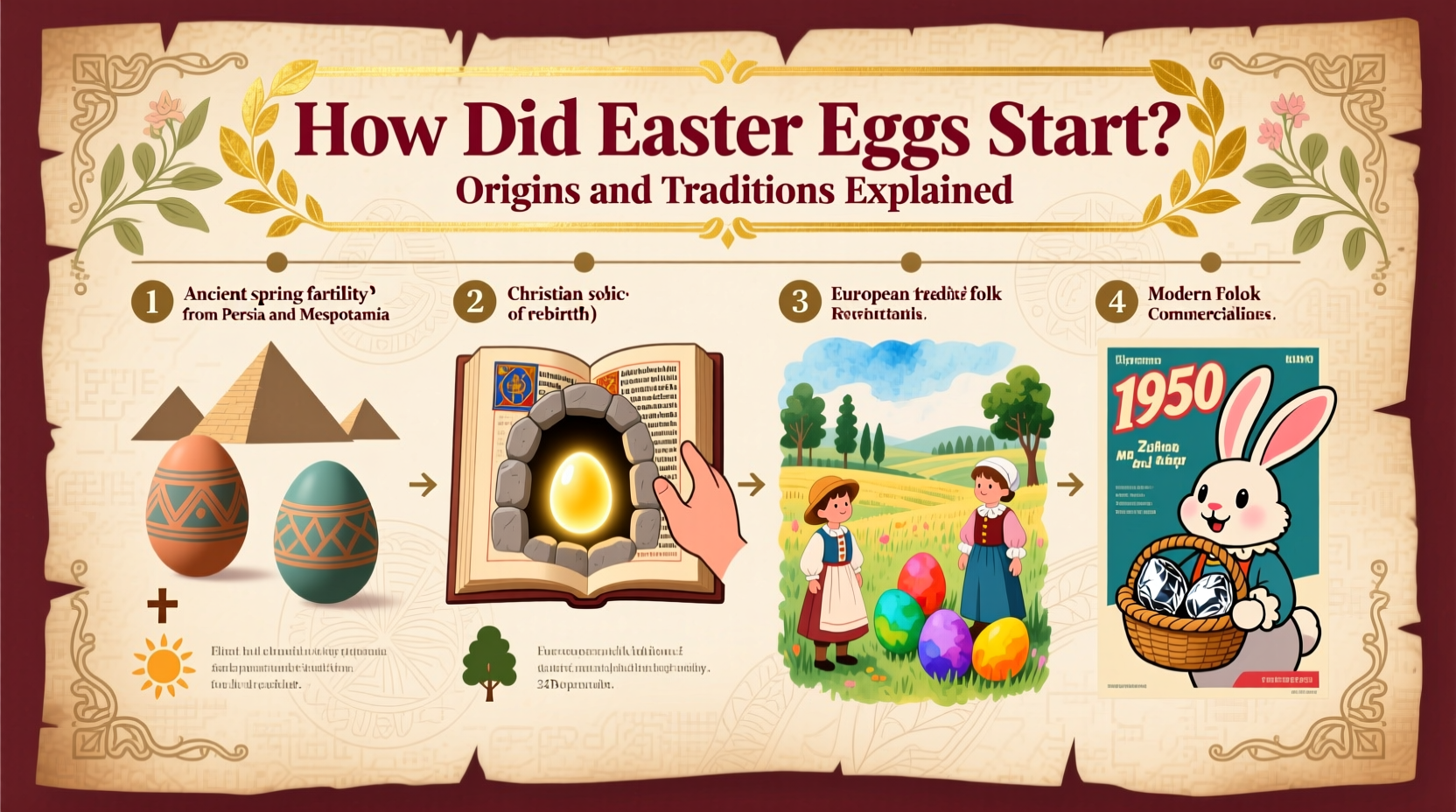
The tradition of Easter eggs began as a symbolic celebration of new life and resurrection, deeply rooted in both pre-Christian pagan customs and early Christian practices. The origins of how Easter eggs started can be traced back thousands of years to ancient spring festivals that honored fertility and renewal, later adopted and reinterpreted by the Christian Church to represent Jesus Christ’s resurrection. This blend of cultural and religious influences gave rise to the modern practice of decorating, gifting, and hunting Easter eggs—a custom now observed worldwide during the Easter season.
Historical Roots of Egg Symbolism
Eggs have long been powerful symbols of life, rebirth, and regeneration across many cultures. Long before Christianity, civilizations such as the Persians, Egyptians, Greeks, and Romans exchanged eggs during springtime celebrations marking the vernal equinox. These events celebrated the earth's awakening after winter, making the egg—an object from which new life emerges—a natural emblem of renewal.
One of the earliest known examples comes from ancient Persia, where people decorated eggs for Nowruz, the Persian New Year, celebrated at the spring equinox. Similarly, in Mesopotamia, early Christians stained eggs red to symbolize the blood of Christ shortly after his crucifixion. Over time, these regional customs merged into broader European traditions, laying the foundation for what would become the Easter egg tradition we recognize today.
Christian Adoption and Religious Significance
As Christianity spread throughout Europe between the first and fourth centuries AD, the Church sought ways to integrate existing cultural practices into its liturgical calendar. This process, known as inculturation, allowed converts to retain familiar customs while infusing them with Christian meaning. The egg, already associated with spring and new beginnings, was reinterpreted as a symbol of the empty tomb from which Jesus rose.
During Lent—the 40-day period of fasting and penance preceding Easter—Christians traditionally abstained from eating animal products, including eggs. Hens, however, continued to lay eggs, so families collected and preserved them. By Easter Sunday, baskets were filled with hard-boiled eggs, which were then blessed, eaten, and shared as part of the festive meal breaking the fast. This practical aspect reinforced the spiritual symbolism: just as a chick breaks free from its shell, Christ emerged from the tomb, conquering death.
Medieval European Traditions and Decorated Eggs
By the Middle Ages, the practice of decorating eggs had become widespread in Central and Eastern Europe. In countries like Ukraine, Poland, and Germany, intricate designs were painted onto eggs using natural dyes made from plants, bark, and flowers. The most famous example is the Ukrainian pysanka, a wax-resist decorated egg with elaborate geometric or religious patterns.
In Western Europe, especially in France and England, royalty began incorporating Easter eggs into courtly celebrations. Historical records show that King Edward I of England commissioned 450 decorated eggs in 1290 to distribute among members of the royal household during Easter. Some were even gilded or adorned with gold leaf, highlighting the growing cultural importance of the custom.
The Influence of German Folklore and the Easter Bunny
The evolution of how Easter eggs started also includes the emergence of folklore characters who deliver or hide eggs for children. One of the most enduring figures is the Osterhase (Easter Hare), a folkloric character originating in 17th-century Germany. According to legend, this wise hare laid colorful eggs in nests prepared by children, often placed in hats or shoes left outside.
This tradition crossed the Atlantic with German immigrants settling in Pennsylvania during the 18th century. There, it evolved into the modern American practice of the Easter Bunny hiding baskets and eggs for children to find on Easter morning. While the bunny itself has no biblical basis, its association with fertility and springtime made it a fitting companion to the egg symbolism already embedded in Easter celebrations.
Global Variations in Easter Egg Customs
Today, the way Easter eggs are used varies significantly around the world, reflecting local cultures and religious interpretations. Below is a comparison of key traditions:
| Country | Tradition | Unique Features |
|---|---|---|
| Ukraine | Pysanky (wax-resist eggs) | Symbolic colors and patterns; often include prayers or blessings |
| Greece | Red-dyed eggs for Tsougrisma | Cracking game at Easter dinner; represents Christ’s resurrection |
| UK | Egg rolling and egg hunts | Royal egg rolls at Avenham Park; chocolate egg gifts |
| Australia | Chocolate bilbies instead of bunnies | Conservation-themed alternative due to bunny environmental impact |
| USA | Easter egg hunts and baskets | Largest event: White House Easter Egg Roll since 1878 |
These variations illustrate how the core idea of Easter eggs—symbolizing new life and joy—has been adapted globally, blending religious observance with community celebration.
From Real Eggs to Chocolate: The Commercialization of Easter Eggs
The shift from real, hard-boiled eggs to edible confections began in 19th-century Europe, particularly in France and Germany, where chocolatiers started crafting hollow chocolate eggs filled with sweets. Advances in molding technology allowed manufacturers to produce large quantities, making chocolate Easter eggs accessible to the middle class.
By the early 20th century, companies like Cadbury in the UK pioneered mass production of chocolate eggs, introducing iconic lines such as the Cadbury Creme Egg in 1971. Today, billions of chocolate Easter eggs are sold annually worldwide, transforming the tradition into a major commercial event. While some purists prefer homemade or natural eggs, most children now associate Easter primarily with candy-filled treats.
Common Misconceptions About Easter Eggs
Despite their popularity, several misconceptions persist about how Easter eggs started:
- Misconception: Easter eggs are purely a Christian invention.
Reality: Their symbolism predates Christianity and was absorbed into Christian practice. - Misconception: The Bible mentions Easter eggs.
Reality: There is no scriptural reference to Easter eggs; they developed through tradition. - Misconception: All Easter eggs are chocolate.
Reality: Many cultures still use real, decorated eggs for games and rituals.
How to Celebrate Easter Eggs Today: Tips and Ideas
Whether you're observing Easter for religious reasons or simply enjoying it as a seasonal holiday, here are meaningful ways to engage with the tradition:
- Host a DIY Egg Decorating Party: Use natural dyes (beet juice, turmeric, spinach) to create vibrant colors without chemicals.
- Organize an Educational Egg Hunt: Pair each egg with a fact about Easter history or symbolism to teach kids context.
- Support Ethical Chocolate Brands: Choose fair-trade or organic chocolate eggs to promote sustainability.
- Preserve Cultural Techniques: Try making a pysanka or Greek red egg to honor traditional methods.
- Create a Family Time Capsule Egg: Decorate a plastic egg and fill it with notes, drawings, or small mementos to open next year.
Verifying Local Traditions and Events
If you’re planning to attend public Easter egg events—such as egg rolls, church services, or community hunts—it’s important to verify details locally. Schedules can vary significantly depending on denomination, region, and municipality. For example:
- Check city parks department websites for public egg hunt registration.
- Review church bulletins or social media pages for special Easter services involving eggs.
- Visit museum or cultural center calendars for heritage-based egg decoration workshops.
Always confirm dates and times ahead of time, as some events may shift based on the lunar calendar or weather conditions.
Conclusion: How Did Easter Eggs Start?
The answer to how Easter eggs started lies in a rich tapestry of ancient symbolism, religious adaptation, and cultural evolution. Beginning as a universal emblem of spring and rebirth, the egg was embraced by early Christians as a metaphor for resurrection and eternal life. Over centuries, it transformed from a simple dyed egg into a global phenomenon encompassing art, commerce, and family ritual. Understanding this journey not only enriches our appreciation of the holiday but also connects us to generations past who celebrated renewal in much the same spirit.
Frequently Asked Questions
Why are eggs associated with Easter?
Eggs symbolize new life and resurrection, aligning with the Christian belief in Jesus rising from the dead. They also reflect ancient spring festivals celebrating renewal.
When did chocolate Easter eggs start?
The first chocolate Easter eggs appeared in Europe in the early 1800s, with France and Germany leading production. Mass production began in the late 19th century.
Are Easter eggs mentioned in the Bible?
No, Easter eggs are not mentioned in the Bible. Their use developed through tradition, not scripture.
What do different egg colors mean in Easter traditions?
Red symbolizes Christ’s blood (common in Orthodox traditions); gold represents glory and resurrection; green reflects spring growth; purple signifies penance during Lent.
Can non-religious people celebrate Easter eggs?
Yes. Many people enjoy Easter eggs as a cultural or seasonal tradition, focusing on family, fun, and springtime themes rather than religious beliefs.





 浙公网安备
33010002000092号
浙公网安备
33010002000092号 浙B2-20120091-4