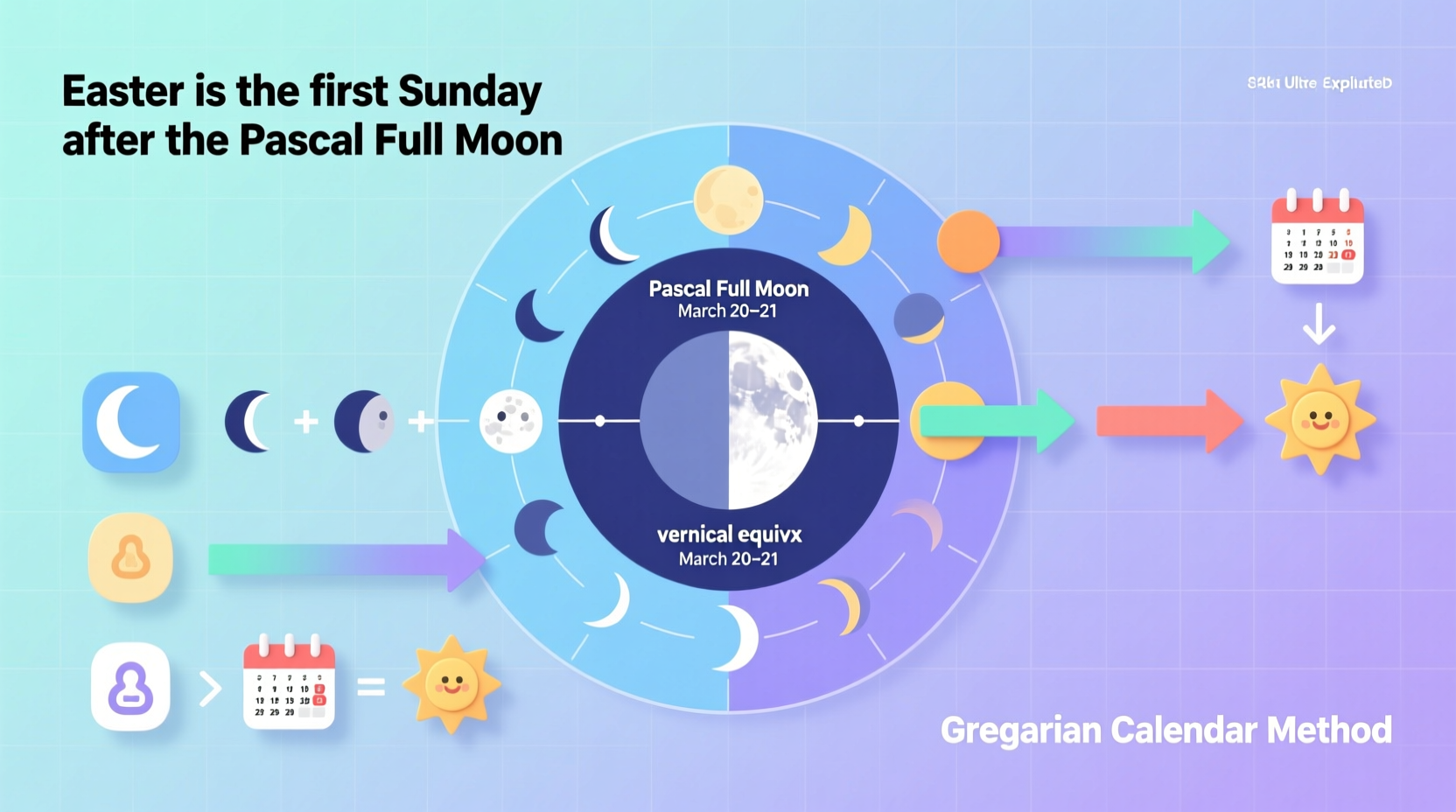
The date of Easter is determined by a unique combination of astronomical observation and ecclesiastical tradition: we know when Easter is because it falls on the first Sunday after the first full moon following the spring equinox in the Northern Hemisphere. This method, rooted in early Christian councils and tied to the lunar calendar, ensures that Easter always occurs between March 22 and April 25. Understanding how do we know when Easter is reveals a fascinating blend of science, religion, and history that continues to guide both Western and Eastern Christian churches—albeit with slight variations in practice.
Why Does the Date of Easter Change Every Year?
Unlike fixed holidays such as Christmas (December 25), Easter is a moveable feast. Its date shifts annually because it is based on the lunar calendar rather than the Gregorian solar calendar. The primary reason for this variability lies in the biblical account of Jesus Christ’s crucifixion and resurrection, which occurred after the Jewish festival of Passover. Since Passover is itself determined by the lunar cycle—beginning on the 15th day of the Hebrew month of Nisan, which corresponds to a full moon—early Christians sought to align Easter with this timing.
In 325 CE, the First Council of Nicaea established a uniform method for calculating Easter to ensure consistency across the Christian world. It declared that Easter would be celebrated on the first Sunday after the Paschal Full Moon—the ecclesiastical approximation of the first full moon on or after March 21, the date fixed as the vernal (spring) equinox regardless of actual astronomical data. This rule remains the foundation for determining when Easter is in most Western Christian denominations today.
The Mathematical and Astronomical Basis of Easter's Date
To understand how do we know when Easter is, one must grasp the interplay between solar and lunar cycles. The Gregorian calendar, introduced in 1582 by Pope Gregory XIII, refined earlier calculations to better align with Earth's orbit around the Sun. However, the moon's phases still require a separate tracking system known as the Metonic cycle—a 19-year period after which the phases of the moon recur on the same dates.
Using this cycle, the Church calculates what is called the “ecclesiastical full moon” for each year. These dates are precomputed and listed in tables known as the Computus. Once the ecclesiastical full moon following March 21 is identified, Easter is set for the following Sunday. For example:
| Year | Spring Equinox | Full Moon | Easter Sunday (Western) |
|---|---|---|---|
| 2024 | March 20 | March 25 | March 31 |
| 2025 | March 20 | April 12 | April 20 |
| 2026 | March 20 | April 1 | April 5 |
| 2027 | March 20 | March 21 | March 28 |
Note that even if the astronomical full moon occurs on a Sunday, Easter is delayed until the next Sunday. This rule prevents Easter from coinciding with the Jewish Passover, maintaining theological distinction.
Differences Between Western and Eastern Easter Dates
While many countries observe Easter on the same day, there are notable differences between Western (Roman Catholic and Protestant) and Eastern Orthodox celebrations. The divergence arises not from different interpretations of scripture but from the use of different calendars.
The Western Church uses the Gregorian calendar, while most Orthodox Churches continue to follow the older Julian calendar for liturgical purposes. Because the Julian calendar is currently 13 days behind the Gregorian, the spring equinox is observed on April 3 instead of March 21, and the ecclesiastical full moons fall later. As a result, Eastern Orthodox Easter often occurs one to five weeks after Western Easter.
For instance, in 2025, Western Easter will be on April 20, but Orthodox Easter will fall on April 20 only if the lunar calculations align—which they do in this case—but more commonly, Orthodox Easter lands on April 27 or May 4 depending on the year. This discrepancy leads to situations where families with mixed religious backgrounds may celebrate twice—or choose one date over another.
Which Countries Celebrate Easter and How Is the Date Recognized?
How do we know when Easter is also depends on cultural and national context. Over 100 countries officially recognize Easter as a public holiday, including the United States, Canada, Australia, the United Kingdom, Germany, France, Brazil, and South Africa. In predominantly Christian nations, Easter Monday is often a public holiday, extending the festive period.
However, in non-Christian-majority countries like Japan, China, or India, Easter is generally not a public holiday, though some Christian communities observe it privately. In places like the Philippines and Mexico, Easter is marked with elaborate processions and religious reenactments. Meanwhile, secular traditions such as the Easter Bunny and egg hunts have spread globally through media and commercial influence, even in regions without strong Christian roots.
Travelers planning around Easter should verify local observances, as school breaks, retail hours, and transportation schedules can vary significantly. For example, in Australia, major retailers remain open on Easter Sunday but close on Good Friday and Easter Monday. In contrast, in Italy, nearly all businesses shut down during Holy Week.
Common Misconceptions About How We Know When Easter Is
Despite the clear rules, several myths persist about how do we know when Easter is:
- Myth: Easter is always the second Sunday in April.
Fact: While it often falls in April, Easter can occur as early as March 22 (last in 1818, next in 2285). - Myth: The date is decided by the Vatican each year.
Fact: The date is computed mathematically using centuries-old formulas; no annual decision is required. - Myth: All Christians celebrate Easter on the same day.
Fact: Due to calendar differences, Orthodox Christians frequently celebrate on a different Sunday. - Myth: The astronomical full moon determines Easter.
Fact: The Church uses an approximate “ecclesiastical” full moon, not real-time astronomy.
How to Prepare for Easter: Practical Tips Based on the Calendar
Knowing how do we know when Easter is allows individuals and organizations to plan effectively. Here are actionable steps:
- Check the Date Early: Easter dates are predictable decades in advance. Use online calculators or ecclesiastical tables to confirm future dates.
- Plan Religious Observances: Lent begins 40 days before Easter (not counting Sundays). Mark Ash Wednesday accordingly (e.g., February 14, 2024).
- Schedule Travel: Many people travel for Easter weekend. Book accommodations at least two months ahead, especially in popular destinations like Rome or Jerusalem.
- Prepare Retail Operations: Businesses selling seasonal goods (chocolate, flowers, clothing) should stock up six to eight weeks prior.
- Coordinate Family Events: If your family includes members of different denominations, discuss whether to celebrate on Western, Orthodox, or both dates.
Will Easter Ever Be Fixed on a Permanent Date?
In recent years, there has been growing discussion about establishing a fixed date for Easter—such as the second Sunday in April—to simplify scheduling for schools, governments, and international events. Proponents argue that a fixed date would reduce confusion and economic disruption caused by the shifting holiday.
However, resistance remains strong among religious leaders who view the current method as theologically significant. Any change would require agreement among Roman Catholics, Protestants, and Orthodox Churches—a complex ecumenical challenge. As of now, no official move toward a fixed Easter has succeeded, meaning how do we know when Easter is will continue to rely on lunar-based computation for the foreseeable future.
Verifying Easter Dates: Reliable Sources and Tools
To ensure accuracy in personal or professional planning, consult authoritative sources:
- TimeandDate.com: Provides global holiday calendars, sunrise/sunset data, and lunar phase tracking.
- The U.S. Naval Observatory: Offers precise astronomical data used in ecclesiastical computations.
- Vatican Publications: Issues liturgical calendars for the Roman Catholic Church.
- Orthodox Patriarchates: Websites like the Ecumenical Patriarchate of Constantinople publish Orthodox Easter dates annually.
- Government Holiday Lists: National portals (e.g., USA.gov, UK.gov) list public holidays, including Easter Monday where applicable.
Always cross-reference multiple sources if planning international events or religious services.
Conclusion: The Enduring Logic Behind Easter’s Changing Date
How do we know when Easter is? Through a carefully preserved system that links faith, nature, and mathematics. From the Council of Nicaea to modern-day calendars, the determination of Easter reflects humanity’s long-standing effort to harmonize time with spiritual meaning. Whether you're observing the solemnity of Good Friday or enjoying an Easter egg hunt, understanding the logic behind the date deepens appreciation for this central Christian celebration—and explains why it moves each year.
Frequently Asked Questions
When is Easter in 2026?
Easter Sunday in 2026 falls on April 5 for Western Christianity. Orthodox Easter will be on April 12.
Why isn’t Easter on the same date every year?
Easter follows the lunar cycle and is set relative to the spring equinox, so its date changes annually within a range from March 22 to April 25.
Do all countries celebrate Easter on the same day?
No. Western Christian countries typically observe Easter on the same Sunday, but Eastern Orthodox countries often celebrate one to five weeks later due to calendar differences.
What is the earliest and latest possible date for Easter?
The earliest Easter can occur is March 22; the latest is April 25. These extremes are rare due to the alignment requirements of the full moon and Sunday.
Can the date of Easter be changed permanently?
There have been proposals to fix Easter on a specific Sunday in April, but no consensus exists among Christian denominations, so the traditional calculation remains in place.




 浙公网安备
33010002000092号
 浙B2-20120091-4