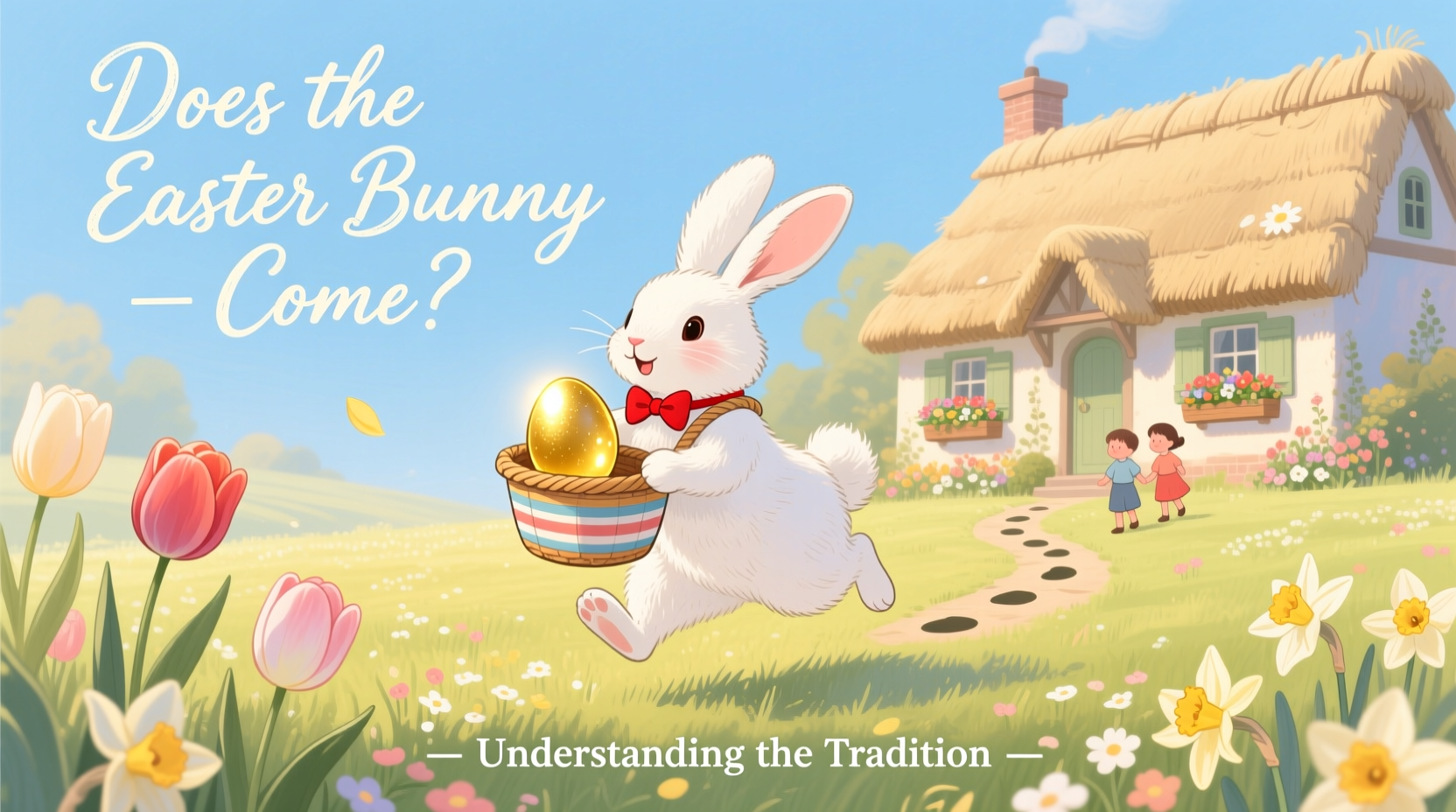
The Easter Bunny does come — at least in the hearts and homes of millions of children around the world each spring. Rooted in centuries-old customs and intertwined with both pagan symbolism and Christian traditions, the idea that the Easter Bunny visits to deliver baskets and hide eggs is a central part of modern Easter celebrations. This beloved figure, often depicted as a gentle rabbit carrying colored eggs, candy, and gifts, plays a symbolic role in marking renewal and joy during the Easter season. Families who observe this custom typically anticipate the Easter Bunny’s arrival on the night before Easter Sunday, much like children await Santa Claus at Christmas.
What Is the Easter Bunny and Why Does It 'Come'?
The concept of the Easter Bunny ‘coming’ refers to a festive tradition where an anthropomorphized rabbit delivers treats and hides decorated eggs for children to find on Easter morning. While not a religious figure, the Easter Bunny has become one of the most recognizable symbols of Easter in Western cultures. The act of the Easter Bunny visiting homes usually occurs overnight between Saturday and Easter Sunday. Parents often use this narrative to engage children in seasonal activities such as egg hunts, crafting nests from grass or paper, and preparing baskets filled with chocolates, toys, and small gifts.
This tradition satisfies a deep-rooted human desire to mark seasonal change with ritual and storytelling. The Easter Bunny's visit symbolizes fertility, new life, and hope — themes closely aligned with the arrival of spring and the religious message of resurrection in Christianity. Although the Easter Bunny doesn’t physically exist, the emotional and cultural impact of this character is very real for many families celebrating Easter.
Historical Origins of the Easter Bunny
To understand why people say the Easter Bunny comes, it’s essential to explore its historical roots. The earliest references to an egg-bringing hare originate in 16th-century Germany. Germanic folklore told of a hare called Osterhase (or Oschter Haws) that would lay eggs and leave them in gardens for well-behaved children. Immigrants from Germany brought this tradition to Pennsylvania in the 1700s, planting the seeds for what would become a widespread American custom.
The choice of a hare or rabbit as a symbol stems from ancient associations between rabbits and fertility due to their high reproduction rates. In pre-Christian European traditions, the hare was linked to Eostre, a Germanic goddess of spring and dawn — a connection noted by scholars like Jacob Grimm. Over time, these pagan symbols merged with Christian observances of Easter, creating a hybrid celebration that honors both spiritual rebirth and natural renewal.
How the Easter Bunny 'Visits' Around the World
While the core idea of the Easter Bunny coming remains consistent across countries, local customs vary significantly:
- United States & Canada: Children create nests using hats, baskets, or even outdoor spaces lined with grass. On Easter Eve, parents place chocolate eggs, jellybeans, and plush bunnies while children sleep. Many communities host public egg hunts organized by churches, schools, or civic groups.
- Australia: Due to environmental concerns about invasive rabbits, there's growing support for the 'Easter Bilby' — a native marsupial that serves as an alternative symbol. Still, the Easter Bunny remains popular in mainstream media and retail.
- Germany: As the birthplace of the tradition, Germany maintains strong ties to the Osterhase. Families decorate trees with colorful eggs (Osterbaum), and children search for eggs hidden in yards or parks.
- United Kingdom: Known more for chocolate eggs than a visiting bunny, though the character appears in advertising and children's stories. Some families adopt the U.S.-style basket delivery system.
- Scandinavia: In Sweden and Finland, Easter includes witches rather than bunnies — children dress up as 'Easter witches' and go door-to-door for candy, blending Finnish and Swedish folk beliefs.
| Country | Does the Easter Bunny Come? | Local Variations |
|---|---|---|
| USA | Yes | Egg hunts, baskets, family rituals |
| Canada | Similar to U.S., regional events | |
| Germany | Yes | Osterhase, Osterbaum, garden hunts |
| Australia | Partially | Rise of Easter Bilby; bunny still common |
| UK | Sometimes | More focus on chocolate eggs |
| Sweden | No | Easter witches instead of bunnies |
When Does the Easter Bunny Come?
The Easter Bunny traditionally comes on the evening before Easter Sunday. Since Easter falls on the first Sunday after the first full moon following the spring equinox (March 21), its date varies annually — typically between March 22 and April 25. For example:
- 2024: March 31
- 2025: April 20
- 2026: April 5
Therefore, the Easter Bunny arrives on Saturday night leading into those dates. Many families mark this event by leaving out carrots and water for the bunny, similar to leaving milk and cookies for Santa Claus. By morning, the food is gone (eaten by parents!), and eggs are scattered throughout the house or yard.
How to Prepare for the Easter Bunny’s Arrival
Families can enhance the magic of the Easter Bunny coming through thoughtful preparation. Here are practical steps:
- Create a Nest: Use a basket, hat, or cardboard box lined with artificial grass or shredded paper. Let children personalize it with drawings or stickers.
- Choose Treats Wisely: Include a mix of chocolates, hard-boiled eggs, small toys, books, or coins. Consider allergies and dietary restrictions when selecting candies.
- Hide Eggs Strategically: Balance difficulty levels so younger kids aren’t frustrated. Use color-coded baskets to assign different hunting zones.
- Tell the Story: Explain the tradition’s meaning — renewal, kindness, and family bonding — without insisting on literal belief.
- Involve Extended Family: Grandparents or relatives can send Easter cards or care packages to reinforce the sense of connection.
Some families also write letters to the Easter Bunny, detailing good behavior or wishes, which adds interactivity and literacy development for young children.
Common Misconceptions About the Easter Bunny
Despite its popularity, several myths surround the Easter Bunny:
- Misconception 1: The Easter Bunny is a Christian symbol. Reality: It originated in Germanic paganism and was later incorporated into secular Easter practices.
- Misconception 2: All children believe the Easter Bunny is real. Reality: Most children realize it’s a family tradition by age 7–9, but continue participating for fun.
- Misconception 3: The Easter Bunny brings presents to all kids. Reality: Participation depends on family preference, culture, and religious background.
- Misconception 4: Egg hunts are ancient traditions. Reality: Organized egg hunts became popular only in the 19th century, especially after President Rutherford B. Hayes opened the White House lawn for one in 1878.
Cultural Sensitivity and Modern Adaptations
In recent years, educators and parents have reevaluated the Easter Bunny tradition in multicultural settings. Because the story centers on a mythical character delivering goods, some argue it may unintentionally promote consumerism or confuse children from non-Western backgrounds. Others appreciate its inclusivity — unlike Santa Claus, whose association with Christmas may exclude non-Christians, the Easter Bunny is often treated as a lighthearted seasonal figure detached from theology.
Modern adaptations include eco-friendly egg hunts using reusable plastic eggs, charity-based hunts that donate proceeds to food banks, and sensory-friendly events for children with autism. Libraries and community centers increasingly host inclusive celebrations that honor diversity while preserving festive spirit.
Should You Tell Your Child the Truth About the Easter Bunny?
There’s no universal answer. Psychologists suggest that imaginative play supports cognitive and emotional development. Pretending the Easter Bunny comes encourages creativity, anticipation, and family bonding. However, when children begin questioning the reality of the bunny, honesty delivered gently is best.
Instead of abruptly ending the myth, parents might say: “The Easter Bunny is a special way families celebrate spring. We help the bunny by hiding eggs because spreading joy is what matters most.” This preserves the tradition’s warmth while acknowledging its symbolic nature.
Final Thoughts: The Enduring Magic of the Easter Bunny
So, does the Easter Bunny come? In the literal sense, no — but in the emotional, cultural, and familial context, absolutely. The tradition transcends mere fantasy; it represents continuity, shared joy, and the passing down of meaningful rituals across generations. Whether through a backyard egg hunt, a handmade basket, or a quiet moment of storytelling, the arrival of the Easter Bunny continues to bring wonder to countless households every year.
Frequently Asked Questions
Does the Easter Bunny come every year?
Yes, in families who observe the tradition, the Easter Bunny 'comes' annually on the eve of Easter Sunday.
What time does the Easter Bunny arrive?
Typically, the Easter Bunny is said to visit late at night on Holy Saturday, after children go to bed.
Do all countries celebrate the Easter Bunny?
No. While common in North America and parts of Europe, other regions have different symbols, such as Easter bells in France or witches in Scandinavia.
Can I make my own Easter Bunny tradition?
Absolutely. Many families customize the experience with themed baskets, scavenger hunts, or charitable acts in the bunny’s name.
Is the Easter Bunny related to Jesus?
No direct link exists. The Easter Bunny is a cultural symbol of springtime and renewal, not a religious figure tied to the resurrection of Jesus Christ.





 浙公网安备
33010002000092号
浙公网安备
33010002000092号 浙B2-20120091-4