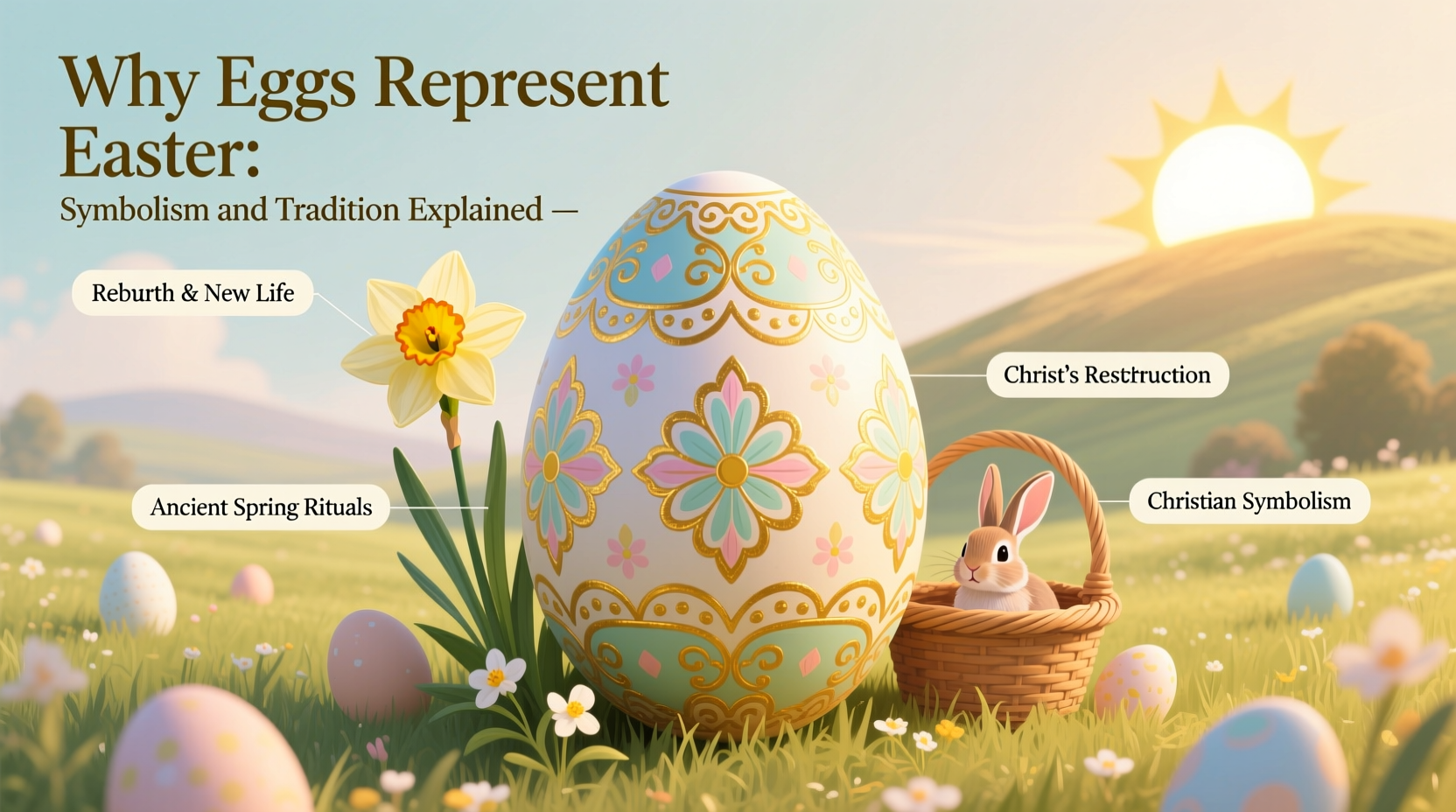
Eggs represent Easter as a powerful symbol of new life, resurrection, and the arrival of spring, deeply rooted in both pagan traditions and Christian beliefs. The practice of associating eggs with Easter stems from ancient customs celebrating renewal and fertility, later adopted by the Christian church to symbolize Jesus Christ's resurrection from the tomb—just as a chick hatches from an egg, so too did Christ emerge from the grave. This blending of pre-Christian spring rituals with Christian theology created one of the most enduring symbols of the holiday: the Easter egg. Understanding why eggs represent Easter reveals a rich tapestry of cultural evolution, religious adaptation, and seasonal celebration that continues to shape how millions observe the holiday today.
Historical Origins of Easter Eggs
The tradition of using eggs during springtime festivities predates Christianity by thousands of years. Ancient civilizations across Europe, the Middle East, and Asia celebrated the vernal equinox as a time of rebirth and fertility. For these early cultures, the egg was a universal emblem of creation and new beginnings. In Persian culture, for example, decorated eggs were exchanged during Nowruz, the Persian New Year, which coincides with the first day of spring. Similarly, the ancient Egyptians and Romans used eggs in spring rituals to honor deities associated with life and regeneration.
When Christianity spread throughout Europe, it often incorporated existing pagan customs into its liturgical calendar to ease conversion. Since Easter celebrates the resurrection of Jesus—a triumph over death and the promise of eternal life—the symbolism of the egg aligned perfectly with this message. By the early medieval period, Christians in Eastern Europe began coloring eggs red to represent the blood of Christ shed on the cross, while others saw the hard shell as symbolic of the sealed tomb and the emerging chick as Christ rising from the dead.
Christian Symbolism and Religious Practices
Within Christian theology, the egg became more than just a folk symbol—it evolved into a meaningful part of Lenten and Easter observances. During Lent, many Christians historically abstained from eating meat and animal products, including eggs. Hens, however, continued to lay eggs, leading families to collect and preserve them throughout the 40-day fast. These stored eggs were then blessed, decorated, and consumed on Easter Sunday as part of the feast breaking the fast.
This practice gave rise to various regional customs. In Orthodox Christian communities, particularly in Greece, Ukraine, and Russia, elaborately painted eggs known as pysanky became central to Easter celebrations. These intricate designs often included religious motifs such as crosses, doves, and floral patterns representing paradise. The act of giving and receiving these eggs reinforced communal bonds and spiritual renewal.
The Catholic Church also embraced the egg as a legitimate symbol of Easter joy. Pope Paul V (1605–1621) is said to have blessed eggs as part of a prayer invoking protection and new life, further legitimizing their role in Christian worship. Over time, the blessing of Easter eggs became a formal rite in some parishes, especially in Central and Eastern Europe.
Pagan Roots and Spring Festivals
To fully understand why eggs represent Easter, one must acknowledge the influence of pre-Christian spring festivals. One of the most notable was the Germanic festival of Eostre, a goddess of dawn and fertility whose name may be the origin of the word 'Easter.' According to the Venerable Bede, an 8th-century English monk, Anglo-Saxons held feasts in Eostre’s honor during the month of April, using symbols of fertility such as hares and eggs.
While historical evidence about Eostre remains limited, scholars agree that spring festivals across Northern Europe commonly featured eggs as offerings or decorative items. These traditions merged seamlessly with Christian practices after the region's conversion, allowing the egg to retain its symbolic power while acquiring new theological meaning.
Evolution of Easter Egg Customs
Over the centuries, the ways people celebrate with Easter eggs have diversified significantly. What began as simple dyed chicken eggs has transformed into a global phenomenon involving chocolate eggs, plastic fillings, egg hunts, and elaborate artistry.
- Egg Dyeing: One of the oldest and most widespread customs involves boiling eggs and coloring them using natural dyes like onion skins, beet juice, or commercial food coloring. In Slavic countries, wax-resist methods produce stunningly detailed pysanky.
- Egg Rolling: A traditional game played in several countries, including the United States (notably at the White House lawn), where children roll hard-boiled eggs down a slope without cracking them—a metaphor for the stone being rolled away from Christ’s tomb.
- Egg Hunts: Popularized in the 19th century, especially in Protestant regions, egg hunts engage children in searching for hidden eggs, often made of chocolate or plastic filled with candy. This playful activity reinforces the theme of discovery and joy central to Easter.
- Chocolate Eggs: Introduced in 19th-century Europe by confectioners like J.S. Fry & Son and Cadbury, chocolate eggs revolutionized Easter gifting. Today, they dominate retail sales and are marketed globally as sweet symbols of the season.
Cultural Variations Around the World
The significance and presentation of Easter eggs vary widely across cultures, reflecting local history, religion, and cuisine.
| Country | Tradition | Unique Feature |
|---|---|---|
| Ukraine | Pysanky egg decorating | Intricate wax-resist designs with symbolic colors and patterns |
| Greece | Red-dyed eggs for Tsoureki bread | Cracking eggs during family meals to symbolize Christ’s resurrection |
| Germany | Easter trees and egg hanging | Bare branches decorated with colorful eggs in gardens |
| United States | Easter egg hunts and bunnies | White House Easter Egg Roll since 1878 |
| France | Bells fly to Rome; chocolate eggs appear | Church bells are silent until Easter Sunday, then 'return' with eggs |
Modern Interpretations and Commercialization
In contemporary society, the symbolism of Easter eggs has expanded beyond religious contexts. While many still observe the spiritual meaning behind the tradition, others embrace it as a secular family holiday centered on fun, gift-giving, and seasonal treats.
The commercialization of Easter has led to a surge in themed merchandise—from stuffed bunnies to jelly beans—and massive production of chocolate eggs by major brands. Retailers report billions in annual sales during the Easter season, making it second only to Halloween in candy consumption in the U.S.
Despite this shift, efforts to preserve traditional practices continue. Educational programs teach children how to make natural dyes, museums host exhibitions on pysanky art, and churches incorporate egg blessings into their services. These initiatives help maintain the deeper meaning behind why eggs represent Easter, even amid consumer trends.
Common Misconceptions About Easter Eggs
Several myths surround the origins and meanings of Easter eggs:
- Misconception: Easter eggs originated solely with Christianity.
Reality: Their roots lie in pre-Christian spring festivals; Christianity adapted the symbol. - Misconception: All Easter eggs are meant to be eaten.
Reality: Many decorative eggs, especially blown-out shells or wooden replicas, are purely ornamental. - Misconception: The Easter Bunny brings eggs because rabbits lay eggs.
Reality: This is a humorous confusion; the bunny and egg are separate fertility symbols that merged over time.
How to Incorporate Meaningful Easter Egg Traditions Today
Families looking to deepen their understanding of why eggs represent Easter can adopt meaningful traditions that blend education, faith, and creativity:
- Host a DIY Egg-Dyeing Party: Use natural ingredients like turmeric, spinach, and red cabbage to teach kids about sustainable practices and historical techniques.
- Attend a Church Blessing: If available, participate in a service where eggs are blessed, reinforcing their sacred significance.
- Create an Easter Garden: Combine eggs, crosses, and flowers to depict the resurrection story visually.
- Support Artisan Craftsmen: Purchase hand-painted pysanky or wooden eggs from Eastern European artisans to preserve cultural heritage.
- Discuss the Symbolism: Talk with children about what the egg represents—not just as a treat, but as a sign of hope, growth, and new beginnings.
Conclusion: Why Eggs Remain Central to Easter
The reason eggs represent Easter lies in their profound ability to convey complex ideas through simple imagery. They encapsulate themes of life emerging from darkness, renewal after sacrifice, and the cyclical nature of seasons—all of which resonate across religious and cultural boundaries. Whether displayed in a museum, hidden in a backyard, or shared at a family table, the Easter egg endures not merely as a custom, but as a timeless symbol of hope.
Frequently Asked Questions
Why do we color Easter eggs?
Coloring Easter eggs dates back to early Christian practices of dyeing eggs red to symbolize the blood of Christ. Over time, vibrant colors came to represent the joy of resurrection and the vibrancy of spring.
Are Easter eggs a Christian invention?
No, the use of eggs in spring celebrations predates Christianity. However, Christians adopted and reinterpreted the symbol to align with the resurrection narrative.
What does the Easter egg hunt symbolize?
The Easter egg hunt symbolizes the discovery of the empty tomb by the women who visited Jesus’ grave. It turns the biblical story into an interactive experience for children.
Can vegetarians participate in Easter egg traditions?
Yes. Many now use plant-based dyes, vegan chocolate eggs, or craft eggs from paper or wood, allowing inclusive participation regardless of dietary choices.
How can I explain the meaning of Easter eggs to my child?
You can say: 'Just like a baby bird comes out of an egg, Jesus came out of the tomb alive. That’s why we use eggs—to remember that He rose and brought new life.'





 浙公网安备
33010002000092号
浙公网安备
33010002000092号 浙B2-20120091-4