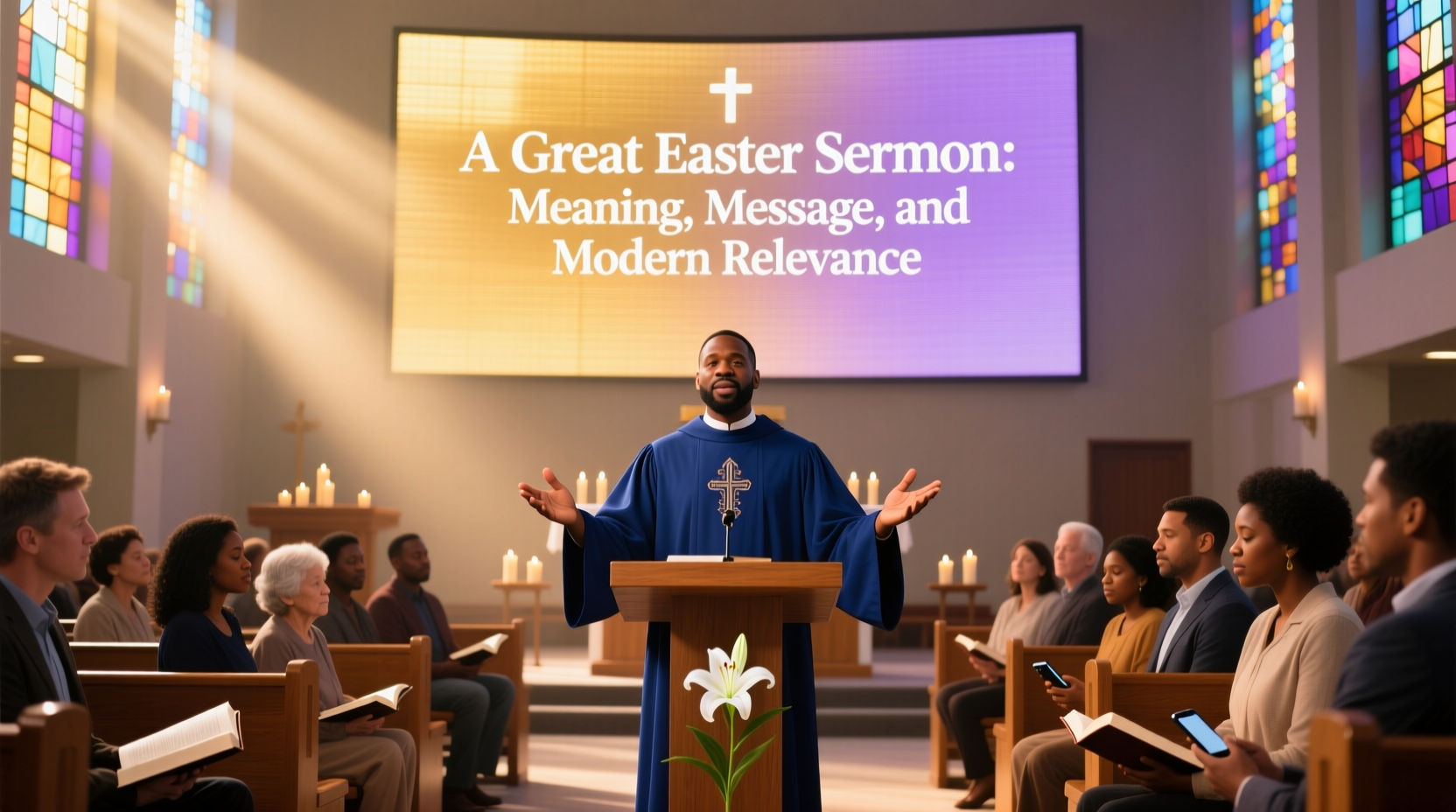
A great Easter sermon captures the heart of the Christian faith by proclaiming the resurrection of Jesus Christ as the ultimate victory over sin and death. Rooted in Scripture and delivered with conviction, such a message not only celebrates the empty tomb but also invites believers into a deeper experience of hope, transformation, and renewed purpose. A powerful Easter Sunday homily draws from the Gospels—particularly Matthew 28, Mark 16, Luke 24, and John 20—where the risen Christ appears to His disciples, confirming that He is alive and active in the world today. This central truth forms the foundation of a compelling Easter message that resonates across generations.
The Biblical Foundation of a Great Easter Sermon
The core of any meaningful Easter sermon lies in the scriptural account of Christ’s resurrection. The four Gospels present slightly different details, yet all affirm the same essential fact: on the third day after His crucifixion, Jesus rose from the dead. In Matthew 28:5–6, an angel declares to the women at the tomb, “He is not here; He has risen, just as He said.” This moment marks the turning point of human history—the triumph of life over death, light over darkness.
A great Easter sermon does more than recount this event; it connects it to the broader narrative of redemption. Preachers often trace the theme of resurrection back to Old Testament prophecies, such as Isaiah 53, which foretells the suffering servant who will bear the sins of many, and Hosea 6:2: “After two days he will revive us; on the third day he will restore us, that we may live in his presence.” These passages provide theological depth and continuity, showing that the resurrection was not an afterthought but part of God’s eternal plan.
Key Themes in a Powerful Easter Message
While each pastor brings their own voice and context to the pulpit, certain themes consistently emerge in a great Easter sermon. These include:
- Victory Over Death: The resurrection proves that death does not have the final word. Christ’s conquest of the grave offers believers assurance of eternal life (1 Corinthians 15:55–57).
- Hope and New Beginnings: Just as the stone was rolled away, so too can burdens be lifted. The Easter message emphasizes spiritual renewal and second chances.
- Transformation Through Faith: Encounters with the risen Christ changed the lives of Mary Magdalene, Peter, Thomas, and others. A strong sermon challenges listeners to encounter Him personally.
- The Cost and Call of Discipleship: Following the resurrected Lord means living differently—loving boldly, forgiving freely, and serving selflessly.
- Global Impact of the Resurrection: From Jerusalem to modern cities, the risen Christ continues to transform individuals, families, and nations.
These themes are not abstract ideas but lived realities for millions. A skilled preacher illustrates them through storytelling, personal testimony, and cultural relevance, making ancient truths accessible to contemporary audiences.
Historical Development of Easter Preaching
Easter sermons have been central to Christian worship since the early church. In the second century, Irenaeus of Lyons emphasized the bodily resurrection as essential to salvation. By the fourth century, bishops like John Chrysostom delivered powerful homilies during Easter Vigil services. His famous Easter Homily, still read in Eastern Orthodox churches today, proclaims: “Let no one grieve at their poverty, for the universal kingdom has been revealed.”
During the Reformation, Martin Luther stressed the personal assurance found in Christ’s resurrection, while John Wesley preached Easter messages focused on holiness and sanctification. In the 20th century, preachers like Billy Graham used mass evangelism platforms to deliver simple, gospel-centered Easter sermons to millions via radio and television.
Today, a great Easter sermon blends historical fidelity with cultural engagement. Whether preached in a cathedral, megachurch, or house gathering, it remains rooted in Scripture while addressing current struggles—loneliness, anxiety, injustice, and doubt.
Elements of an Effective Easter Sermon Structure
To maximize impact, pastors often follow a clear structure when crafting a great Easter sermon. Below is a common framework:
| Section | Purpose | Example Content |
|---|---|---|
| Introduction | Grab attention, state the main idea | Share a personal story about loss and unexpected joy |
| Scripture Reading | Establish biblical authority | Read John 20:1–18 aloud |
| Exposition | Explain the text and context | Discuss why Mary didn’t recognize Jesus at first |
| Application | Connect truth to daily life | Invite people to listen for Christ calling their name |
| Conclusion & Invitation | Call for response | Offer prayer for new believers or rededications |
This structure ensures clarity and emotional resonance, guiding listeners from intellectual understanding to spiritual response.
Common Mistakes to Avoid in Easter Preaching
Even experienced preachers can fall into pitfalls when preparing a great Easter sermon. Some common errors include:
- Overemphasizing Tradition Over Truth: While Easter eggs and bunnies are culturally familiar, focusing on them distracts from the resurrection’s centrality.
- Using Clichés Without Depth: Phrases like “He is risen indeed” should be explained, not merely repeated.
- Neglecting the Cross: The resurrection gains power because of the cross. A balanced sermon acknowledges both sacrifice and victory.
- Ignoring Doubt: Many in the congregation wrestle with uncertainty. Addressing Thomas’ skepticism (John 20:24–29) validates honest questions.
- Failing to Call for Response: Proclamation must lead to invitation—whether to faith, repentance, or renewed commitment.
Avoiding these missteps helps ensure that the sermon is both faithful and impactful.
Cultural and Regional Variations in Easter Messages
A great Easter sermon may vary significantly depending on cultural context. In Latin America, sermons often emphasize liberation and social justice, reflecting Christ’s power to break chains. In Africa, preachers highlight community restoration and ancestral hope fulfilled in Christ. In Western Europe, where secularism is growing, sermons may focus on apologetics—defending the historicity of the resurrection.
In North America, large churches often coordinate multi-campus broadcasts, using video technology to unify the message while allowing local pastors to add personalized elements. Meanwhile, rural congregations may deliver more intimate, narrative-driven sermons drawing from local experiences.
Despite these differences, the core message remains unchanged: Christ has died, Christ is risen, Christ will come again.
How to Prepare for Delivering or Receiving a Great Easter Sermon
For pastors, preparation begins weeks in advance. Steps include:
- Prayerful Study: Spend time meditating on the resurrection accounts and related epistles (e.g., 1 Corinthians 15).
- Contextual Research: Understand the congregation’s needs—grief, celebration, skepticism?
- Illustration Gathering: Find stories, analogies, or current events that illustrate resurrection power.
- Rehearsal: Practice delivery to ensure clarity, pacing, and emotional authenticity.
For listeners, engaging deeply with the sermon involves:
- Arriving early to center the heart in worship.
- Taking notes on key points and personal applications.
- Discussing the message afterward with family or small groups.
- Reflecting on how the resurrection impacts daily decisions.
The Lasting Impact of a Great Easter Sermon
When done well, a great Easter sermon does not end when the benediction is pronounced. Its influence extends into homes, workplaces, and communities. It can reignite dormant faith, inspire acts of kindness, and strengthen marriages. Some hearers decide to be baptized; others commit to sharing their faith. Churches report increased attendance and giving in the weeks following Easter, suggesting that the message lingers beyond the service.
Moreover, recorded sermons shared online continue to reach global audiences long after Resurrection Sunday. Platforms like YouTube, podcast apps, and church websites amplify the reach of a single sermon, turning a local event into a worldwide witness.
Frequently Asked Questions About a Great Easter Sermon
What makes an Easter sermon effective?
An effective Easter sermon is biblically grounded, emotionally engaging, culturally relevant, and calls for a response. It balances explanation with application and leaves listeners with a clearer vision of the risen Christ.
Should children be included in Easter preaching?
Yes. Many churches offer child-friendly versions or special segments during the service. Using simple language and visual aids helps younger audiences grasp the wonder of the resurrection.
Can a layperson give a great Easter sermon?
Absolutely. With prayer, preparation, and reliance on Scripture, anyone called to speak can deliver a powerful message. Humility and sincerity often make sermons more relatable.
Is it appropriate to mention other religions during an Easter sermon?
If done respectfully and with evangelistic intent, referencing other beliefs can help clarify Christianity’s unique claims about resurrection and salvation. However, the focus should remain on Christ’s work, not comparative religion debates.
How long should an Easter sermon be?
Most effective Easter sermons last between 20 and 35 minutes. This allows enough time for depth without overwhelming attention spans, especially with larger, diverse congregations present.




 浙公网安备
33010002000092号
 浙B2-20120091-4