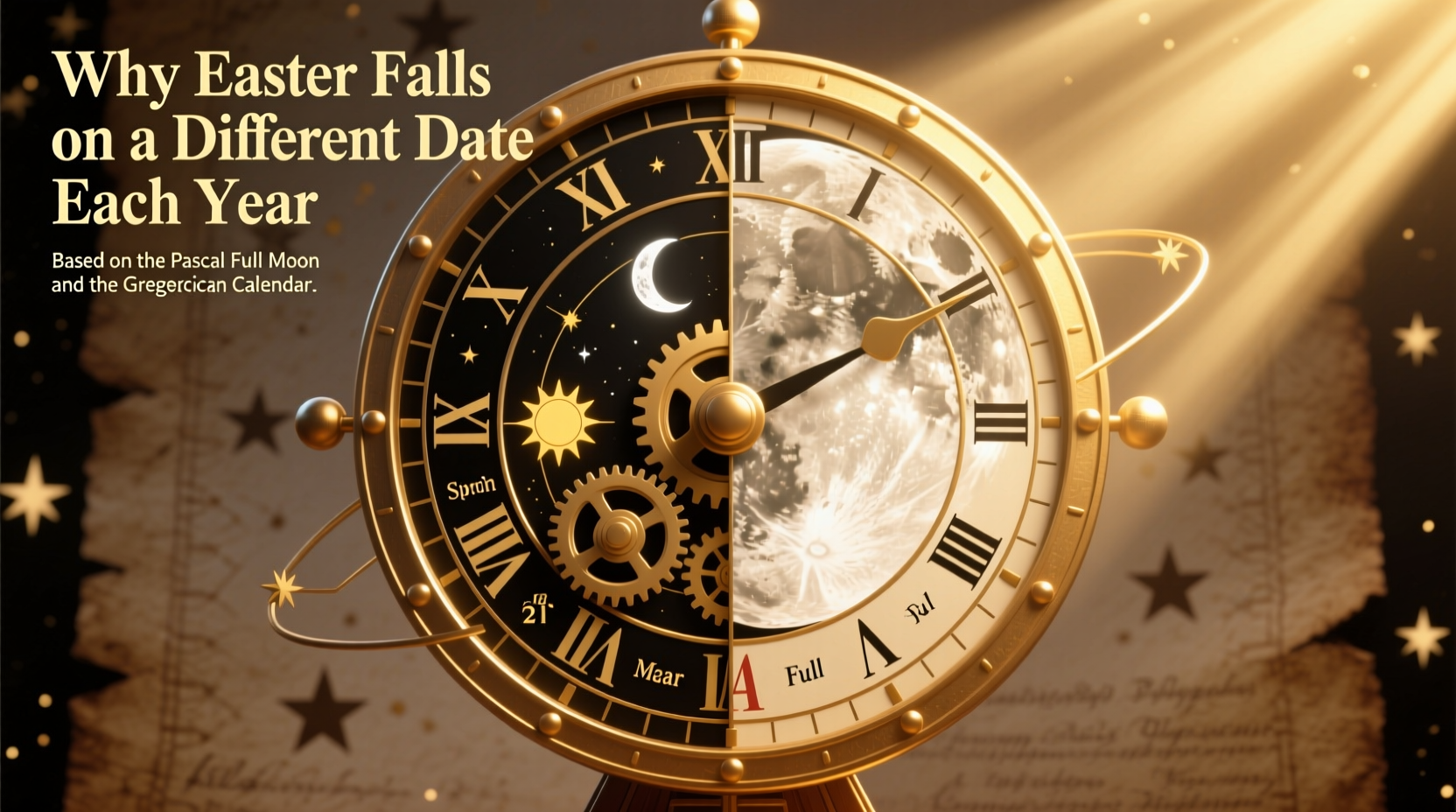
Easter falls on a different Sunday each year because its date is determined by a unique combination of solar and lunar calendars, specifically tied to the first Sunday after the first full moon following the spring equinox. This system, rooted in early Christian tradition, means that why Easter is different each year ultimately traces back to efforts to align the holiday with both astronomical events and religious observances. As a result, Easter can occur as early as March 22 or as late as April 25 in the Gregorian calendar, making it a moveable feast unlike fixed holidays such as Christmas.
The Historical Origins of Easter’s Changing Date
The reason Easter shifts annually lies in centuries-old decisions made by the early Christian Church. After Jesus Christ's resurrection, which Christians believe occurred three days after his crucifixion during the Jewish Passover, early followers sought to commemorate this event annually. However, disagreements arose over whether Easter should always fall on a Sunday (the day of resurrection) or be tied directly to the date of Passover, which follows the Hebrew lunar calendar.
This debate culminated at the First Council of Nicaea in 325 CE, where church leaders established a unified method for calculating Easter. They decided that Easter would be celebrated on the first Sunday after the Paschal Full Moon—the ecclesiastical approximation of the first full moon on or after the vernal (spring) equinox, set fixedly on March 21 regardless of actual astronomical observations. This compromise allowed Christianity to maintain independence from the Jewish calendar while still preserving the seasonal and lunar connections central to the timing of Passover.
How the Calculation Works: A Step-by-Step Breakdown
To understand why Easter is different each year, it helps to break down the calculation process used by most Western Christian churches (those following the Gregorian calendar):
- Vernal Equinox: Fixed at March 21 in church tradition, even if the astronomical equinox occurs a day earlier or later.
- Full Moon Determination: The 'ecclesiastical' full moon is not necessarily the same as the astronomical full moon. It’s based on precomputed tables called the Ecclesiastical Full Moon dates, derived from the Metonic cycle—a 19-year lunar cycle used to approximate moon phases.
- First Sunday After: Once the Paschal Full Moon is identified, Easter is set for the following Sunday.
For example, if the first full moon after March 21 occurs on March 23, and that day is a Saturday, then Easter will be the next day, March 24. But if the full moon falls on a Sunday (say, April 5), Easter is delayed by one week to April 12, ensuring it always lands on a Sunday.
Eastern vs. Western Easter: Why Two Dates Exist
Another key factor in understanding why Easter changes every year involves the distinction between Western (Catholic and Protestant) and Eastern Orthodox celebrations. While both use similar principles—first Sunday after the Paschal Full Moon following the spring equinox—they apply different calendars and calculations.
Most Orthodox churches use the older Julian calendar to determine the equinox and full moon dates, which currently runs 13 days behind the Gregorian calendar. Additionally, Orthodox tradition often requires that Easter must come after the Jewish Passover, adding another layer of complexity. As a result, Orthodox Easter frequently occurs one, four, or even five weeks after Western Easter.
For instance, in 2025, Western Easter falls on April 20, but Orthodox Easter will be celebrated on April 20 only if the conditions align; more commonly, it shifts to May. In 2026, Western Easter is on April 5, while Orthodox Easter is expected on April 12—demonstrating how calendar systems create variation not just year-to-year, but also across denominations.
When Is Easter in Upcoming Years?
Because of these complex rules, many people search for specific dates like “2026 Easter date” or “when is Easter next year.” Below is a table showing upcoming Easter Sundays in both Western and projected Orthodox traditions:
| Year | Western Easter (Gregorian) | Orthodox Easter (Julian-based) |
|---|---|---|
| 2024 | March 31 | May 5 |
| 2025 | April 20 | April 20* (rare alignment) |
| 2026 | April 5 | April 12 |
| 2027 | March 28 | May 2 |
| 2028 | April 16 | April 16* (alignment possible) |
*Note: Exact Orthodox dates depend on final ecclesiastical announcements and moon sightings, so slight variations may occur.
Which Countries Celebrate Easter and How Does That Affect Observance?
Easter is observed in dozens of countries worldwide, though practices vary significantly. In predominantly Christian nations—such as the United States, Canada, the UK, Germany, Brazil, and Australia—Easter is typically marked by church services, family meals, egg hunts, and symbolic decorations. Many of these countries recognize Good Friday and/or Easter Monday as public holidays.
In contrast, some non-Christian-majority countries still acknowledge Easter due to cultural influence or significant Christian populations. For example, Japan and South Korea have growing Christian communities and hold special church services, though commercial activities are limited. Meanwhile, in countries like Egypt and Ethiopia, where ancient Christian traditions persist, Easter (known locally as "Resurrection Sunday") follows their own liturgical calendars and often includes all-night vigils and traditional foods.
Travelers planning around Easter should note that business hours, transportation schedules, and tourist attractions may change during Holy Week. Major retailers in the U.S. and Europe often close on Good Friday or Easter Sunday, especially in Catholic regions like Ireland, Italy, and Spain. Always verify local customs and operating times via official tourism websites or retailer pages before making plans.
Common Misconceptions About Easter’s Date
Despite widespread celebration, several myths persist about why Easter changes every year. One common misunderstanding is that Easter is entirely random or arbitrarily chosen. In fact, its variability follows precise mathematical and ecclesiastical rules developed over centuries.
Another myth is that Easter always occurs in April. While it most commonly appears in April, it can fall in late March—as it did in 2016 (March 27) and will again in 2027 (March 28). Conversely, late Easters, such as April 25 (last seen in 1943, next in 2038), highlight the full range of possible dates.
Some also believe that Easter is linked directly to pagan festivals like Eostre, suggesting its date was borrowed from pre-Christian spring rites. While some symbols—like eggs and rabbits—are associated with fertility and renewal in various cultures, the date itself was established independently through Christian theological reasoning and astronomical observation.
How to Prepare for Easter Each Year
Given that Easter moves annually, families and organizations benefit from planning ahead. Here are practical tips for preparing:
- Mark Your Calendar Early: Use online liturgical calendars or church bulletins to confirm the date well in advance.
- Plan Travel Strategically: If visiting family or attending religious services, book accommodations early—especially for years when Easter falls in peak spring travel seasons.
- Prepare Retail or Business Operations: Store owners should check regional laws regarding Sunday closures and adjust staffing accordingly. In some U.S. states, large retailers remain open on Easter, while others see reduced hours.
- Coordinate Community Events: Churches and community groups often host egg hunts, charity drives, or outreach programs. Scheduling these events two to three months in advance ensures better participation.
- Educate Children: Teach kids about the meaning behind Easter’s changing date using simple charts or moon-phase trackers to make learning interactive.
Will Easter Ever Have a Fixed Date?
In recent decades, there have been proposals to fix Easter on a permanent Sunday—such as the second or third Sunday in April—to simplify scheduling for schools, businesses, and international coordination. The World Council of Churches has discussed unifying Western and Eastern dates under a common formula, potentially reducing confusion.
However, no major agreement has been reached. Resistance comes from both theological concerns and logistical challenges in updating global calendar systems. Until consensus emerges, Easter will continue to shift annually, preserving its historical and symbolic ties to lunar rhythms and seasonal rebirth.
Frequently Asked Questions
Why does Easter change but Christmas doesn’t?
Christmas is fixed to December 25 in the solar calendar, commemorating the birth of Jesus. Easter, however, is tied to the lunar-based timing of Passover and the resurrection, which is why it varies each year.
What is the earliest and latest Easter can be?
The earliest possible date for Easter is March 22; the latest is April 25. These extremes are rare, occurring only under specific lunar and calendrical alignments.
Do all Christians celebrate Easter on the same day?
No. Most Western Christians (Catholic and Protestant) celebrate on the same Sunday, but Eastern Orthodox Christians often observe Easter on a different date due to using the Julian calendar and additional liturgical rules.
How is the Easter date decided each year?
It is calculated as the first Sunday after the first ecclesiastical full moon on or after March 21. This uses predefined tables rather than real-time astronomy.
Can I find Easter dates far into the future?
Yes. Because the calculation follows a repeating 19-year Metonic cycle, Easter dates repeat in predictable patterns. Reliable sources include church publications, almanacs, and astronomy-based calendars.





 浙公网安备
33010002000092号
浙公网安备
33010002000092号 浙B2-20120091-4