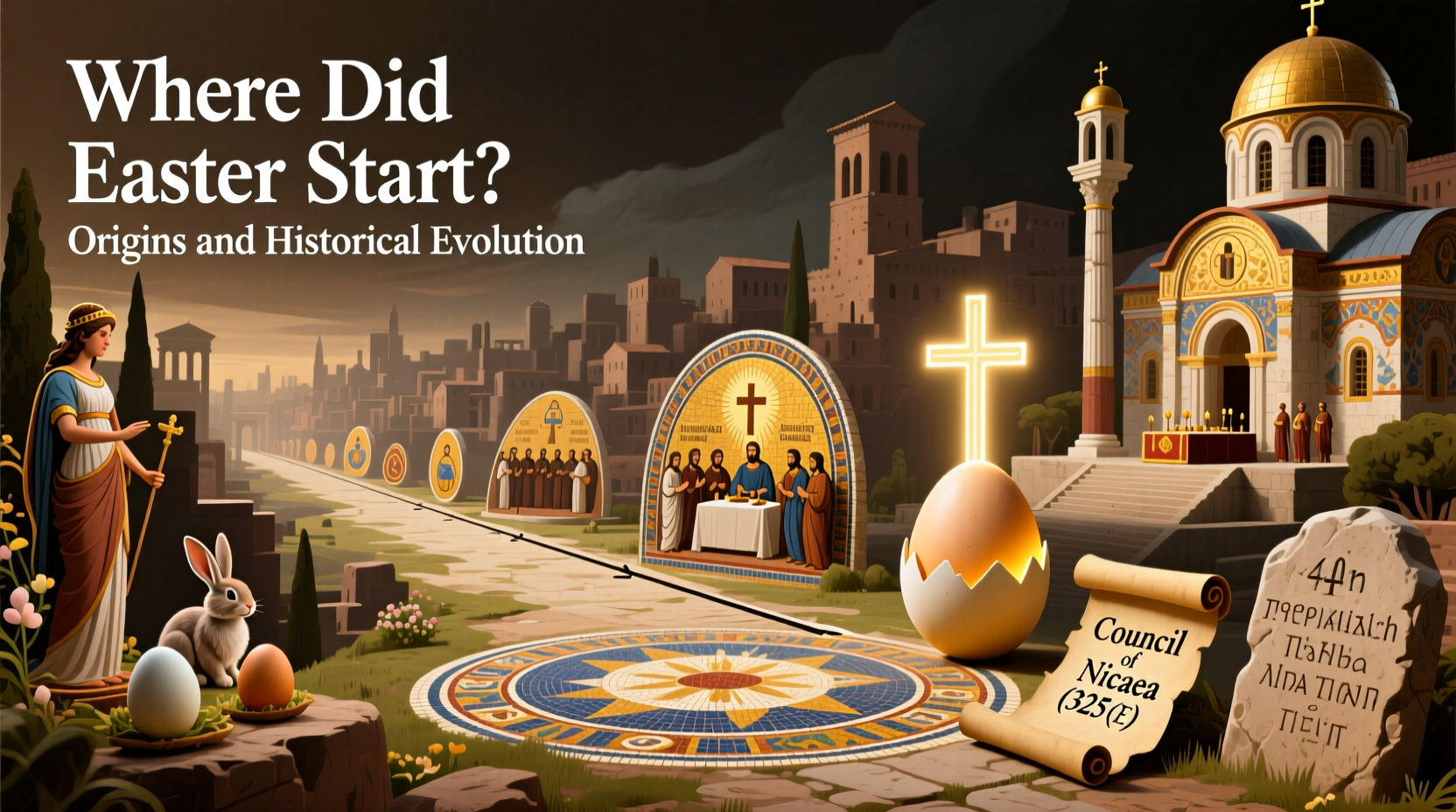
The origins of Easter can be traced back to early Christian traditions rooted in the ancient celebration of Christ's resurrection, which emerged in the first centuries after Jesus’ death. Where did Easter start? The earliest observances of where the Easter holiday originated point to Jerusalem and other centers of early Christianity in the Eastern Mediterranean, where followers commemorated the crucifixion and resurrection of Jesus during the Jewish festival of Passover. Over time, this religious observance evolved into the widely celebrated holiday known today as Easter, blending theological significance with regional customs and, eventually, symbolic elements like eggs and rabbits.
Historical Origins of Easter: The First Celebrations
To understand where did Easter start, we must journey back to the 1st century CE, when Jesus of Nazareth was crucified and, according to Christian belief, resurrected three days later. The foundational event of Easter is described in the New Testament Gospels—Matthew, Mark, Luke, and John—which place the crucifixion and resurrection in Jerusalem around the time of the Jewish Passover. This timing is not coincidental; early Christians sought to align their remembrance of Jesus' death and rebirth with the existing liturgical calendar of Judaism, particularly Passover (Pesach), which celebrates liberation from slavery in Egypt.
The word "Easter" itself likely derives from "Ēostre," a pre-Christian Germanic goddess associated with spring and fertility, although this etymology remains debated among scholars. However, the religious practice of celebrating Christ’s resurrection predates the use of the term 'Easter.' The earliest recorded observances were called Pascha, derived from the Hebrew Pesach, emphasizing its connection to Passover. These early celebrations focused on fasting, prayer, baptism, and the Eucharist, especially during the period now known as Holy Week.
By the 2nd century, churches across the Roman Empire—from Alexandria in Egypt to Rome and Antioch—were observing Pascha. A key moment in the history of where Easter started came at the Council of Nicaea in 325 CE. Church leaders convened to standardize Christian doctrine and practices, including the date of Easter. They decided that Easter would be celebrated on the first Sunday after the first full moon following the vernal (spring) equinox, ensuring it remained independent of the Jewish lunar calendar while still symbolically linked to springtime renewal.
Geographic Spread: From Jerusalem to Europe
While the theological roots of Easter lie in Jerusalem, its development into a global Christian feast unfolded through missionary activity and imperial adoption. In the Byzantine Empire, Easter became the most important religious festival, marked by elaborate liturgies and all-night vigils. Meanwhile, in Western Europe, particularly under the influence of the Roman Catholic Church, Easter absorbed local springtime customs.
One significant transformation occurred during the early medieval period, when Germanic and Anglo-Saxon traditions began to blend with Christian teachings. Symbols such as hares and eggs—long associated with fertility and new life in pagan spring festivals—were reinterpreted as metaphors for resurrection and spiritual rebirth. For example, the tradition of decorating eggs may have originated in Mesopotamia among early Christians who stained eggs red to represent Christ’s blood, but it gained widespread popularity in Eastern Europe, particularly in Ukraine with its famous pysanky eggs.
The spread of Christianity through missionaries like St. Patrick in Ireland and St. Augustine in England helped solidify Easter as a central feast across Europe. By the Middle Ages, Easter was not only a religious event but also a cultural one, involving feasting after Lenten fasting, special church services, and community gatherings.
Easter Traditions Around the World: Regional Variations
Today, Easter is observed in nearly every country with a Christian population, but the ways in which it is celebrated vary significantly. Understanding where did Easter start helps contextualize how these diverse traditions evolved. Below is a comparison of Easter customs in different regions:
| Region | Key Traditions | Religious Significance | Cultural Elements |
|---|---|---|---|
| Middle East (e.g., Israel, Lebanon) | Church processions in Jerusalem, especially on Good Friday and Easter Sunday | Direct connection to biblical events; pilgrimages to holy sites | Use of olive wood crosses, Arabic hymns |
| Italy | La Pasqua dinner, chocolate eggs with surprises inside | Attending Mass; emphasis on family reunions | Colomba cake (dove-shaped sweet bread) |
| Spain | Semana Santa (Holy Week) parades with hooded penitents | Dramatic reenactments of the Passion | Nazarenos and floats carrying religious statues |
| Poland | Śmigus-Dyngus (water fights on Easter Monday) | Attending dawn services and blessing of baskets | Colorful folk costumes and egg tapping games |
| United States | Easter egg hunts, Bunny visits, church services | Mix of Protestant and Catholic observances | Commercialization with candy, toys, and themed events |
Theological Significance vs. Secular Celebrations
While the original question—where did Easter start—is deeply tied to religious history, modern observance often includes secular elements. Many people participate in Easter egg hunts or enjoy chocolate bunnies without engaging in religious worship. This duality reflects the holiday’s complex evolution.
The core Christian message of Easter centers on redemption and eternal life through Jesus’ resurrection. Churches hold special services, including sunrise services symbolizing the discovery of the empty tomb, and festive liturgies featuring music, flowers, and the proclamation “Christ is risen!”
In contrast, popular culture emphasizes fun, family, and consumerism. Retailers promote Easter-themed products months in advance, and media portrayals often focus on the Easter Bunny rather than religious themes. While some view this as diluting the holiday’s meaning, others see it as an inclusive way to celebrate spring and renewal.
How the Date of Easter Is Determined
Unlike fixed holidays like Christmas, Easter falls on a different date each year. This variability stems directly from its origins in both lunar cycles and seasonal equinoxes. As established at the Council of Nicaea, Easter is set for the first Sunday after the first full moon following the vernal equinox (March 21 in the ecclesiastical calendar).
This system results in Easter occurring between March 22 and April 25 in Western Christianity (using the Gregorian calendar). Eastern Orthodox churches, however, often celebrate Easter later because they follow the Julian calendar and stricter interpretations of the Paschal rules. For instance, in 2026, Western Easter will be on March 29, while Orthodox Easter will fall on April 5.
If you're wondering when Easter is in upcoming years, here are the dates through 2030:
- 2025: April 20 (Western), April 20 (Orthodox)
- 2026: March 29 (Western), April 5 (Orthodox)
- 2027: March 28 (Western), May 2 (Orthodox)
- 2028: April 16 (Western), April 16 (Orthodox)
- 2029: April 1 (Western), April 8 (Orthodox)
- 2030: April 21 (Western), April 28 (Orthodox)
To verify the correct date in your region, consult your local church or diocesan website, especially if you follow an Eastern rite tradition.
Common Misconceptions About Easter’s Origins
Several myths persist about where Easter started and what it represents. One common misconception is that Easter is entirely a pagan holiday co-opted by Christians. While some symbols—like eggs and rabbits—have pre-Christian associations, the central event of Easter is firmly rooted in Christian theology and historical worship practices dating back to the apostolic era.
Another myth is that the name "Easter" proves pagan origins. While the Anglo-Saxon goddess Ēostre is mentioned by the Venerable Bede, there is limited evidence of her widespread worship, and many scholars believe the term could derive from Old High German ostarun (dawn or east), symbolizing new beginnings.
Finally, some assume Easter has always included commercial activities like candy sales and bunny mascots. In reality, these are largely 19th- and 20th-century developments, particularly in North America, driven by industrial confectionery and marketing.
How to Observe Easter Meaningfully Today
Whether you approach Easter from a religious, cultural, or familial perspective, there are meaningful ways to engage with its origins and spirit:
- Attend a Worship Service: Participate in a Good Friday service or Easter Sunday Mass to connect with the holiday’s spiritual roots.
- Learn the History: Read about the early church and how Easter developed across cultures to deepen your understanding of where did Easter start.
- Create Educational Activities: For families, combine fun with learning—make resurrection gardens, bake symbolic foods, or read age-appropriate Bible stories.
- Support Local Churches or Charities: Honor Easter’s theme of renewal by volunteering or donating to organizations that help others experience new beginnings.
- Limit Commercial Influence: Focus less on gifts and more on shared experiences, reflection, and gratitude.
Frequently Asked Questions
Q: Where did the Easter Bunny come from?
A: The Easter Bunny tradition originated in Germany among Lutheran communities in the 17th century. It was brought to America by German immigrants and gradually became a popular secular symbol of Easter.
Q: Why does the date of Easter change every year?
A: Easter follows a lunisolar calendar, set as the first Sunday after the first full moon following the spring equinox. This method links it to both astronomical events and ancient ecclesiastical rules.
Q: Do all Christians celebrate Easter on the same day?
A: No. Most Western Christians (Catholic, Protestant) use the Gregorian calendar, while Eastern Orthodox churches often use the Julian calendar, leading to different dates in many years.
Q: Is Easter mentioned in the Bible?
A: The word "Easter" appears only once in older English translations (Acts 12:4), but the event of Christ’s resurrection is central to the New Testament. The early church celebrated this event long before the term 'Easter' was used.
Q: Can non-Christians celebrate Easter?
A: Yes. Many people celebrate Easter culturally—as a spring festival or family holiday—without religious affiliation. Customs like egg hunts and festive meals are widely inclusive.





 浙公网安备
33010002000092号
浙公网安备
33010002000092号 浙B2-20120091-4