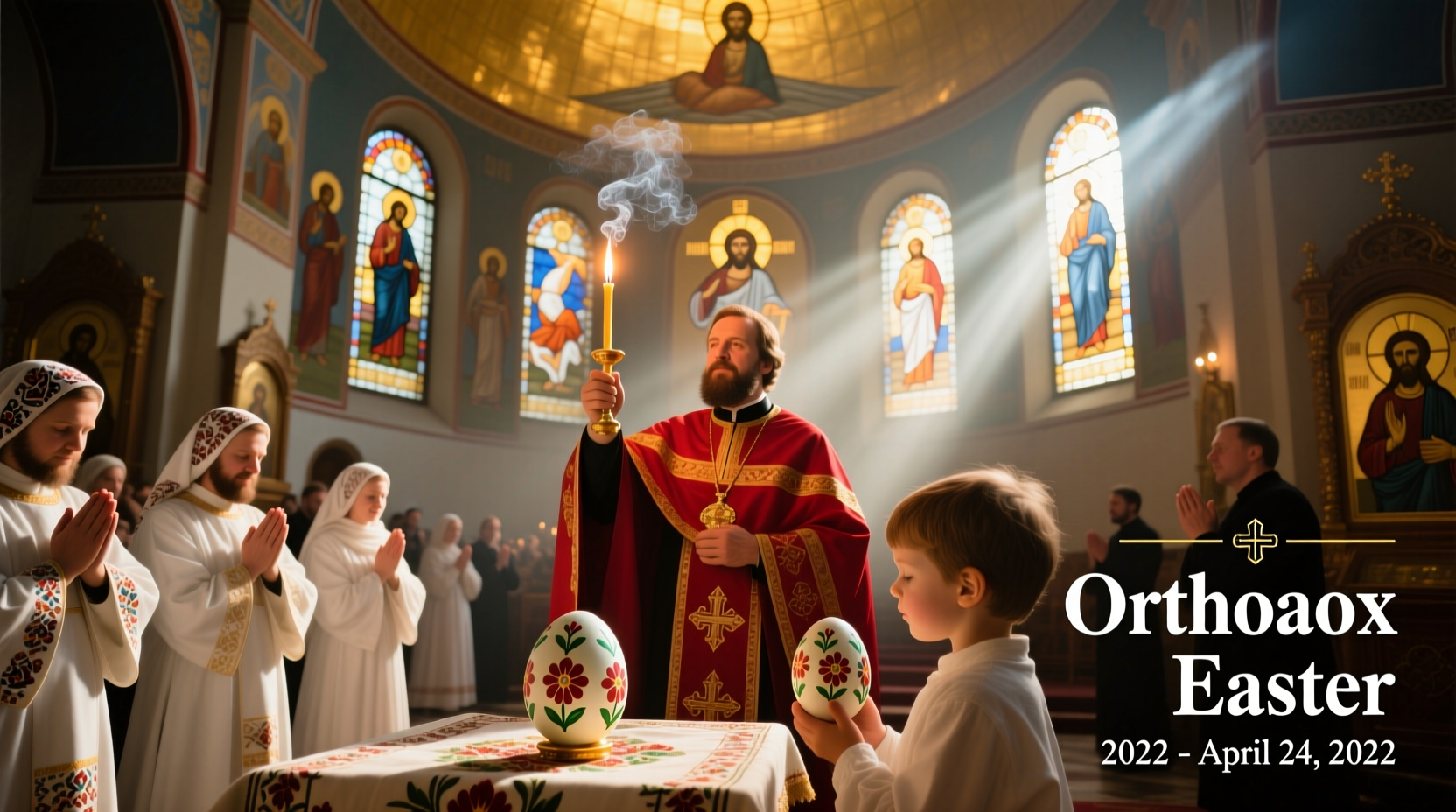
Orthodox Easter 2022 was celebrated on Sunday, April 24, 2022. This date reflects the traditional calculation used by most Eastern Orthodox Churches, which observe Easter based on the Julian calendar rather than the Gregorian calendar. A key factor behind this difference is the use of the Julian calendar for ecclesiastical purposes, leading to a frequent divergence from the Western (Catholic and Protestant) observance of Easter. For those searching for when Orthodox Easter 2022 occurred or seeking to understand why it falls on a different day than the commonly recognized Easter Sunday, this article provides a comprehensive overview of the historical, religious, and cultural reasons behind the timing of Orthodox Easter, along with its global observance and practical implications.
Why Orthodox Easter 2022 Was on April 24
The date of Orthodox Easter each year is determined by a complex set of astronomical and liturgical rules rooted in early Christian tradition. Unlike Western Christianity, which uses the Gregorian calendar to calculate Easter, the majority of Eastern Orthodox Churches continue to rely on the older Julian calendar for determining the date of Pascha (the Orthodox term for Easter). In 2022, this resulted in Orthodox Easter being celebrated on April 24, while Western Easter had already taken place on April 17.
The rule for calculating Easter—both in the East and West—states that it should fall on the first Sunday after the first full moon following the spring equinox. However, the Orthodox Church uses March 21 according to the Julian calendar (which corresponds to April 3 in the modern Gregorian calendar) as the fixed date for the equinox. Additionally, they require that Easter must come after the Jewish Passover, a stipulation not uniformly observed in Western calculations. These combined factors often push Orthodox Easter later into April, and sometimes even into May.
Historical Background of the Calendar Split
The divergence between Orthodox and Western Easter dates stems from the adoption of the Gregorian calendar reform in 1582. Pope Gregory XIII introduced the new calendar to correct drifts in the Julian system, which had miscalculated the solar year by about 11 minutes per year. Over centuries, this led to a growing discrepancy between the calendar and actual astronomical events like the equinox.
Roman Catholic countries adopted the Gregorian calendar almost immediately, followed later by Protestant nations. However, many Eastern Orthodox Churches chose to retain the Julian calendar for religious festivals, viewing it as an essential part of their spiritual heritage. Today, churches such as the Greek Orthodox, Russian Orthodox, Serbian Orthodox, and others follow the 'Revised Julian' or traditional Julian calendar for Pascha, preserving the distinct timing of their holy days.
This historical decision continues to influence millions of believers worldwide. As a result, followers asking when Orthodox Easter 2022 took place found themselves marking the occasion more than a week after their Western counterparts.
Countries That Celebrated Orthodox Easter on April 24, 2022
Orthodox Easter is widely observed across numerous countries where Eastern Orthodoxy is the dominant faith. In 2022, the following nations celebrated Easter on April 24:
- Greece
- Russia
- Ukraine (prior to calendar reforms in some regions)
- Serbia
- Romania
- Bulgaria
- Georgia
- Cyprus
- North Macedonia
- Montenegro
- Belarus
- Moldova
In these countries, Orthodox Easter is not only a religious holiday but also a major cultural event involving family gatherings, special foods, church services, and traditional customs such as candlelight processions and the cracking of red-dyed eggs. The celebration typically begins with Holy Saturday night’s midnight Divine Liturgy and continues through Bright Week—the week following Easter Sunday.
| Country | Primary Church | Easter Date 2022 | Public Holiday? |
|---|---|---|---|
| Greece | Greek Orthodox Church | April 24 | Yes |
| Russia | Russian Orthodox Church | April 24 | Yes |
| Ukraine | Orthodox Church of Ukraine / Moscow Patriarchate | April 24 | Yes |
| Serbia | Serbian Orthodox Church | April 24 | Yes |
| Romania | Romanian Orthodox Church | April 24 | Yes |
| Bulgaria | Bulgarian Orthodox Church | April 24 | Yes |
How the Date of Orthodox Easter Is Calculated
Understanding when Orthodox Easter occurs requires familiarity with both astronomy and ecclesiastical tradition. The formula can be summarized as follows:
- Determine the date of the vernal (spring) equinox: Fixed as March 21 in the Julian calendar (Gregorian date: April 3).
- Find the next full moon (called the Paschal Full Moon) after that equinox, according to the ecclesiastical tables.
- Select the first Sunday after this full moon.
- Ensure that Easter does not precede or coincide with the Jewish festival of Passover; if it does, delay Easter by one week.
This method ensures that Orthodox Easter never precedes Passover and always falls after it—a theological principle emphasizing Christ as the fulfillment of the Passover sacrifice. Because of the calendar lag and additional constraints, Orthodox Easter often occurs one to five weeks after Western Easter.
Common Misconceptions About Orthodox Easter Dates
One common misunderstanding is that all Christians celebrate Easter on the same day. While unity in celebrating Christ’s resurrection is ideal, the reality is shaped by centuries of ecclesiastical tradition and calendar systems. Another misconception is that the Orthodox Church refuses to update its calendar out of stubbornness. In truth, the choice reflects deep theological and cultural identity, not mere resistance to change.
Some people assume that when Orthodox Easter 2022 happened was arbitrary, but it followed precise canonical rules established at the First Council of Nicaea in 325 AD. Furthermore, there are ongoing ecumenical discussions about unifying the date of Easter, though no binding agreement has been reached among global Christian leaders.
Practical Implications: Travel, Business, and Retail Hours
For travelers and international businesses, knowing when Orthodox Easter 2022 was held is important for planning. In countries observing Orthodox Easter, government offices, banks, schools, and many retail stores close on Easter Sunday and often on Easter Monday as well. Public transportation may operate on reduced schedules.
Tourists visiting Greece, Russia, or other Orthodox-majority countries during late April 2022 would have encountered closed attractions on April 24–25. Restaurants and hotels, however, often offer special menus and events for Easter celebrations, making it a unique opportunity to experience local culture firsthand.
Online shoppers should note that delivery times from Orthodox-majority countries might have been delayed around this period. Similarly, customer service response times from companies based in these regions could have slowed due to holiday closures.
How to Prepare for Orthodox Easter: Traditions and Practices
Preparation for Orthodox Easter begins long before the actual day. The Lenten fast lasts for 40 days (plus Holy Week), during which many faithful abstain from meat, dairy, fish, oil, and wine. This period of prayer, repentance, and almsgiving culminates in the joyous celebration of Pascha.
On Holy Saturday, families prepare traditional foods such as tsoureki (sweet bread), magiritsa (lamb soup), and dyed red eggs. The red color symbolizes the blood of Christ and the promise of eternal life. At midnight on Saturday night, worshippers attend church carrying candles and baskets of food to be blessed.
After the service, families return home to break the fast with a festive meal, often featuring roasted lamb. Children participate in egg-tapping games, trying to crack each other’s eggs without breaking their own—a game representing the opening of Christ’s tomb.
Regional Variations and Emerging Trends
While most Orthodox Churches adhered to April 24 in 2022, some jurisdictions are exploring calendar reforms. For example, the Orthodox Church of Ukraine has considered adopting the Gregorian calendar for fixed feasts, although Pascha still follows the traditional computation. Similarly, the Ecumenical Patriarchate of Constantinople encourages dialogue on a possible common Easter date.
In diaspora communities—such as Greek-American or Russian-Canadian parishes—some churches align civil holidays with local norms while maintaining traditional dates for religious observances. This dual approach helps integrate immigrant populations while preserving spiritual continuity.
Verifying Future and Past Orthodox Easter Dates
To confirm the date of Orthodox Easter in any given year—including past years like 2022—it is best to consult official church calendars or reputable religious websites such as the website of the Ecumenical Patriarchate, national Orthodox synods, or academic sources specializing in liturgical studies. Many online calculators now allow users to compare Western and Orthodox Easter dates side by side.
Because minor variations can occur depending on jurisdiction (e.g., whether a church uses the strict Julian or Revised Julian calendar), double-checking with specific diocesan announcements is advisable for precision.
Frequently Asked Questions
Was Orthodox Easter 2022 on the same day everywhere?
Most Orthodox Churches celebrated Easter on April 24, 2022, but slight differences can occur based on regional practices or calendar interpretations. Generally, the date is uniform across the majority of the Orthodox world.
Why is Orthodox Easter different from Catholic Easter?
Orthodox Easter uses the Julian calendar and requires Easter to follow Passover, whereas Western Christianity uses the Gregorian calendar and different astronomical calculations. These differences lead to separate dates in most years.
Did any Orthodox churches celebrate Easter earlier in 2022?
No major Orthodox jurisdiction celebrated Easter before April 24 in 2022. Some smaller groups or monasteries may have local variations, but the universal Orthodox consensus was April 24.
Will Orthodox Easter ever align with Western Easter?
Occasionally, the dates coincide—for example, in 2025, both East and West will celebrate Easter on April 20. However, full alignment every year would require formal agreement on calendar reform, which has not yet been achieved.
How can I find Orthodox Easter dates for other years?
You can use online liturgical calendars, church websites, or ecclesiastical almanacs. Search terms like "when is Orthodox Easter [year]" or "Pascha date calculator" yield accurate results from trusted religious sources.




 浙公网安备
33010002000092号
浙公网安备
33010002000092号 浙B2-20120091-4