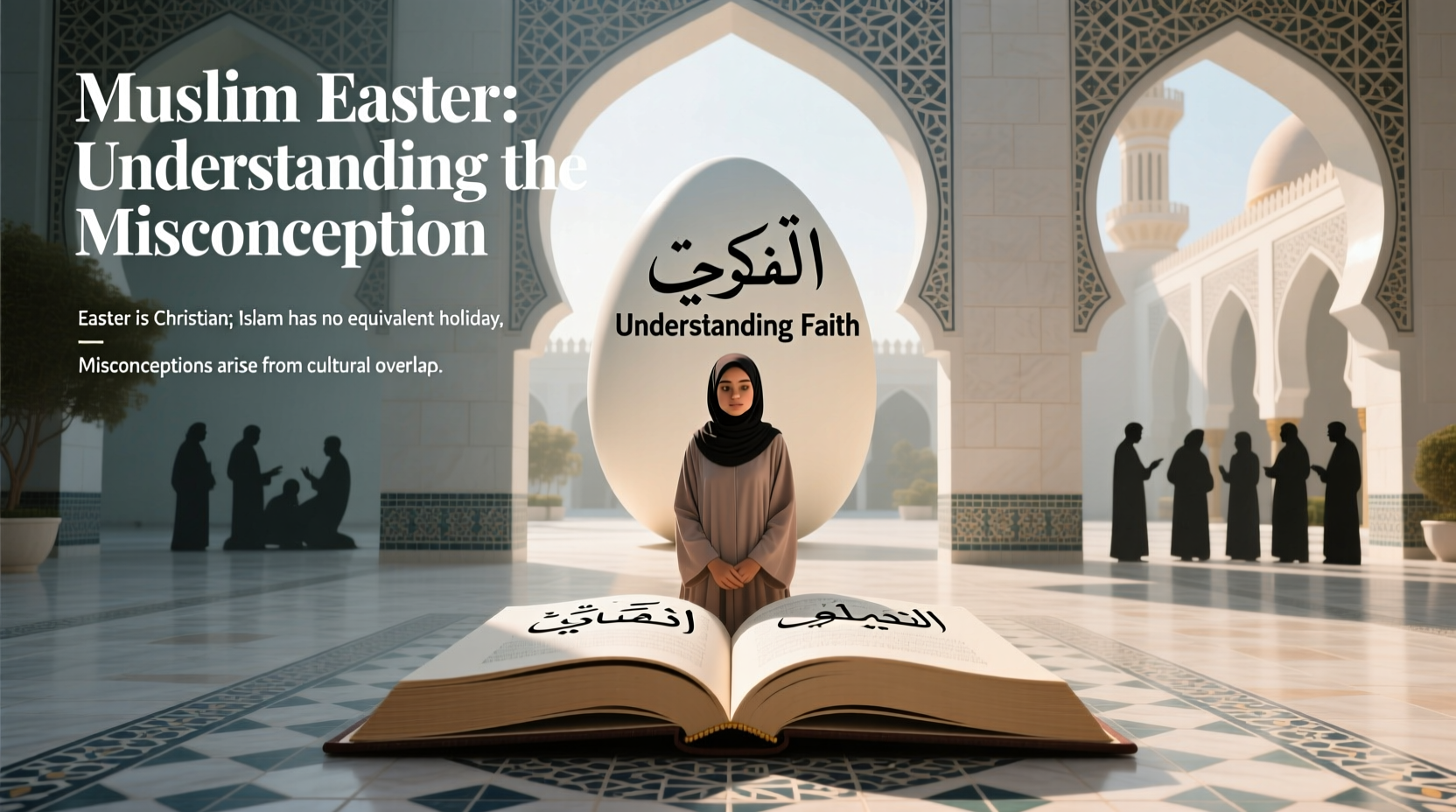
The term 'when is Muslim Easter' reflects a common misunderstanding — there is no such thing as 'Muslim Easter.' Easter is a central Christian festival celebrating the resurrection of Jesus Christ, which does not align with Islamic beliefs, as Muslims do not view Jesus (Isa in Arabic) as divine nor believe in his crucifixion or resurrection in the same way. Therefore, the concept of 'Muslim Easter' is a misnomer. While many people searching for 'when is Muslim Easter' may be confused about interfaith holidays or seeking to understand how Muslims observe or respond to Easter, it's important to clarify that Islam has its own set of religious festivals, primarily Eid al-Fitr and Eid al-Adha, which are based on the Islamic lunar calendar and are entirely distinct from Easter.
Why There Is No Muslim Easter
One of the most frequent misconceptions in cross-cultural religious understanding is the idea that all major world religions celebrate similar holidays. The phrase 'when is Muslim Easter' often arises from this confusion. In reality, Easter is exclusively a Christian celebration, rooted in the New Testament narrative of Jesus’ death and resurrection. Since Islamic theology differs significantly from Christianity—particularly in its understanding of the nature and mission of Jesus—Islam does not recognize Easter as a religious observance.
Muslims revere Jesus as a prophet, born of the Virgin Mary (Maryam), but they do not believe he was crucified. According to the Quran (Surah An-Nisa 4:157–158), Jesus was not killed nor crucified, but rather, it was made to appear so, and Allah raised him up to Himself. This fundamental doctrinal difference means that the events commemorated during Easter—crucifixion on Good Friday and resurrection on Easter Sunday—are not accepted in Islam, thus eliminating the basis for any equivalent celebration.
Islamic Festivals That May Be Confused With Easter
While there is no Muslim version of Easter, two major Islamic holidays—Eid al-Fitr and Eid al-Adha—occur at different times each year due to the lunar-based Islamic calendar. These are sometimes mistaken by non-Muslims as equivalents to Christian holidays like Easter or Christmas due to their festive nature, communal prayers, feasting, and gift-giving traditions.
- Eid al-Fitr: Marks the end of Ramadan, the month of fasting. It is a joyous celebration involving prayer, charity (Zakat al-Fitr), family gatherings, and meals. It usually falls in April or May depending on the moon sighting.
- Eid al-Adha: Known as the 'Festival of Sacrifice,' it commemorates Prophet Ibrahim’s (Abraham’s) willingness to sacrifice his son in obedience to God. It occurs during the Hajj pilgrimage, typically in July or August.
Neither of these holidays corresponds to Easter in theological meaning or timing, but because they are significant religious events in the Muslim world, searches for 'when is Muslim Easter' might stem from attempts to draw parallels between global religious festivals.
Differences Between Easter and Islamic Holy Days
To better understand why 'Muslim Easter' is an inaccurate term, it helps to compare key aspects of Easter and Islamic observances:
| Aspect | Easter (Christian) | Eid al-Fitr / Eid al-Adha (Islamic) |
|---|---|---|
| Religious Significance | Resurrection of Jesus Christ | End of Ramadan / Commemoration of Ibrahim’s sacrifice |
| Theological Basis | Belief in crucifixion and resurrection | No belief in crucifixion; Jesus honored as prophet |
| Calendar System | Gregorian (with lunar calculations for date) | Lunar Hijri calendar |
| Typical Observances | Church services, Easter eggs, family meals | Prayers, charity, animal sacrifice (Eid al-Adha), feasting |
| Frequency | Annually, usually March or April | Annually, dates shift 10–11 days earlier each Gregorian year |
When Is Easter Celebrated? Clarifying the Date
Since 'when is Muslim Easter' may actually be a search for when Easter occurs, especially in predominantly Muslim countries, here is a clear answer: Easter Sunday in 2025 will fall on April 20. In 2026, it will be celebrated on April 5. The date varies annually because it is determined by the first Sunday after the first full moon following the spring equinox (March 21). Most Western churches (Catholic and Protestant) use the Gregorian calendar to calculate this, while some Eastern Orthodox churches use the Julian calendar, leading to different dates—often in April or even early May.
In countries with Muslim majorities—such as Egypt, Indonesia, or Morocco—Christians still celebrate Easter according to their denominational calendars. However, Easter is not a public holiday in most Muslim-majority nations, except where Christian communities are officially recognized and granted religious freedom.
How Do Muslims View Easter?
Muslims generally respect the religious practices of others, including Christians celebrating Easter. The Quran encourages dialogue and peaceful coexistence with People of the Book (Jews and Christians). Many Muslims living in multicultural societies acknowledge Easter as an important time for their Christian neighbors, friends, and colleagues. Some may even exchange greetings or participate in interfaith events, though they do not observe the holiday themselves.
In educational or workplace settings, increasing awareness about both Islamic and Christian holidays helps reduce confusion and promote inclusivity. For example, someone asking 'when is Muslim Easter' might benefit from learning that while Muslims don’t celebrate Easter, they do have significant holidays that can coincide with the Easter season depending on the year.
Common Misunderstandings Behind the Search 'When Is Muslim Easter'
The query 'when is Muslim Easter' likely stems from several sources of confusion:
- Assumption of Universal Religious Holidays: Some assume that major religions must have parallel celebrations. While themes like sacrifice, renewal, and gratitude appear across faiths, the specific rituals and meanings differ.
- Lack of Awareness About Islamic Beliefs: Not knowing that Muslims honor Jesus but do not accept the resurrection leads to assumptions that they might celebrate Easter.
- Media or Cultural Blending: In regions with diverse populations, holiday symbols (like Easter bunnies or Eid decorations) may appear simultaneously, creating confusion about which group celebrates what.
- Translation Errors or Informal Usage: In multilingual contexts, terms may be loosely translated or used incorrectly, leading to phrases like 'Muslim Easter.'
How to Respectfully Navigate Interfaith Holiday Questions
If you're unsure about whether a holiday is observed by a particular religion, it's best to ask respectfully or consult reliable cultural or religious sources. Instead of searching 'when is Muslim Easter,' consider more accurate queries such as:
- 'Do Muslims celebrate Easter?'
- 'What holidays do Muslims celebrate instead of Easter?'
- 'When is Eid al-Fitr in 2026?'
- 'Difference between Easter and Eid'
These searches yield more precise results and foster better understanding. Educators, employers, and community leaders can also promote clarity by providing inclusive calendars that list both Christian and Islamic holy days.
Regional Variations and Coexistence
In countries with both large Muslim and Christian populations—such as Lebanon, Nigeria, or Bosnia and Herzegovina—religious holidays from both faiths are often recognized to some extent. While Muslims do not celebrate Easter, they may be aware of its timing due to school breaks, media coverage, or business closures affecting Christian-majority areas.
Conversely, Muslims eagerly anticipate Eid, and non-Muslims in those regions often learn about Eid celebrations. This mutual awareness supports social harmony and reduces misunderstandings like the notion of a 'Muslim Easter.'
Preparing for Religious Holidays Across Cultures
Whether you're planning travel, scheduling work events, or organizing community activities, understanding the religious calendar is crucial. Here are practical tips:
- Check Local Holiday Calendars: Use official government or religious council announcements to confirm dates for both Easter and Islamic Eids.
- Avoid Assumptions: Don’t assume all people of a certain nationality or background celebrate the same holidays.
- Promote Inclusive Communication: Use neutral language like 'spring holidays' if referring to multiple observances without singling out one faith.
- Verify Dates Annually: Because Islamic dates shift each year, and Easter changes slightly, always double-check upcoming dates.
Conclusion: Correcting the Record on 'Muslim Easter'
To reiterate, there is no Muslim Easter. The phrase 'when is Muslim Easter' represents a widespread misconception arising from limited interfaith knowledge. Easter is a Christian festival centered on the resurrection of Jesus, a belief not shared in Islam. Muslims observe their own profound religious holidays—Eid al-Fitr and Eid al-Adha—on dates determined by the lunar calendar. Understanding these distinctions fosters greater respect and clarity in our increasingly interconnected world.
Frequently Asked Questions
Do Muslims celebrate Easter in any form?
No, Muslims do not celebrate Easter. They respect Jesus as a prophet but do not believe in his crucifixion or resurrection, which are central to Easter.
Why do some people think there is a Muslim Easter?
This confusion often comes from misunderstanding Islamic views on Jesus or assuming all religions have equivalent holidays. The term is incorrect and should be avoided.
When is Easter in 2026?
Easter Sunday in 2026 will be on April 5 for Western Christian churches. Eastern Orthodox churches may celebrate it later, on April 12 or May 3, depending on the calendar used.
What are the main Islamic holidays instead of Easter?
The two main Islamic festivals are Eid al-Fitr (marking the end of Ramadan) and Eid al-Adha (the Festival of Sacrifice), both based on the lunar Hijri calendar.
Can Muslims wish Christians happy Easter?
Yes, many Muslims offer respectful greetings to Christian friends and colleagues during Easter as a gesture of goodwill and interfaith harmony.





 浙公网安备
33010002000092号
浙公网安备
33010002000092号 浙B2-20120091-4