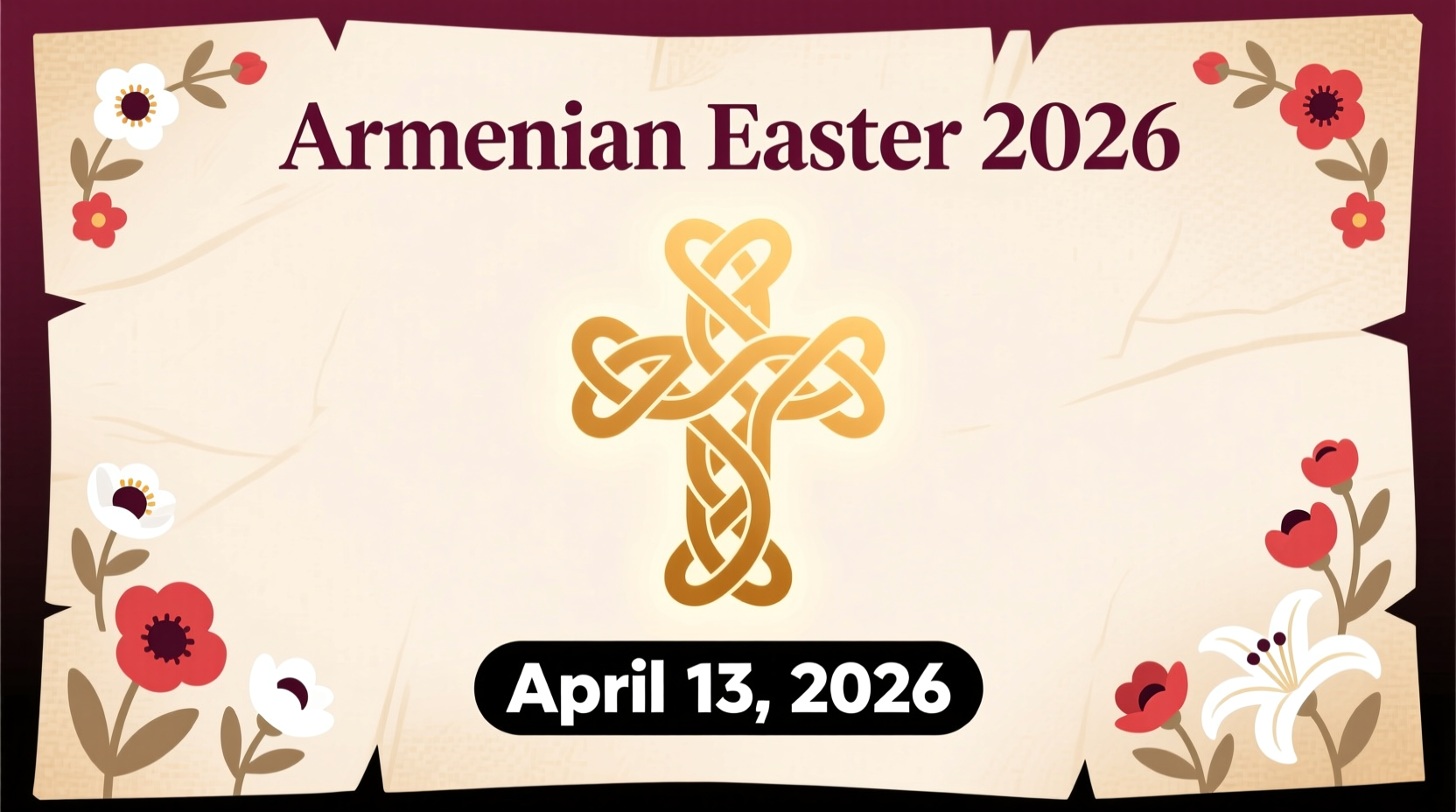
Armenian Easter in 2026 will be celebrated on Sunday, April 5th. This date follows the traditional calculation used by the Armenian Apostolic Church, which observes Easter based on the Julian calendar and ancient ecclesiastical rules for determining the paschal full moon. Unlike Western Christian churches that use the Gregorian calendar, the Armenian Church—along with several other Eastern Orthodox and Oriental Orthodox traditions—maintains a distinct liturgical calendar, resulting in different dates for major feasts like Easter. Understanding when is Armenian Easter requires recognizing these historical, theological, and calendrical distinctions that shape its observance each year.
Understanding the Date of Armenian Easter
The date of Armenian Easter is determined using a combination of the Julian calendar and traditional calculations for the vernal equinox and the paschal full moon. In 2026, this results in Easter being observed on April 5th. This contrasts with Western Easter (celebrated by Roman Catholic and Protestant churches), which in 2026 falls on March 30th. The difference arises because the Armenian Apostolic Church adheres to older methods of computation that align more closely with early Christian practices established at the First Council of Nicaea in 325 AD.
The Armenian Church uses the Julian calendar for liturgical purposes, which currently runs 13 days behind the Gregorian calendar used in civil life and by most Western nations. However, the calculation of Easter does not simply involve adding 13 days to the Gregorian date. Instead, the church applies specific astronomical and religious criteria: Easter must fall after the spring equinox (fixed as March 21 in the Julian calendar, or April 3 in the Gregorian) and after the first full moon following that date. Additionally, it must occur after the Jewish Passover, reflecting the biblical connection between Christ’s resurrection and the Passover feast.
Why Armenian Easter Differs from Western Easter
One of the most frequently asked questions related to when is Armenian Easter is why it often occurs on a different date than Western Easter. The primary reason lies in the use of different calendars and differing interpretations of ecclesiastical rules. While both traditions aim to celebrate Easter on the first Sunday after the first full moon following the vernal equinox, the Armenian Church relies on the older Julian calendar and traditional tables for lunar cycles, whereas Western Christianity adopted the Gregorian calendar reform in 1582, which refined the accuracy of solar and lunar calculations.
Moreover, the Armenian Church places strong emphasis on maintaining continuity with ancient Christian practice, particularly the link between Easter and Passover. In contrast, many Western churches decoupled Easter from the Hebrew calendar in favor of standardized mathematical models. As a result, Armenian Easter can sometimes coincide with Western Easter—for example, in 2025 both will fall on April 20th—but more often they differ by one or more weeks.
Historical Background of Armenian Easter Traditions
The celebration of Easter, known in Armenian as Zatik, has deep roots in the nation's religious and cultural identity. Armenia was the first country to adopt Christianity as a state religion in 301 AD, under King Tiridates III and through the missionary work of Saint Gregory the Illuminator. This early adoption meant that Armenian Christians developed unique liturgical customs, including their method of calculating Easter, independent of later reforms introduced in Europe.
For centuries, the Armenian Church preserved its own calendar system and scriptural interpretations, contributing to a rich spiritual heritage. The liturgy for Easter Sunday includes special hymns, scripture readings, and the blessing of decorated eggs—symbols of new life and resurrection. Midnight services are common, culminating in the proclamation “Christ is risen!” (“Christos haryav i merelots!”), answered by the congregation with “Blessed is the resurrection!” (“Orhnyal eh haryavadzneron!”).
How Armenian Easter Dates Are Calculated Year by Year
To understand when is Armenian Easter in any given year, one must examine three key factors:
- The Julian calendar’s fixed date for the vernal equinox: March 21 (Gregorian: April 3)
- The ecclesiastical full moon, calculated according to traditional tables
- The requirement that Easter follow the Jewish Passover
Because of these criteria, Armenian Easter cannot occur before April 4th (Gregorian) and typically falls between April 4th and May 8th. Below is a table showing upcoming dates for Armenian Easter:
| Year | Armenian Easter Date | Western Easter Date | Difference |
|---|---|---|---|
| 2024 | May 5 | March 31 | 5 weeks apart |
| 2025 | April 20 | April 20 | Same day |
| 2026 | April 5 | March 30 | 1 week apart |
| 2027 | April 25 | April 11 | 2 weeks apart |
| 2028 | April 16 | April 16 | Same day |
This variation underscores the importance of consulting official church calendars when planning religious observances or cultural events tied to Armenian Easter.
Regional Variations and Global Observance
While the Armenian Apostolic Church centrally determines the date of Easter, local customs may vary across regions. In Armenia itself, Easter is a national holiday marked by church attendance, family gatherings, and traditional meals. In diaspora communities—including those in Russia, Lebanon, Iran, France, and the United States—Armenian churches follow the same liturgical calendar but may adapt celebrations to local contexts.
In some countries, such as Lebanon and Syria, where Armenians form significant minority populations, Easter is widely recognized and public holidays may be declared. In contrast, in nations like the U.S., while there is no federal recognition, Armenian parishes organize large-scale services and community events. It's important for travelers and participants to verify service times and event schedules through local parish websites or diocesan announcements.
Common Misconceptions About Armenian Easter
A frequent misunderstanding concerns the idea that all Orthodox Christians celebrate Easter on the same day. In reality, there are multiple Orthodox churches—including Greek, Russian, Coptic, and Armenian—each with slightly different calendar systems and rules. For instance, the Armenian Church does not follow the revised Julian calendar used by some other Orthodox bodies, nor does it rely on the same Paschal tables as the Eastern Orthodox Church.
Another misconception is that the date of Armenian Easter changes randomly. On the contrary, it follows a predictable cycle based on well-established astronomical and theological principles. Although it may appear irregular compared to the Gregorian-based Western schedule, the pattern repeats over long periods and can be forecast decades in advance.
How to Prepare for Armenian Easter
Preparation for Armenian Easter begins during Great Lent, a 55-day period of fasting, prayer, and almsgiving that starts seven weeks before Easter Sunday. During this time, devout Armenians abstain from animal products and focus on spiritual renewal. Holy Week includes special services such as Palm Sunday processions, Maundy Thursday liturgies commemorating the Last Supper, and Good Friday reflections on the crucifixion.
Families prepare festive foods in advance, including choereg (sweet braided bread), roasted lamb, and dyed red eggs symbolizing Christ’s blood and resurrection. Homes are cleaned, and new clothes are often worn to signify spiritual rebirth. Attending the midnight Easter service is considered essential, followed by a joyous meal shared with relatives and neighbors.
Tips for Observing or Participating in Armenian Easter
- Check your local Armenian church schedule: Service times can vary; confirm details online or by phone.
- Learn basic Armenian Easter greetings: Saying “Christos haryav i merelots!” shows respect and cultural appreciation.
- Attend a community event: Many parishes host open receptions or cultural programs after Mass.
- Respect fasting traditions: If invited to a Lenten meal, avoid bringing non-fasting items unless specified.
- Plan travel early: In Armenia, hotels and transportation fill up quickly around Easter weekend.
Verifying the Correct Date Each Year
Because the date of Armenian Easter shifts annually relative to the Gregorian calendar, it's crucial to consult reliable sources for confirmation. Recommended resources include:
- The official website of the Mother See of Holy Etchmiadzin (the spiritual center of the Armenian Church)
- Local Armenian Apostolic parish bulletins
- Reputable interfaith or liturgical calendar sites that specify denominational differences
Do not assume that Armenian Easter aligns with either Western or Eastern Orthodox dates without verification, as convergence only happens occasionally.
Frequently Asked Questions
Does Armenian Easter always fall after Western Easter?
No, not always. While Armenian Easter often comes after Western Easter due to calendar differences, they sometimes coincide—such as in 2025 and 2028—or Armenian Easter may even precede it in rare cases depending on lunar calculations.
Why doesn’t the Armenian Church adopt the Gregorian calendar for Easter?
The Armenian Church prioritizes preserving ancient traditions and liturgical continuity. Changing to the Gregorian system would disrupt centuries-old practices and disconnect from historical Christian observance patterns.
Is Armenian Easter a public holiday in Armenia?
Yes, Armenian Easter is a national holiday in the Republic of Armenia. Government offices, schools, and many businesses close to allow citizens to attend religious services and spend time with family.
Can non-Armenians attend an Armenian Easter service?
Absolutely. Visitors are generally welcome in Armenian churches. Modest dress and respectful behavior are expected, especially during sacred rites.
Are there differences between Armenian Catholic and Armenian Apostolic Easter dates?
Yes. The Armenian Catholic Church, in communion with Rome, usually celebrates Easter on the same date as Western Christianity (Gregorian calendar), while the Armenian Apostolic Church follows the traditional Julian-based calculation.




 浙公网安备
33010002000092号
 浙B2-20120091-4