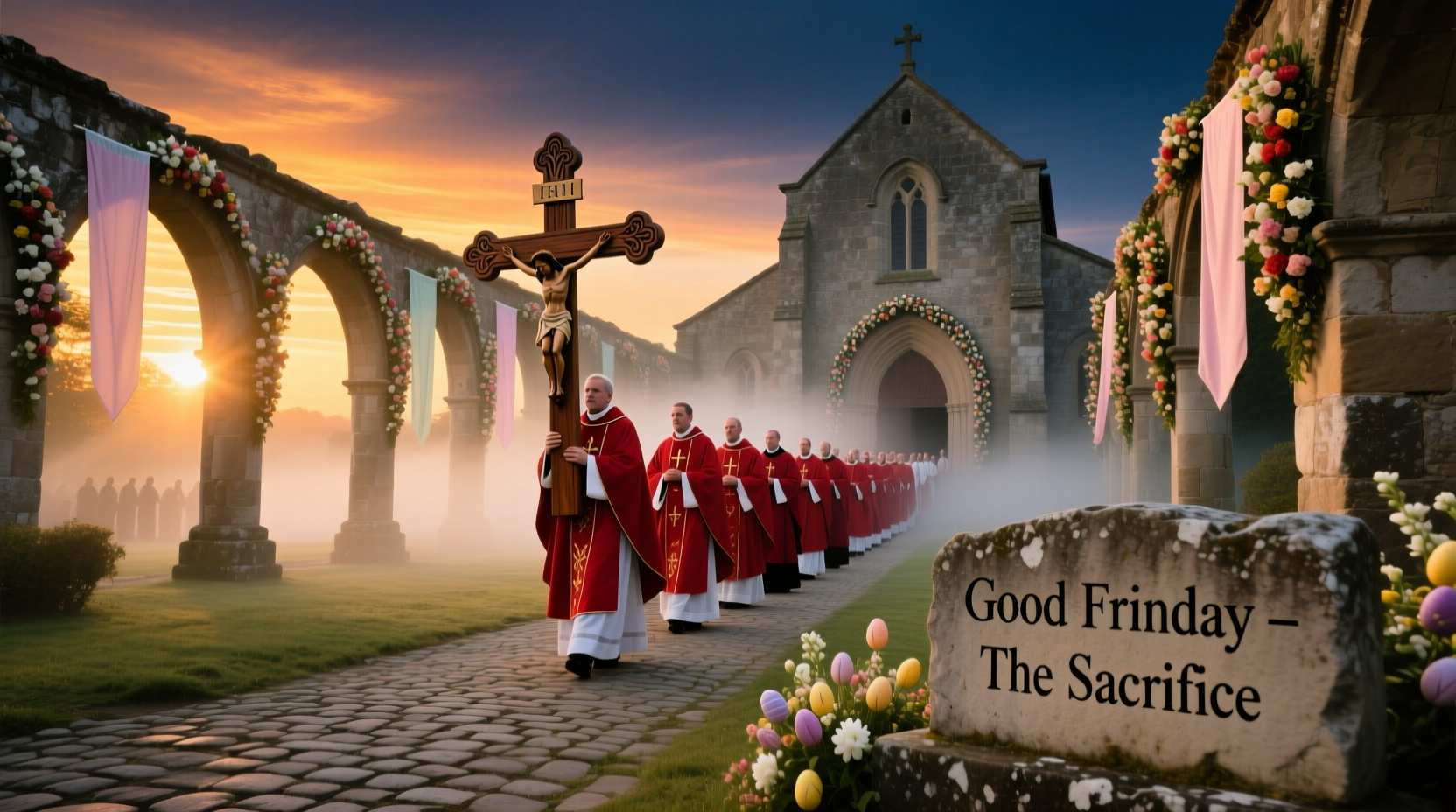
Good Friday is the Christian holy day that commemorates the crucifixion of Jesus Christ and his death at Calvary. It is observed during Holy Week as part of the Paschal Triduum, two days before Easter Sunday. Often searched as 'what is good Easter,' this term typically refers to the broader Easter observance but centers on the solemn meaning of Good Friday. Despite the name including 'good,' the day is marked by mourning, fasting, and reflection rather than celebration. It is a public holiday in many countries with significant Christian populations and sets the stage for the joyous resurrection celebrated on Easter Sunday.
The Historical Origins of Good Friday
The roots of Good Friday trace back to the New Testament accounts of the final days of Jesus Christ. According to the Gospels—Matthew, Mark, Luke, and John—Jesus was arrested in Jerusalem after the Last Supper, tried by religious and Roman authorities, and sentenced to death by crucifixion under Pontius Pilate. The event is believed to have occurred around 30 or 33 AD. Early Christians began observing this day as a time of penance and sorrow, reflecting on the sacrifice made for humanity’s redemption. By the 4th century, formal liturgies were established, particularly after Emperor Constantine legalized Christianity and pilgrimage to the Holy Land increased.
Why Is It Called 'Good' Friday?
At first glance, calling a day of suffering and death 'good' may seem paradoxical. However, in Christian theology, the term 'good' signifies 'holy' or 'pious.' The 'goodness' comes not from the act of crucifixion itself but from the belief that Jesus’ sacrifice brought salvation to humankind. This theological perspective frames Good Friday as a necessary step toward the Resurrection—an act of divine love and redemption. In some cultures, the day is not called 'Good' Friday at all: in German, it’s Karfreitag (Sorrowful Friday), and in Spanish, Viernes Santo (Holy Friday), emphasizing its solemn nature.
How Is Good Friday Observed Around the World?
Observances vary widely across denominations and regions, but common elements include church services, fasting, and symbolic rituals. Many churches hold a special service in the afternoon, traditionally at 3 p.m., the hour believed to be when Jesus died. The Service of the Passion often includes readings from the Gospel account of the crucifixion, hymns, prayers, and veneration of the cross.
In Catholic tradition, Good Friday is a day of both fasting and abstinence. Fasting applies to those aged 18–59, allowing one full meal and two smaller meals, while abstinence requires avoiding meat. Orthodox Christians may follow stricter fasts, avoiding oil and dairy as well.
| Country | Observance Type | Public Holiday? | Common Traditions |
|---|---|---|---|
| United States | Christian observance | No (federal) | Church services, Stations of the Cross, fasting |
| United Kingdom | Religious & cultural | Yes | Church attendance, BBC religious programming |
| Philippines | Highly devotional | Yes | Reenactments, self-flagellation, processions |
| Italy | Traditional & solemn | Yes | Papal ceremony at Vatican, silent reflection |
| Australia | Widespread observance | Yes | Attending services, family gatherings, retail closures |
Good Friday vs. Easter Sunday: Understanding the Contrast
While both are central to the Easter season, Good Friday and Easter Sunday represent opposite emotional and theological poles. Good Friday is somber and reflective—a day of mourning the death of Christ. Easter Sunday, in contrast, is joyful and celebratory, marking the resurrection of Jesus and the triumph over sin and death. This contrast is essential to Christian belief: without the sacrifice on Good Friday, there would be no resurrection on Easter Sunday. The progression from sorrow to joy forms the core of the Paschal mystery.
When Does Good Friday Occur Each Year?
Good Friday falls on the Friday before Easter Sunday, which is determined as the first Sunday after the first full moon following the spring equinox (March 21). Because of this lunar calculation, the date varies each year between March 20 and April 23. For example:
- 2024: Good Friday – March 29 | Easter – March 31
- 2025: Good Friday – April 18 | Easter – April 20
- 2026: Good Friday – April 3 | Easter – April 5
This variability affects school holidays, business operations, and travel plans, especially in countries where it is a public holiday.
Easter Retail and Business Operations on Good Friday
Business hours on Good Friday differ significantly by country and region. In nations where it is a public holiday—such as Canada, Australia, Germany, and the UK—many businesses, schools, and government offices close. Retailers often shut down or operate on reduced hours. In the United States, while not a federal holiday, several states (including Connecticut, Florida, and Texas) recognize it as a state holiday, leading to partial closures.
Major retailers like Walmart and Target typically remain open in the U.S., though some may reduce hours. In contrast, stores in predominantly Catholic areas may close entirely. Online shopping platforms usually stay active. Travelers should check local announcements, as transportation schedules may also be altered.
Cultural Misconceptions About Good Friday
One common misunderstanding is that Good Friday is a festive occasion. Unlike Easter Sunday, it is not a day for parties, bright colors, or feasting. Another misconception is that all Christians celebrate it the same way. In reality, practices differ: Protestants may focus on sermons and communion, Catholics emphasize the Stations of the Cross and veneration of the cross, and Orthodox Christians observe a strict fast until after the evening service.
Additionally, some people confuse 'Good Friday' with 'Easter Monday'—the latter being a public holiday in many countries but not part of the core religious observance. Clarifying these distinctions helps deepen understanding of what is good Easter in both religious and cultural contexts.
How to Observe Good Friday Respectfully
Whether you are a practicing Christian or simply interested in cultural traditions, there are meaningful ways to honor Good Friday:
- Attend a service: Participate in a local church’s Good Friday liturgy to experience the solemnity firsthand.
- Practice silence or fasting: Refrain from entertainment or social media for a few hours to reflect on the day’s significance.
- Learn the story: Read the Gospel accounts of the Passion (Matthew 26–27, Mark 15, Luke 23, John 18–19).
- Support charitable causes: Make a donation in memory of Christ’s sacrifice, aligning with themes of compassion and service.
- Educate others: Share accurate information about the day’s meaning, especially if explaining to children or non-Christians.
The Connection Between Good Friday and Easter Preparation
For many Christians, Lent—a 40-day period of fasting, prayer, and almsgiving—leads up to Good Friday and Easter. The final week, known as Holy Week, includes Palm Sunday (Jesus’ entry into Jerusalem), Maundy Thursday (the Last Supper), Good Friday, and then Easter. Preparing for Good Friday often involves spiritual reflection, confession, and attending special services. Families may also prepare simple meals in anticipation of the fast, avoiding rich foods in keeping with the day’s austerity.
Regional Variations in Observance
Different cultures express the solemnity of Good Friday in unique ways:
- Latin America: In countries like Mexico and Guatemala, elaborate processions feature statues of Christ and Mary, accompanied by mournful music and incense.
- Malta: Life-sized statues depicting scenes from the Passion are carried through towns in candlelit processions.
- Germany: Church bells fall silent from Thursday evening until Easter morning, and children are told the bells have flown to Rome.
- Eastern Europe: In Poland, altars are stripped bare, and homes display black drapes to symbolize mourning.
These variations highlight how deeply embedded Good Friday is in both religious practice and national identity in many parts of the world.
Frequently Asked Questions
Is Good Friday a public holiday worldwide?
No, Good Friday is not a global public holiday. It is officially recognized in many Christian-majority countries such as the UK, Canada, Australia, and several European and Latin American nations. In the U.S., it is a state holiday in some regions but not federally observed.
Can you eat meat on Good Friday?
According to Catholic doctrine, adults are required to abstain from meat on Good Friday as a form of penance. Exceptions exist for health reasons. Other Christian denominations may not have this rule, so practices vary.
Why does the date of Good Friday change every year?
The date depends on the lunar calendar. Easter Sunday is set as the first Sunday after the first full moon following the spring equinox (March 21). Therefore, Good Friday shifts accordingly each year.
What is the difference between Good Friday and Easter Sunday?
Good Friday commemorates the crucifixion and death of Jesus Christ and is a day of mourning. Easter Sunday celebrates his resurrection from the dead and is a joyful festival of new life and hope.
Are churches open on Good Friday?
Yes, most churches hold special services on Good Friday, typically in the afternoon. While they are open for worship, regular activities and non-religious events are generally suspended.





 浙公网安备
33010002000092号
浙公网安备
33010002000092号 浙B2-20120091-4