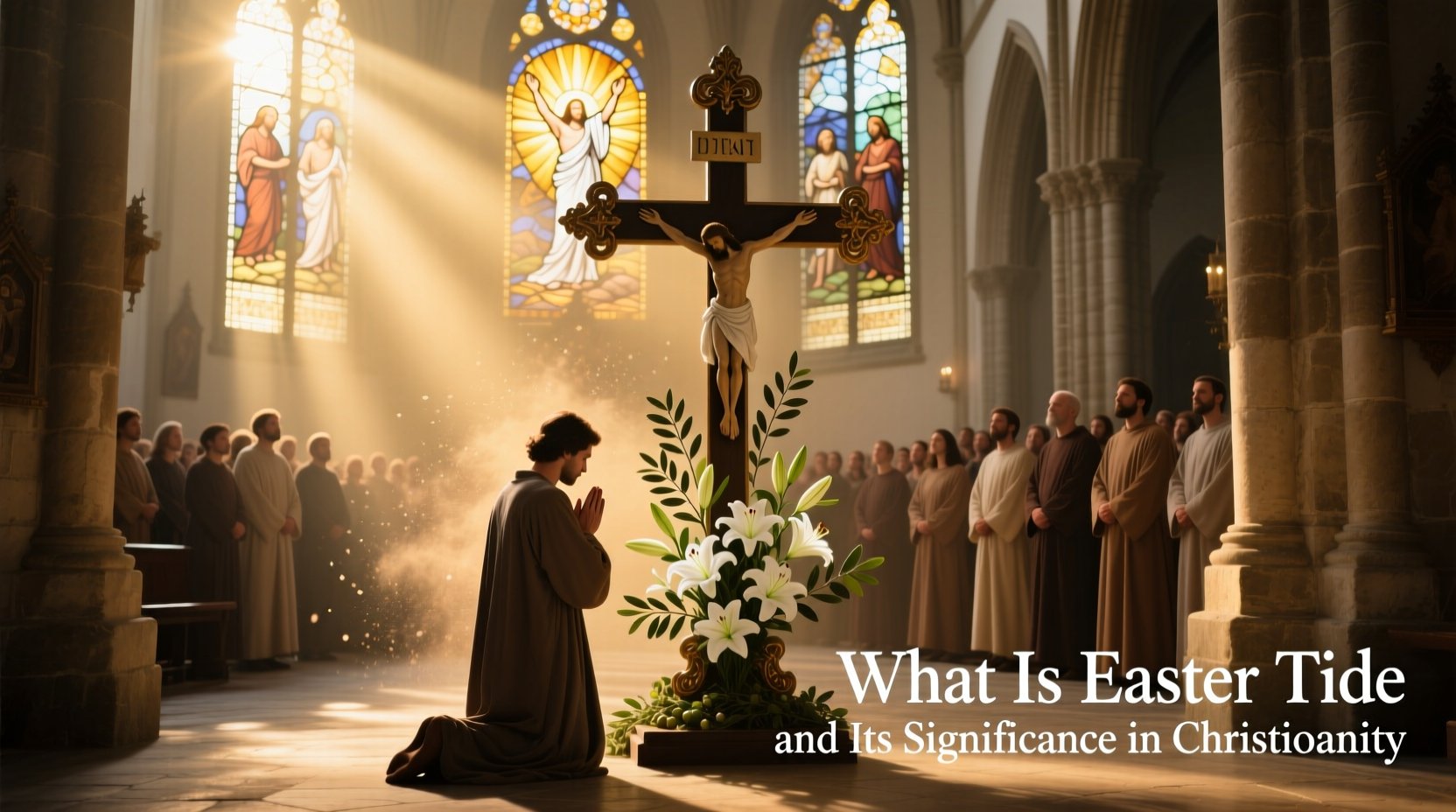
What is Easter tide? Easter tide, also known as Eastertide, refers to the joyful season in the Christian liturgical calendar that begins on Easter Sunday and lasts for 50 days, concluding on Pentecost Sunday. This sacred period celebrates the Resurrection of Jesus Christ and is considered one of the most important times in the Church year. The term 'Easter tide'—a traditional English expression derived from the Old English word 'tīd,' meaning 'time' or 'season'—highlights the extended nature of this festal period, emphasizing spiritual renewal, communal worship, and the unfolding mystery of Christ’s resurrection appearances and ascension. During Easter tide, churches are adorned with white and gold, hymns focus on victory over death, and believers deepen their reflection on new life in Christ.
Historical Origins of Easter Tide
The roots of Easter tide stretch back to the early centuries of Christianity. By the 4th century, the Church had formalized a liturgical calendar that included a distinct period following Easter to allow for prolonged celebration and catechetical instruction. Newly baptized Christians, especially those initiated at the Easter Vigil, would continue wearing white garments throughout the first week (known as Easter Week or the Octave of Easter), symbolizing their purification and new life in Christ.
The length of Easter tide—50 days—mirrors the Jewish festival of Shavuot, which occurs 50 days after Passover and commemorates the giving of the Law at Mount Sinai. In Christian theology, Pentecost marks the descent of the Holy Spirit upon the apostles and is seen as the birth of the Church. Thus, the entire Easter season forms a theological arc: from resurrection (Easter) to ascension (40 days later) to the outpouring of the Spirit (Pentecost).
Early Church Fathers such as St. Augustine and St. John Chrysostom delivered homilies during this season, reinforcing its importance. Liturgical practices evolved across regions, but the core structure remained: a jubilant, prayerful extension of Easter joy rather than a single-day observance.
Duration and Key Dates Within Easter Tide
Easter tide spans seven full weeks, beginning at sunset on Holy Saturday with the Easter Vigil—the most solemn and elaborate service of the liturgical year—and continuing through the Day of Pentecost. Below is a breakdown of major milestones within the season:
| Date Relative to Easter | Name | Significance |
|---|---|---|
| Easter Sunday | Resurrection of the Lord | Christ's victory over sin and death; central event of Christianity |
| Days 2–8 | Octave of Easter | Daily celebrations recalling baptism and new life |
| 40th day | Ascension of the Lord | Christ’s bodily ascent into heaven; observed on Thursday or transferred to Sunday |
| 50th day | Pentecost Sunday | Descent of the Holy Spirit; conclusion of Easter tide |
Note that the date of Easter varies each year because it is calculated based on the lunar calendar: the first Sunday after the first full moon following the spring equinox (March 21). Therefore, Easter can fall as early as March 22 or as late as April 25, affecting the exact dates of all subsequent events in Easter tide.
Liturgical Practices During Easter Tide
Throughout Easter tide, Christian denominations—especially Roman Catholic, Anglican, Lutheran, and Eastern Orthodox traditions—observe specific liturgical customs designed to sustain the joy and reverence of the season.
- Use of White and Gold Vestments: These colors symbolize purity, glory, and triumph. They replace the purple of Lent and remain in use until Pentecost.
- The Paschal Candle: Lit during every Mass or service throughout Easter tide, the candle stands near the altar as a reminder of the Risen Christ, the Light of the World.
- Alleluia Restoration: After being omitted during Lent, the word "Alleluia" returns with exuberance and is frequently sung in responses and acclamations.
- Renewal of Baptismal Vows: On Easter Sunday and again at Pentecost, many congregations renew their baptismal promises, reaffirming their commitment to Christian discipleship.
- Scripture Readings: The Lectionary shifts focus to post-resurrection appearances of Jesus, the Acts of the Apostles (instead of the Old Testament in some traditions), and teachings about the early Church.
In the Eastern Orthodox Church, Easter tide is known as the Season of Joy or Fifty Days of Pascha. The greeting “Christ is Risen!” (“Christos Anesti!”) is exchanged throughout the period, with the response: “Indeed, He is Risen!” Unlike Western traditions, Orthodox Christians do not kneel during this time, reflecting the celebratory posture of standing in resurrection life.
Cultural Traditions Associated With Easter Tide
Beyond formal worship, various cultural expressions mark Easter tide around the world:
- Easter Gardens: Common in Germany and parts of Central Europe, these miniature gardens depict the empty tomb and resurrection scene, often placed in homes or churchyards.
- Flowering the Cross: In some parishes, a bare wooden cross is gradually covered with flowers over the 50 days, culminating in a fully blooming cross on Pentecost.
- Community Walks and Pilgrimages: Some communities organize weekly walks retracing Jesus’ post-resurrection appearances, enhancing spiritual engagement throughout Eastertide.
- School and Catechetical Programs: Religious education programs often extend lessons on baptism, grace, and mission during these weeks, helping children internalize the meaning of Easter beyond candy and bunnies.
Differences Among Christian Denominations
While the general framework of Easter tide is widely observed, there are notable variations among Christian traditions:
- Roman Catholic Church: Follows a strict 50-day season. Each Sunday is referred to as “Second Sunday of Easter,” “Third Sunday of Easter,” etc., up to “Sixth Sunday of Easter,” followed by the Seventh Sunday (Pentecost). Ascension Thursday is celebrated on the 40th day, though some dioceses transfer it to the following Sunday.
- Anglican/Episcopal Churches: Similar structure, but greater flexibility in local observance. Some provinces emphasize preaching series throughout Eastertide.
- Eastern Orthodox Churches: Use a different calculation for Easter (based on the Julian calendar), so their Easter tide often falls later than Western observances. The entire period is treated as one continuous feast, with no fasting allowed—even on Wednesdays and Fridays.
- Protestant Traditions (e.g., Methodist, Presbyterian): While many recognize Easter tide, observance varies. Larger mainline churches may follow the lectionary closely, while evangelical congregations might treat Easter as a single-day event.
Misconceptions About Easter Tide
Several common misunderstandings surround Easter tide:
- Misconception 1: “Easter is just one day.” While culturally celebrated as such, liturgically, Easter is a season. Treating it as a single event diminishes its theological depth.
- Misconception 2: “The Ascension isn’t important.” Actually, the Ascension (the 40th day of Easter tide) completes Christ’s earthly ministry and prepares for Pentecost. It affirms His divine authority and ongoing intercession.
- Misconception 3: “Pentecost marks the start of a new season.” No—it concludes Easter tide. Only afterward does Ordinary Time resume.
- Misconception 4: “All Christians celebrate Easter tide the same way.” Due to differing calendars, liturgical practices, and theological emphases, observance varies significantly across global Christianity.
How to Observe Easter Tide Personally
Even if your church does not emphasize the full 50 days, you can engage meaningfully with Easter tide through intentional practices:
- Read the Book of Acts: This narrative of the early Church unfolds perfectly during Eastertide. Reading one chapter per day will carry you nearly through the season.
- Keep an Eastertide Journal: Reflect weekly on how the reality of resurrection impacts your daily life—your relationships, work, and hopes.
- Light a Candle Weekly: Place a paschal-style candle in your home and light it each Sunday, accompanied by a short prayer of thanksgiving.
- Practice Hospitality: Invite others to meals during the season, echoing the post-resurrection meals Jesus shared (e.g., Emmaus road, seaside breakfast in John 21).
- Support Mission Work: Since Pentecost celebrates the sending of the Spirit for witness, consider donating time or resources to missions during this season.
Conclusion: The Enduring Importance of Easter Tide
Understanding what Easter tide is reveals more than a liturgical footnote—it opens a transformative window into the heart of Christian faith. Far from being a mere extension of a holiday, Easter tide provides space for believers to live into the implications of Christ’s resurrection. It invites sustained celebration, deeper study, and renewed evangelistic courage inspired by the coming of the Holy Spirit at Pentecost. Whether observed in grand cathedrals or quiet home devotions, Easter tide remains a powerful reminder that the resurrection is not just a past event, but an ongoing reality shaping Christian life today.
Frequently Asked Questions (FAQs)
What is the difference between Easter and Easter tide?
Easter is the single day celebrating Christ’s resurrection, while Easter tide is the 50-day season following Easter, culminating in Pentecost.
When does Easter tide end?
Easter tide ends on Pentecost Sunday, which is the 50th day after Easter Sunday.
Do all Christian churches observe Easter tide?
Most liturgical churches (Catholic, Orthodox, Anglican, Lutheran) formally observe it. Many Protestant churches recognize Easter but may not emphasize the full 50-day season.
Why is Easter tide 50 days long?
The 50 days reflect the period between Passover and Shavuot in Judaism, reinterpreted by Christians as the time between Christ’s resurrection and the descent of the Holy Spirit at Pentecost.
Can you say "Alleluia" during Easter tide?
Yes—"Alleluia" is not only permitted but encouraged throughout Easter tide as a joyful acclamation of praise, having been restored after its Lenten absence.




 浙公网安备
33010002000092号
 浙B2-20120091-4