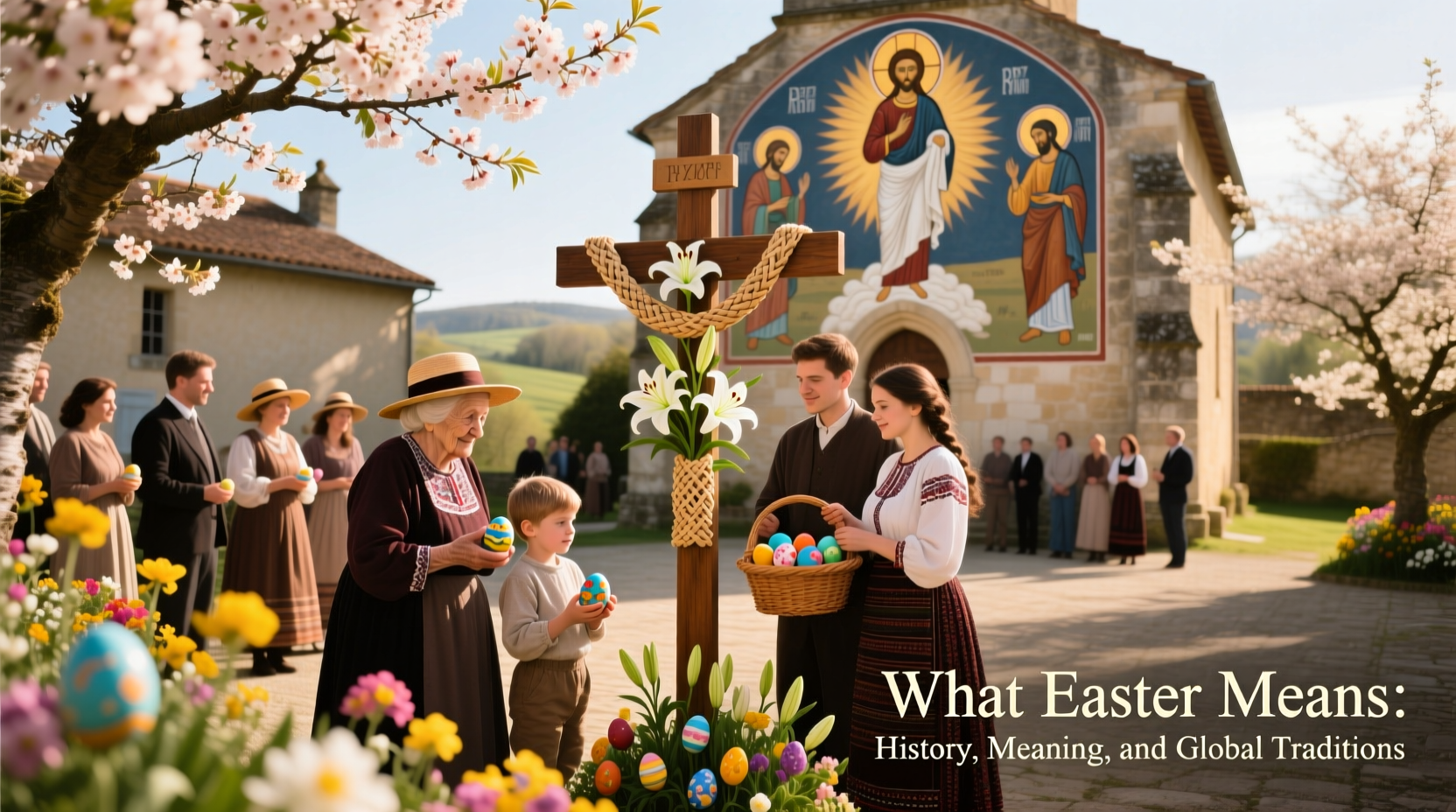
What Easter means is both a religious celebration of the resurrection of Jesus Christ and a cultural holiday marked by symbolic traditions around the world. Rooted in Christian theology, Easter commemorates the cornerstone event of the Christian faith—the belief that Jesus rose from the dead three days after his crucifixion. This central tenet gives Easter its profound spiritual meaning for billions of Christians globally. At the same time, the holiday has evolved to include widely recognized customs such as Easter eggs, the Easter Bunny, and family gatherings, blending ancient pagan symbols with Christian doctrine. Understanding what Easter means today requires exploring its biblical roots, historical development, and diverse global expressions.
The Religious Significance of Easter
Easter is the most important festival in the Christian liturgical calendar. It concludes Holy Week, which begins with Palm Sunday and includes Maundy Thursday and Good Friday. The resurrection of Jesus, as described in the New Testament Gospels (Matthew, Mark, Luke, and John), is viewed as the ultimate victory over sin and death. For believers, Easter represents hope, renewal, and eternal life. Church services on Easter Sunday often feature joyful music, special readings, and the proclamation: 'He is risen!' This phrase encapsulates the core message of Easter—redemption and new beginnings.
The theological foundation of Easter is based on 1 Corinthians 15:17: 'And if Christ has not been raised, your faith is futile; you are still in your sins.' Without the resurrection, Christianity asserts that faith would have no power. Thus, Easter is not just a historical remembrance but a living affirmation of belief. Many denominations observe Lent—a 40-day period of fasting, prayer, and penance—leading up to Easter, symbolizing Jesus’s 40 days in the wilderness. The culmination of this solemn preparation is the joyous celebration of Easter Sunday.
Historical Origins and Calendar Calculations
The date of Easter changes each year because it is determined by a lunisolar calendar. Unlike fixed holidays like Christmas, Easter falls on the first Sunday after the first full moon following the vernal (spring) equinox in the Northern Hemisphere. This method was established by the First Council of Nicaea in 325 AD to standardize the celebration across the Christian world. As a result, Easter can occur as early as March 22 or as late as April 25 in the Gregorian calendar.
For example, in 2026, Easter Sunday will be celebrated on March 29. In contrast, Western churches (Catholic and Protestant) and Eastern Orthodox churches may celebrate Easter on different dates due to variations in their calendars. The Orthodox Church uses the Julian calendar for calculating Easter, which often results in a later observance—sometimes several weeks apart. This divergence highlights the complexity behind answering 'when is Easter' and underscores the importance of context when discussing what Easter means across cultures.
Pagan Influences and Symbolic Traditions
While Easter is fundamentally a Christian holiday, many of its associated symbols have pre-Christian origins. The word 'Easter' itself may derive from 'Eostre,' a Germanic goddess of spring and fertility, though this etymology is debated among scholars. The timing of Easter aligns with ancient spring festivals celebrating rebirth and agricultural renewal. Over time, these themes were incorporated into Christian practice, creating a rich tapestry of meaning.
Easter eggs, for instance, long symbolized new life in various cultures. Ancient Persians, Greeks, and Romans exchanged colored eggs during springtime celebrations. Early Christians adopted this tradition, interpreting the egg as a symbol of the empty tomb from which Jesus emerged. Today, egg hunts and decorative egg painting are common in many countries, especially among children. Similarly, the Easter Bunny—originally a hare—was linked to Eostre and fertility rites. German immigrants brought the legend of the 'Osterhase' to America in the 18th century, where it evolved into the modern custom of leaving baskets filled with candy and toys.
Global Celebrations and Cultural Variations
Understanding what Easter means also involves recognizing how it is observed differently around the world. While primarily a Christian holiday, Easter has taken on unique local flavors depending on regional history and culture.
| Country | Easter Tradition | Religious or Cultural Focus |
|---|---|---|
| Italy | Scoppio del Carro (Explosion of the Cart) in Florence | Religious procession with fireworks |
| Spain | Semana Santa processions with hooded penitents | Highly ceremonial and somber |
| Mexico | Passion plays reenacting the crucifixion | Deeply religious community events |
| United States | Easter egg hunts and family brunches | Mixed religious and secular practices |
| Greece | Midnight church service with candlelight and fireworks | Orthodox Christian focus |
In predominantly Catholic countries like Spain and Italy, Holy Week is marked by elaborate processions, music, and public displays of faith. In contrast, nations with strong secular traditions, such as Sweden and Finland, emphasize outdoor activities and folk customs, including children dressing as 'Easter witches' and exchanging hand-painted cards. These variations reflect how what Easter means can shift from deeply sacred to more cultural or even commercial, depending on the region.
Modern Commercialization and Secular Observances
In recent decades, Easter has become increasingly commercialized, particularly in North America. Retailers promote seasonal merchandise months in advance, including chocolate bunnies, jelly beans, and pastel-colored clothing. According to the National Retail Federation, Americans spend billions annually on Easter-related items. While some view this as diluting the holiday’s religious essence, others see it as a way to make Easter accessible and inclusive for non-religious families.
Schools and communities often host Easter parades, craft fairs, and charity events. The White House Easter Egg Roll, an annual event since 1878, draws thousands of visitors and exemplifies how Easter has become part of national civic life in the U.S. However, critics argue that the prominence of figures like the Easter Bunny overshadows the holiday’s spiritual roots. Balancing reverence and recreation remains a key challenge in preserving what Easter means across generations.
How to Observe Easter Meaningfully
Whether observing Easter for religious, cultural, or familial reasons, individuals can deepen their experience through intentional practices:
- Attend a sunrise service: Many churches hold early morning worship to symbolize the dawn discovery of the empty tomb.
- Participate in Lenten disciplines: Fasting, giving to charity, or abstaining from certain habits can enhance spiritual reflection before Easter.
- Create homemade decorations: Crafting Easter eggs with natural dyes or writing personal messages of hope reinforces mindfulness.
- Support local charities: Volunteering at food banks or shelters aligns with Easter’s themes of compassion and renewal.
- Educate children about the holiday’s meaning: Use age-appropriate books or discussions to explain both the religious story and cultural symbols.
Common Misconceptions About Easter
Several myths surround Easter that obscure its true meaning. One common misconception is that Easter is purely a Christian invention. In reality, it absorbed earlier springtime rituals, making it a hybrid celebration. Another misunderstanding is that all Christians celebrate Easter on the same day. Due to differing calendars and ecclesiastical rules, Eastern and Western churches often observe the holiday weeks apart. Additionally, some believe the Easter Bunny is a modern corporate creation, when in fact it traces back to 18th-century European folklore.
Finally, there's a tendency to view Easter solely as a children’s holiday centered on candy and games. While fun elements are popular, they should not eclipse the deeper message of resurrection and transformation that defines what Easter means at its core.
Verifying Local Practices and Dates
Because Easter traditions and dates vary significantly, it’s essential to consult reliable sources for accurate information. To find out when Easter occurs in a given year, refer to official church calendars or trusted almanacs. For those planning travel or participation in events, checking municipal websites, religious institutions, or tourism boards ensures awareness of local customs and schedules. Retailers’ hours during the Easter weekend also differ—some stores close on Easter Sunday, while others remain open. Always verify operating times directly with businesses.
Frequently Asked Questions
- What does Easter mean in Christianity?
- Easter signifies the resurrection of Jesus Christ, representing victory over death and the promise of eternal life for believers.
- Why does the date of Easter change every year?
- Easter is based on the lunar cycle and is set as the first Sunday after the first full moon following the spring equinox.
- Which countries celebrate Easter the most?
- Countries with large Christian populations such as Italy, Spain, Mexico, Poland, and the Philippines have some of the most vibrant Easter traditions.
- Is the Easter Bunny mentioned in the Bible?
- No, the Easter Bunny is not biblical. It originated from German folklore and became a symbol of fertility and springtime.
- How can I explain Easter to a child?
- Focus on simple truths: Jesus died and came back to life, showing God’s love. Then introduce fun traditions as ways families celebrate this good news.
In conclusion, understanding what Easter means involves appreciating its dual identity—as a sacred religious observance and a culturally rich holiday. From ancient theological doctrines to modern family traditions, Easter continues to evolve while maintaining its central message of hope and renewal. By learning its history, respecting its diversity, and engaging thoughtfully with its practices, people around the world can honor what Easter truly means.





 浙公网安备
33010002000092号
浙公网安备
33010002000092号 浙B2-20120091-4