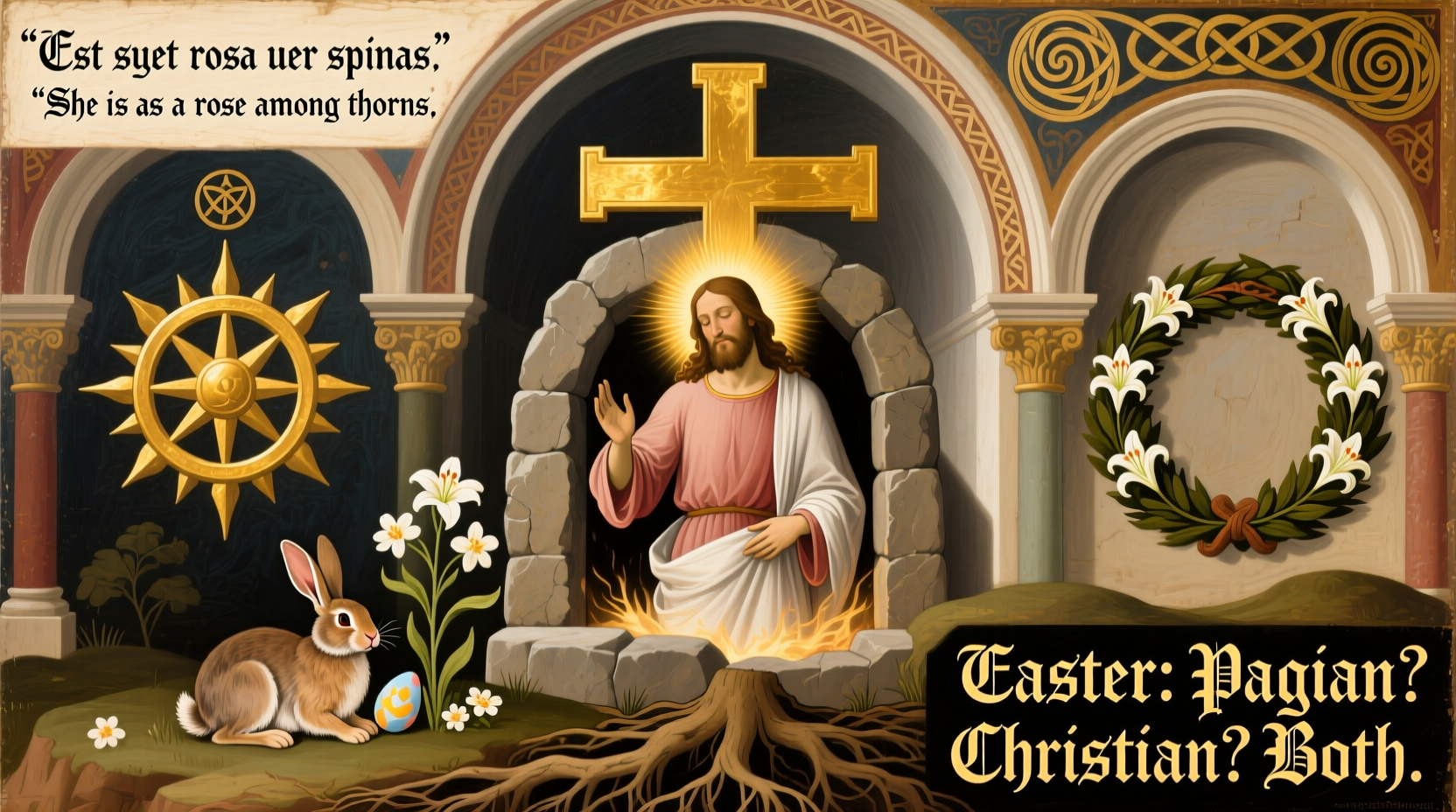
The question is Easter pagan in origin has sparked debate for centuries, but the most accurate answer lies in a nuanced understanding: while the name and some symbols of Easter have roots in pre-Christian, pagan spring festivals, the holiday itself as celebrated today is fundamentally a Christian observance of Jesus Christ’s resurrection. The convergence of ancient fertility rites and renewal celebrations—particularly those honoring the Germanic goddess Eostre or Ostara—with early Christian traditions led to a blending of customs that evolved into modern Easter practices. This fusion forms the foundation of what many now recognize as a uniquely layered religious and cultural event shaped by both spiritual devotion and seasonal symbolism tied to springtime rebirth.
Historical Origins: Tracing Easter’s Name and Symbols
One of the strongest arguments supporting the idea that is Easter pagan-inspired comes from linguistic and symbolic evidence. The English word 'Easter' is believed to derive from 'Eostre,' a Teutonic goddess associated with spring, dawn, and fertility, mentioned briefly by the Venerable Bede, an 8th-century English monk. According to Bede, the month of April was once called 'Eosturmonath' (the month of Eostre), during which feasts were held in her honor. As Christianity spread across northern Europe, missionaries often adapted local customs into Christian celebrations to ease conversion, leading to the alignment of Christ's resurrection with existing spring festivals.
This practice, known as 'religious syncretism,' allowed early Christians to replace pagan rituals with Christian meanings without entirely discarding familiar traditions. For example, eggs and hares—symbols long associated with fertility and new life in European pagan cultures—were reinterpreted as representations of Jesus’ emergence from the tomb and the promise of eternal life.
Easter vs. Pascha: A Global Naming Divide
An important distinction emerges when examining how different languages refer to the holiday. Most non-English-speaking countries use variations of 'Pascha,' derived from the Hebrew 'Pesach' (Passover). This reflects the theological link between Jesus’ crucifixion and the Jewish festival of Passover, which occurs around the same time. In contrast, only English and some Germanic languages (like German 'Ostern') use terms potentially linked to pagan deities.
This linguistic divide underscores a broader truth: the celebration of Easter is rooted in biblical events, particularly the Last Supper, crucifixion, and resurrection of Jesus—all of which occurred during Passover. Therefore, even if certain cultural expressions of Easter incorporate pre-Christian elements, its core meaning remains anchored in Christian theology.
Pagan Festivals and Spring Equinox Celebrations
Before Christianity, many ancient cultures marked the arrival of spring with festivals celebrating renewal, light overcoming darkness, and agricultural rebirth. The vernal equinox, typically falling on March 20 or 21, served as a natural focal point for these observances. Among them:
- Nowruz – Still celebrated in Iran and Central Asia, this Zoroastrian-origin festival marks the new year at the spring equinox.
- Higan – In Japan, Buddhists observe this week-long period around the equinoxes to reflect on impermanence and enlightenment.
- Ostara – Modern Wiccans and Neopagans celebrate Ostara as one of eight sabbats in their Wheel of the Year, featuring egg decorating and nature walks.
While there is no definitive archaeological evidence of widespread worship of Eostre beyond Bede’s account, the general pattern of honoring spring deities was common across Europe. When early church leaders set the date for Easter, they intentionally placed it near the spring equinox to emphasize themes of light, life, and liberation—concepts already meaningful to converts from pagan backgrounds.
Christian Development of Easter Traditions
The formal establishment of Easter as a Christian feast began in the 4th century at the Council of Nicaea (325 CE), where bishops decided that Easter would be celebrated on the first Sunday after the first full moon following the vernal equinox. This ensured that Easter remained connected to the lunar calendar used in Judaism while allowing flexibility within the solar Gregorian calendar.
Over time, various customs emerged:
- Lent – A 40-day period of fasting and reflection preceding Easter, symbolizing Jesus’ 40 days in the wilderness.
- Palm Sunday – Commemorates Jesus’ entry into Jerusalem.
- Good Friday – Observes the crucifixion with solemn services.
- Easter Vigil – Held overnight from Holy Saturday to Easter Sunday, featuring candlelight processions and baptismal rites.
These liturgical practices have no direct pagan equivalents and are deeply embedded in scriptural narrative and ecclesiastical tradition. They represent the central focus of Easter: redemption through Christ’s sacrifice and resurrection.
Symbols Reexamined: Bunnies, Eggs, and Lilies
Critics who argue that is Easter pagan due to its imagery often cite the Easter bunny and decorated eggs as evidence. Let’s examine each:
| Symbol | Pagan Association | Christian Interpretation |
|---|---|---|
| Easter Bunny | Linked to fertility goddesses like Eostre; rabbits symbolize prolific breeding. | No official doctrine supports the bunny; seen as a secular addition, especially in Western culture. |
| Decorated Eggs | Used in Persian, Egyptian, and Slavic spring rites as symbols of life. | Represent the empty tomb; red-dyed eggs in Orthodox traditions symbolize Christ’s blood. |
| Easter Lily | No strong pagan ties. | Symbolizes purity and resurrection; widely used in church decorations. |
While the rabbit has no place in formal Christian liturgy, it gained popularity in 18th-century Germany among Lutheran communities as a folkloric figure bringing eggs to children—a precursor to today’s Easter Bunny. Its adoption was largely cultural rather than doctrinal.
Regional Variations and Cultural Blending
The degree to which pagan influences appear in Easter celebrations varies widely by region:
- Germany and UK: Stronger folk traditions involving bonfires, egg rolling, and costumed processions may echo older rites.
- Greece and Russia: Focus on midnight liturgies, candlelight, and greeting 'Christos Anesti' ('Christ is Risen') with minimal secular trappings.
- United States: Commercialization dominates with Easter baskets, candy, and family brunches, diluting religious significance for many.
- Mexico and Latin America: Passion plays (Semana Santa) are central, emphasizing suffering and salvation.
In predominantly Christian nations, Easter remains primarily a religious holiday, though consumer culture has introduced more secular elements. Meanwhile, in multicultural societies, people of all backgrounds may participate in egg hunts or community events without religious intent—further blurring lines between sacred and seasonal.
Common Misconceptions About Easter’s Pagan Roots
Several myths persist about Easter’s origins, often amplified online. Here are clarifications:
- Myth: Easter was invented by the Roman Catholic Church to replace a major pagan festival.
Fact: There is no evidence of a large-scale pagan festival called 'Eostre' being widely celebrated. The church aligned Easter with spring symbolism, not a specific competing holiday. - Myth: All Easter symbols are pagan.
Fact: Many symbols like crosses, lambs, and lilies originate in Christian theology, not paganism. - Myth: Christians should avoid Easter because it’s inherently pagan.
Fact: Most theologians agree that adopting cultural forms with new spiritual meanings is consistent with Christian mission, as seen in Paul’s letters (e.g., Acts 17:23).
How to Approach Easter Thoughtfully Today
Whether you view Easter through a religious, cultural, or historical lens, here are practical ways to engage meaningfully:
- Learn the history: Understand both the Christian narrative and the cultural context in which it developed.
- Distinguish between symbols: Recognize which traditions are biblically based versus culturally adopted.
- Participate intentionally: Attend a sunrise service, host a Passover-Seder-inspired meal, or discuss resurrection hope with family.
- Respect diverse views: Some Christians avoid Easter due to perceived pagan links; others embrace it fully. Dialogue fosters understanding.
- Verify sources: Be cautious of sensational claims online. Consult academic historians or reputable theological resources.
Conclusion: Is Easter Pagan?
To return to the original question—is Easter pagan?—the answer is not a simple yes or no. While certain aspects of contemporary Easter, such as the name and select symbols like eggs and bunnies, show possible influence from pre-Christian spring festivals, the essence and primary observance of Easter are undeniably Christian. It commemorates the cornerstone event of the Christian faith: the resurrection of Jesus Christ. The incorporation of springtime motifs reflects a strategic and symbolic effort by early missionaries to communicate gospel truths within familiar cultural frameworks.
Thus, Easter stands as a hybrid celebration—rooted in Scripture, shaped by history, and enriched (and sometimes complicated) by cultural evolution. Understanding this complexity allows believers and observers alike to appreciate both its spiritual depth and its seasonal resonance.
Frequently Asked Questions
Q: Did the Catholic Church create Easter to replace a pagan holiday?
A: No, the Church did not invent Easter to replace a pagan festival. Instead, it established a date near the spring equinox to align with Passover and emphasize themes of renewal tied to Christ’s resurrection.
Q: Are Easter eggs a pagan tradition?
A: Decorated eggs were used in various ancient cultures as symbols of life, but Christians reinterpreted them as signs of the empty tomb and new life in Christ.
Q: Is celebrating Easter considered sinful for Christians?
A: Most Christian denominations affirm Easter as a holy day. Some groups, like certain branches of Protestantism, reject it due to perceived pagan associations, but mainstream theology sees it as valid and essential.
Q: Why do we have an Easter bunny?
A: The Easter bunny originated in German folklore as a folk figure who brought eggs to children. It has no religious significance and is primarily a secular, commercial addition.
Q: How can I celebrate Easter in a more meaningful way?
A: Attend a church service, read the Gospel accounts of the resurrection, fast during Lent, or share a meal with symbolic foods like lamb or bread to connect with the deeper spiritual meaning.




 浙公网安备
33010002000092号
浙公网安备
33010002000092号 浙B2-20120091-4