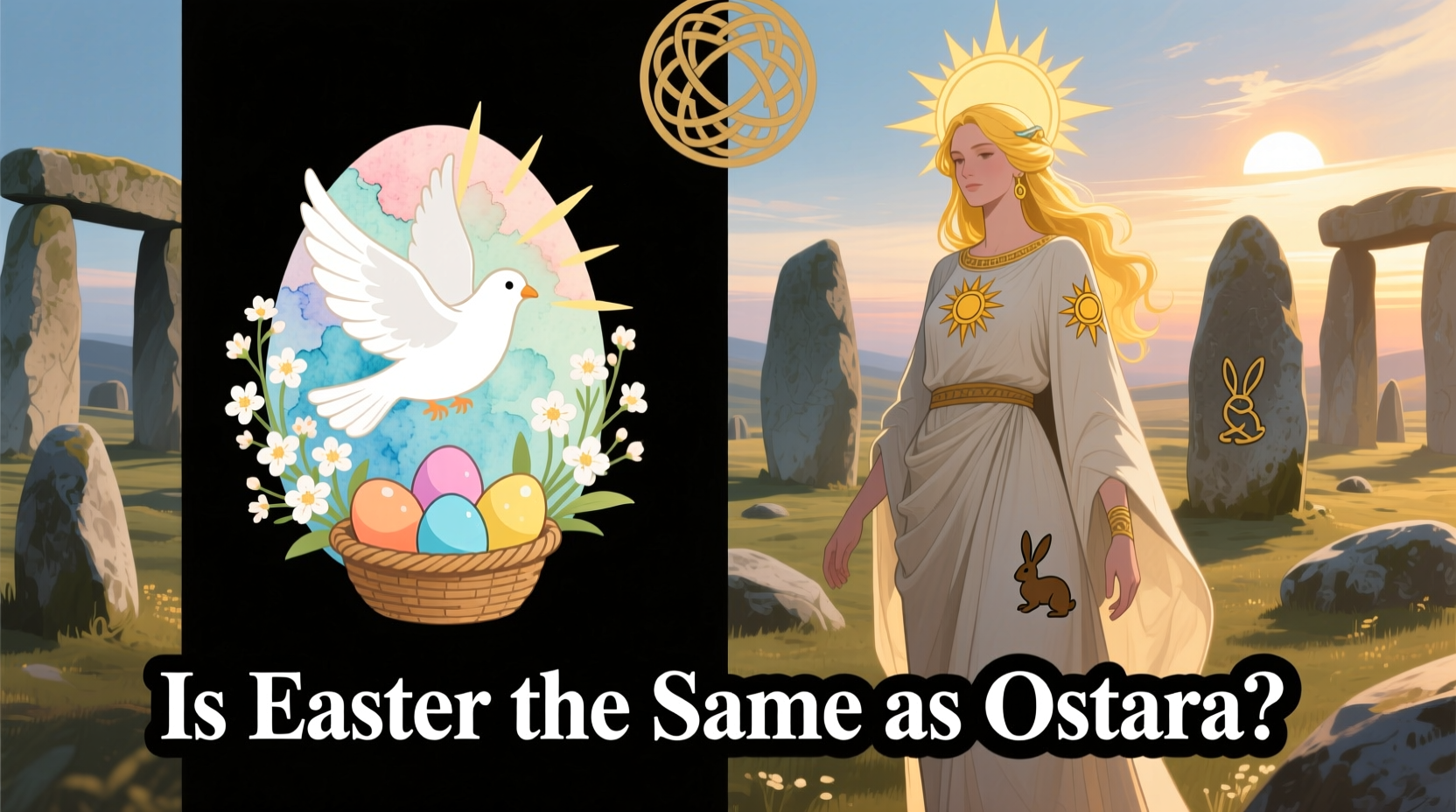
Yes, while Easter and Ostara are not the same holiday, they are deeply interconnected through shared symbolism, timing, and ancient spring fertility traditions rooted in pre-Christian European culture. The question of is Easter Ostara reveals a fascinating blend of Christian theology and pagan heritage, where the resurrection of Jesus Christ coincides with older celebrations of rebirth, light, and renewal tied to the vernal equinox. This convergence has led many to explore the origins of Easter symbols—such as eggs, hares, and sunrise services—and trace them back to the Germanic goddess Ēostre, often associated with the festival of Ostara.
Understanding the Origins: What Is Ostara?
Ostara is a modern neopagan celebration named after the Anglo-Saxon goddess Ēostre (or Eostre), mentioned briefly by the Venerable Bede in his 8th-century work De temporum ratione (The Reckoning of Time). He noted that the month of April was once called Eosturmonath, named after a goddess honored during the spring equinox. However, there is limited historical evidence beyond this reference about actual worship practices or widespread festivals dedicated to Ēostre in early Germanic paganism.
In contemporary times, Ostara refers to one of the eight sabbats on the Wiccan and broader Neopagan Wheel of the Year. It is celebrated annually around the March equinox—usually between March 19 and 21—marking the moment when day and night are nearly equal, symbolizing balance before the increasing dominance of daylight. Modern Ostara rituals emphasize themes of renewal, fertility, growth, and awakening nature. Common activities include planting seeds, decorating eggs, lighting candles, and honoring the return of hares and other animals signaling spring.
How Did Easter Absorb Pagan Spring Traditions?
The connection between Easter and Ostara stems largely from linguistic, seasonal, and symbolic overlap. The word 'Easter' itself likely derives from the same root as 'Ēostre,' suggesting a cultural continuity in naming the spring season. As Christianity spread across Europe, it often incorporated existing pagan festivals into its liturgical calendar to ease conversion. Since the resurrection of Jesus was already linked to the Jewish Passover—which occurs in spring—it made sense to place Easter in this season of rebirth.
Church leaders formalized the date of Easter in 325 CE at the Council of Nicaea, setting it as the first Sunday after the first full moon following the vernal equinox. This ensured that Easter would always fall in spring, aligning with agricultural cycles and long-standing cultural associations with new life. Over time, folk customs such as egg decorating, bunny imagery, and sunrise gatherings became part of Easter celebrations—even though these elements have no direct biblical basis.
Eggs, for example, were forbidden during Lent but preserved and then decorated to celebrate the end of fasting. Their use as symbols predates Christianity; in many ancient cultures, eggs represented creation and regeneration. Similarly, the hare—or rabbit—was a sacred animal associated with fertility deities like Ēostre and the Greek goddess Aphrodite. The so-called 'Easter Bunny' likely originated in 18th-century German Lutheran folklore as the Osterhase, a rabbit who laid eggs for children who behaved well—blending myth, morality, and seasonal joy.
Key Similarities Between Easter and Ostara
- Timing: Both holidays occur around the spring equinox (March 19–21) or shortly thereafter, depending on lunar cycles.
- Symbols: Eggs, bunnies, chicks, flowers (especially tulips and daffodils), and pastel colors dominate both celebrations.
- Themes: Renewal, fertility, hope, light overcoming darkness, and personal transformation are central to both observances.
- Nature-Based Rituals: Planting gardens, cleaning homes, wearing bright clothing, and holding outdoor ceremonies reflect a shared emphasis on reconnecting with nature.
Important Differences Between Easter and Ostara
Despite their overlapping themes and timing, Easter and Ostara differ significantly in religious context, purpose, and practice:
| Aspect | Easter (Christian) | Ostara (Neopagan) |
|---|---|---|
| Religious Foundation | Christian doctrine centered on the resurrection of Jesus Christ | Modern reconstruction of pre-Christian European earth-based spirituality |
| Date Determination | First Sunday after the first full moon after the vernal equinox | Typically observed on the exact date of the March equinox |
| Core Symbolism | Salvation, sacrifice, eternal life, divine love | Natural cycles, balance, feminine divinity, ecological awareness |
| Primary Practices | Church services, communion, Lenten observance, Good Friday crucifixion remembrance | Meditation, altar building, herb planting, honoring goddess energy |
| Cultural Reach | Observed globally by over 2 billion Christians | Limited to modern pagan, Wiccan, and spiritual-but-not-religious communities |
Common Misconceptions About Easter and Ostara
One widespread misconception is that Easter was simply 'invented' by the Church as a repackaged version of Ostara. While some symbols and dates overlap, historians agree that Easter’s theological foundation lies in the Passion narrative of the Gospels, not in pagan ritual. Additionally, the idea that Ēostre was a major pan-European deity lacks archaeological support—she appears only in Bede’s writings, and no temples or artifacts definitively link to her worship.
Another myth is that all Easter customs come from paganism. In reality, many traditions developed independently within Christian communities. For instance, the practice of sunrise services began in 18th-century Moravian congregations in Germany and later spread to America—not as a holdover from sun worship, but as a way to commemorate the empty tomb at dawn.
Regional Variations in Easter and Ostara Observance
Easter is celebrated worldwide, but customs vary widely:
- In Greece and other Orthodox countries, Easter is marked by midnight church services, fireworks, red-dyed eggs, and lamb feasts—often occurring on a different date than Western Easter due to the Julian calendar.
- In Latin America, processions reenact the Stations of the Cross, blending Catholic devotion with indigenous artistic expression.
- In Australia, where rabbits are invasive pests, some environmental groups promote the 'Easter Bilby' instead of the bunny to raise awareness.
- In parts of the United States and Canada, secular events like Easter parades, egg hunts, and visits with the Easter Bunny dominate public celebrations.
Ostara, being a newer and more niche observance, varies even more based on individual or coven interpretation. Some practitioners focus on feminist spirituality, seeing Ostara as a celebration of the Maiden aspect of the Triple Goddess. Others emphasize permaculture and sustainability, using the holiday to launch community gardens or seed exchanges.
How to Celebrate Both Traditions Respectfully
For those interested in exploring the intersection of Easter and Ostara, here are several inclusive and meaningful approaches:
- Learn the history objectively: Study primary sources like Bede’s texts and early Christian writings without assuming syncretism where evidence is thin.
- Create a blended ritual: Incorporate egg decorating with reflections on spiritual rebirth, or plant a tree to honor both environmental stewardship and resurrection symbolism.
- Support interfaith dialogue: Attend an Easter service if invited, or participate in a public Ostara gathering hosted by local pagan groups.
- Educate others: Share accurate information about both holidays to dispel myths and foster mutual respect.
- Focus on universal values: Whether celebrating divine redemption or natural renewal, emphasize compassion, gratitude, and hope.
Verifying Dates and Local Customs
Because Easter follows a lunisolar calendar, its date changes each year—ranging from March 22 to April 25. To find the correct date for any given year (e.g., 2026), consult official ecclesiastical tables or reputable almanacs. Most mainstream churches (Catholic, Protestant, Anglican) follow the Gregorian calculation, while Eastern Orthodox churches may observe Easter later.
For Ostara, most modern pagans observe it on the astronomical equinox, which can be confirmed via the U.S. Naval Observatory or timeanddate.com. However, some choose to celebrate when local flora begins blooming, making it regionally variable.
Conclusion: So, Is Easter Ostara?
To answer directly: No, Easter is not Ostara—but the two share deep cultural, symbolic, and calendrical ties that reflect humanity's enduring fascination with springtime renewal. The inquiry into is Easter Ostara opens a window into how religions evolve, absorb, and reinterpret older beliefs. While Easter remains a cornerstone of Christian faith, its outward expressions—eggs, bunnies, sunrise vigils—resonate with ancient instincts celebrated long before Christianity. Understanding this relationship allows for richer appreciation of both traditions, whether approached through theology, history, or seasonal reflection.
Frequently Asked Questions
Was Easter originally a pagan holiday called Ostara?
No, Easter was established as a Christian feast commemorating the resurrection of Jesus. Although it shares timing and some symbols with pre-Christian spring festivals, it was not originally a pagan holiday. The term 'Ostara' as a formal festival is largely a modern neopagan invention.
Does the Bible mention Ostara or Easter bunnies?
No, the Bible does not mention Ostara, Ēostre, or the Easter Bunny. These elements entered Easter celebrations through folklore and cultural adaptation centuries after the New Testament was written.
Do all Christians believe Easter has pagan roots?
No. Beliefs vary. Some Christians acknowledge cultural influences on holiday customs but maintain that the core meaning of Easter—Christ’s resurrection—is entirely scriptural and distinct from paganism. Others reject any association with pre-Christian traditions.
Can I celebrate both Easter and Ostara?
Yes. Many people blend spiritual practices respectfully. You can attend an Easter service and also hold a personal Ostara ritual focused on nature and renewal, recognizing the different meanings behind each tradition.
Why do Easter and Passover sometimes coincide?
Easter is intentionally timed near Passover because the Gospels describe Jesus’ crucifixion and resurrection occurring during the Jewish festival of Passover, which celebrates liberation from slavery in Egypt. This theological link ensures frequent overlap in the spring calendar.





 浙公网安备
33010002000092号
浙公网安备
33010002000092号 浙B2-20120091-4