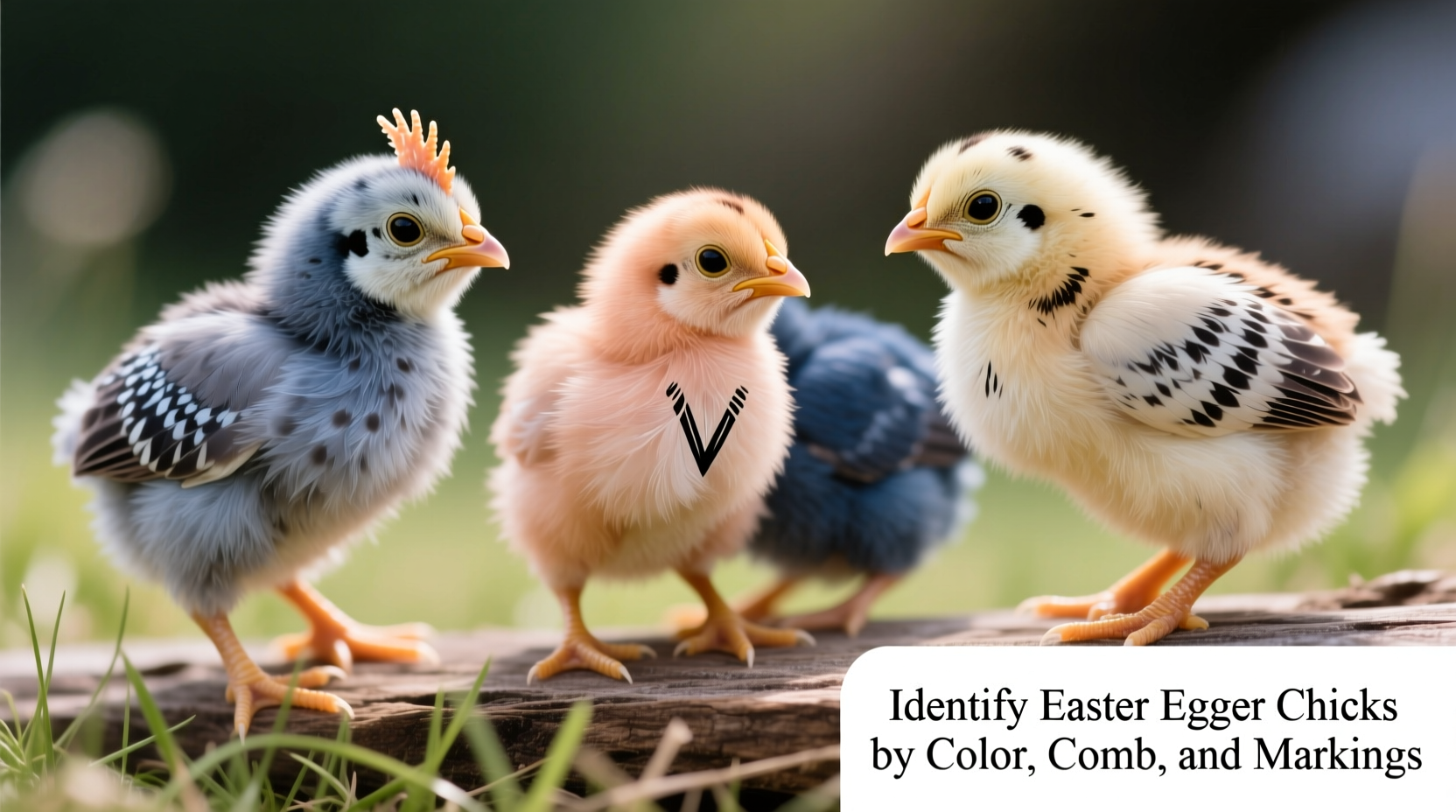
If you're raising backyard chickens and wondering how to identify Easter egger chicks, the key lies in observing their down color, head structure, and subtle feather patterns shortly after hatching. Unlike purebred breeds with predictable appearances, Easter eggers—chickens born from Ameraucana or Araucana crosses—are known for laying colorful eggs and displaying a wide range of physical traits. Because they are hybrid birds rather than a standardized breed, identifying them requires attention to specific visual cues such as tufted ears, pea combs, and mottled down, which often hint at their genetic background. This guide will walk you through the step-by-step process of recognizing Easter egger chicks early, so you can confidently manage your flock and anticipate those vibrant blue, green, or pink-tinted eggs.
Understanding What Makes an Easter Egger Unique
Easter eggers are not a recognized breed but rather a type of hybrid chicken resulting from breeding a bird carrying the blue egg gene—typically an Ameraucana or Araucana—with another breed that does not lay colored eggs. The result is offspring that may inherit the gene for laying pastel-shelled eggs but display highly variable plumage and physical characteristics.
The term “Easter egger” comes from the rainbow of egg colors these hens can produce—ranging from sky blue and seafoam green to olive and even light pinkish shells—reminiscent of dyed Easter eggs. However, this same genetic diversity makes visual identification challenging, especially in chicks under two weeks old.
Key Physical Traits to Watch for in Baby Chicks
While adult Easter eggers can be easier to recognize due to fully developed features, identifying them as chicks relies on several early indicators. Here are the primary signs to look for when trying to determine if a chick is an Easter egger:
- Down Color and Patterns: Easter egger chicks often hatch with mottled, speckled, or uneven down. Common colors include yellow with gray patches, dark brown with tan streaks, or black with white spotting. Solid white or uniformly yellow chicks are less likely to be Easter eggers unless one parent was a light-colored breed.
- Pea Comb Development: One of the most reliable early signs is the presence of a small, bumpy ridge along the top of the head—a developing pea comb. This trait is inherited from Ameraucana and Araucana ancestry and differs from the single comb seen in many commercial breeds like Leghorns.
- Facial Feathering and Muffs: Some Easter egger chicks show slight fluffiness around the cheeks or base of the beak, indicating potential for muffs or beard development later in life. While not all will develop full muffs, early puffiness can be a clue.
- Leg Color: Many Easter eggers have lighter legs—often pinkish-white or pale gray—though this varies widely depending on the non-blue-egg-laying parent. Dark slate legs suggest a Marans influence, while yellow legs might point to a Rhode Island Red cross.
Why Genetic Background Matters in Identification
Since Easter eggers are defined more by genetics than appearance, knowing the parentage of your chicks is crucial. If you're hatching eggs at home or purchasing from a breeder, ask whether one parent is an Ameraucana, Araucana, or another Easter egger. Without this information, identification becomes guesswork.
For example, crossing a blue-egg-laying Ameraucana hen with a barred Plymouth Rock rooster could yield chicks with sex-linked feather patterns—males appearing lighter than females. In contrast, pairing an Araucana with a Sussex might produce chicks with fluffy ear tufts and varied body shapes.
Even within the same hatch, siblings can look dramatically different—one chick may resemble a Barred Rock, another a Golden Comet, and a third look completely unique—yet all carry the capacity to lay colored eggs.
Common Misconceptions About Easter Egger Chicks
Several myths persist about how to identify Easter egger chicks. Let’s clarify the most common ones:
- Myth: All Easter eggers have tufts or beards.
Reality: Only Araucanas consistently have ear tufts, and even then, it's a dominant lethal gene, meaning not all chicks survive. Most Easter eggers lack tufts entirely. - Myth: Feather color predicts egg color.
Reality: There's no correlation between a chick’s down color and the eventual eggshell hue. A black-feathered Easter egger may lay blue eggs just as easily as a golden-laced one. - Myth: You can tell by leg band or hatchery label.
Reality: Hatcheries often label any chick from a blue-egg-laying line as “Easter egger,” even if they don’t carry the gene. Labels can be inaccurate, so physical observation remains essential.
Timeline: When Do Easter Egger Traits Become Clear?
Identification improves significantly as chicks grow. Below is a week-by-week breakdown of what to expect:
| Age | Observable Features | Confidence Level in ID |
|---|---|---|
| Day 1–3 | Mottled down, head shape, comb bump | Low – too early for certainty |
| Week 1–2 | Comb growth, cheek fluff, leg color | Moderate – clues emerge |
| Week 3–4 | First feathers appear, body type forms | High – patterns stabilize |
| Month 2–3 | Wattle and comb size, feather lacing | Very High – close to adult form |
| Month 5+ | Egg production begins | Definitive – egg color confirms |
By four weeks, most Easter eggers begin showing secondary sexual characteristics and clearer feather patterns. By five months, pullets start laying, and the true test arrives: do they produce blue, green, or olive eggs? That’s the ultimate confirmation.
Comparing Easter Eggers to Similar Breeds
To avoid misidentification, it helps to compare Easter eggers with other breeds that share similar traits:
- Ameraucanas: Always have muffs and beard, blue legs, red pea comb, and come in eight recognized colors. More uniform than Easter eggers.
- Araucanas: Rarest of the three; lack tails (rumpless), have prominent ear tufts, and carry the lethal gene. Not commonly found in backyard flocks.
- Golden Comets & Sex-Link Hybrids: Often confused due to similar coloring, but these typically lay brown or tan eggs and have single combs.
If your chick develops a full beard, blue legs, and lays blue eggs, it’s likely an Ameraucana. If tailless with large tufts, possibly an Araucana. But if it has none of these but still lays colored eggs? Then it’s almost certainly an Easter egger.
Practical Tips for Backyard Farmers
Here are actionable steps to improve your ability to identify Easter egger chicks:
- Keep Detailed Records: Note hatch date, parent breeds, and daily observations. Use photos to track changes weekly.
- Isolate Suspect Chicks: Separate possible Easter eggers early to monitor development without confusion from other breeds.
- Use Lighting Wisely: Examine chicks under natural daylight to see subtle color variations and comb texture clearly.
- Wait for First Eggs: Don’t assume identity until egg-laying begins. Even late bloomers can surprise you.
- Join Chicken Communities: Online forums like BackyardChickens.com allow you to post photos and get feedback from experienced keepers.
Regional Differences and Availability
Easter eggers are popular in North America, particularly among small-scale and urban farmers who value novelty and sustainability. They’re less common in Europe, where strict breed standards often discourage hybrid labeling. In countries like the UK or Germany, similar birds may be labeled as “colored egg layers” instead.
In the U.S., major hatcheries like Meyer Hatchery, Stromberg’s, and Cackle Hatchery offer Easter egger chicks seasonally, usually in spring. These are often sold as straight-run (unsexed) chicks, making early identification even more important for managing flock composition.
Advantages and Challenges of Raising Easter Eggers
Pros:
- Lay uniquely colored eggs, adding visual appeal to breakfast tables.
- Generally hardy and adaptable to various climates.
- Good temperament, making them suitable for families with children.
- Often excellent foragers and efficient feed converters.
Cons:
- No breed standard means unpredictable appearance and size.
- Not eligible for poultry shows due to hybrid status.
- Can vary in egg production—some lay 200+ eggs/year, others fewer than 150.
- May pass on inconsistent genetics if used for breeding.
Final Thoughts: Patience Is Key
Learning how to identify Easter egger chicks isn’t about finding a single defining feature—it’s about piecing together clues over time. From the first fuzzy days to the excitement of the first blue egg, the journey is part of the joy of raising backyard chickens. Trust your observations, document changes, and remember that every chick, regardless of breed label, contributes uniquely to your homestead.
Frequently Asked Questions
- Can Easter egger chicks be sexed early?
- No reliable method exists for sexing Easter egger chicks before feather development. Vent sexing requires expertise, and feather sexing only works if crossed with sex-linked breeds.
- Do all Easter eggers lay colored eggs?
- Only hens that inherit the blue egg gene will lay tinted shells. About 75–80% do, but some may lay brown or white eggs if they don’t get the gene.
- What age do Easter eggers start laying?
- Most begin laying between 20 and 28 weeks of age, though stress, diet, or lighting can delay onset.
- Are Easter eggers good for beginners?
- Yes, they’re generally friendly and low-maintenance, but their variability means new keepers should research care basics thoroughly.
- Can I breed my own Easter eggers?
- You can, but results will vary widely. For consistent blue eggs, always include a known blue-egg-layer in the pairing.




 浙公网安备
33010002000092号
 浙B2-20120091-4