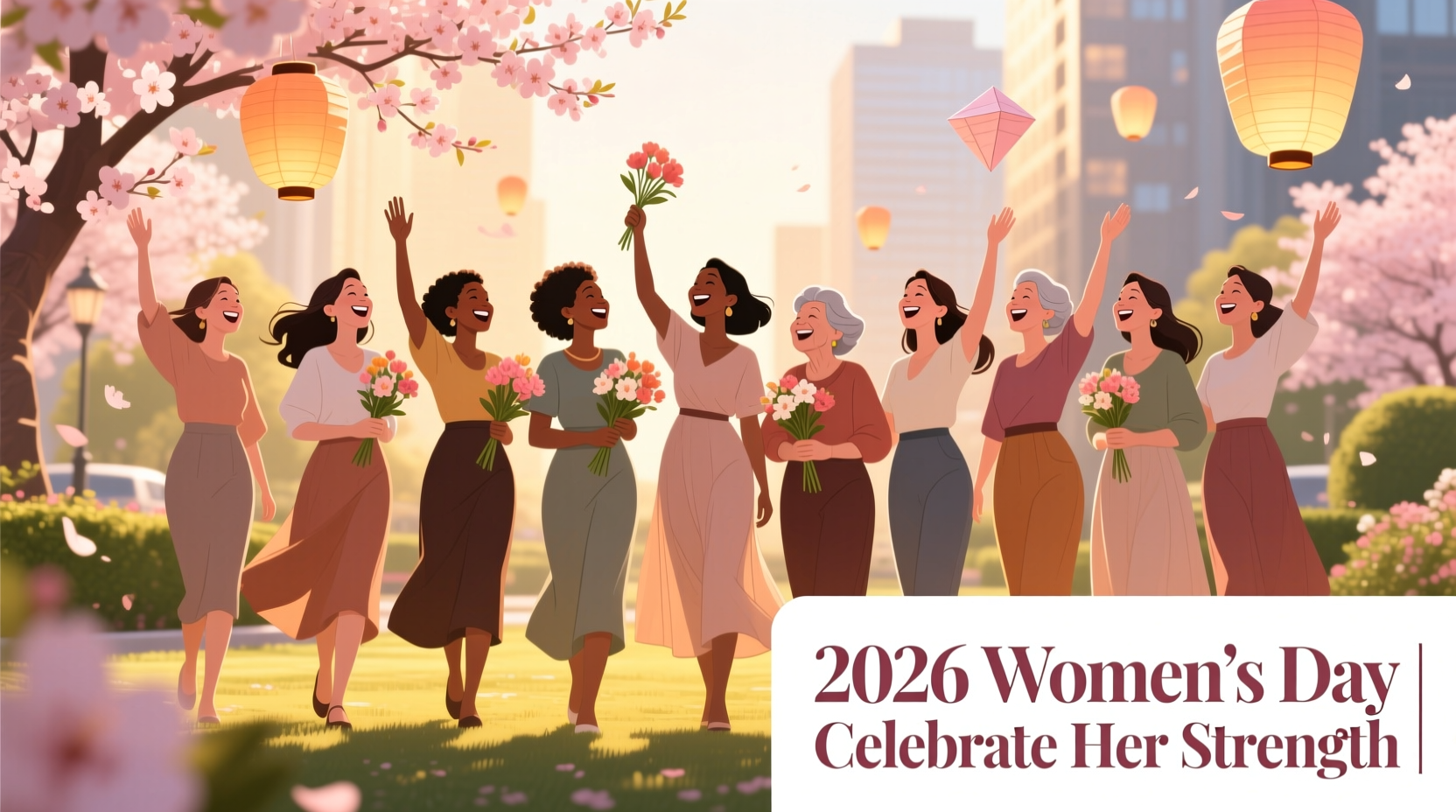
International Women's Day in 2026 falls on Saturday, March 8. This annual celebration, recognized worldwide under the theme of gender equality and women’s achievements, marks a key moment for reflection, advocacy, and action. As one of the most widely observed international days focused on social progress, the 2026 Women's Day date offers individuals, organizations, and governments an opportunity to honor women’s contributions across history, culture, science, politics, and everyday life. Whether you're planning events, selecting meaningful gifts, or seeking ways to participate in global conversations about equity, knowing the exact day—March 8, 2026—is essential for preparation and engagement.
Historical Origins of International Women's Day
The roots of International Women's Day stretch back to the early 20th century, emerging from labor movements in North America and Europe. The first National Woman's Day was observed in the United States on February 28, 1909, organized by the Socialist Party of America to commemorate the 1908 garment workers' strike in New York, where women protested against poor working conditions.
In 1910, at the International Conference of Working Women in Copenhagen, Clara Zetkin, a German socialist and feminist, proposed establishing an annual Women’s Day to advocate for equal rights, including suffrage. Her idea was unanimously approved by over 100 women from 17 countries. The following year, on March 19, 1911, International Women's Day was celebrated for the first time in Austria, Denmark, Germany, and Switzerland, drawing more than one million people to rallies.
The date eventually shifted to March 8, which became permanently fixed after the 1917 women-led protests in Russia (then on the Julian calendar) during World War I. Women marched demanding bread and peace, marking what would later be known as the February Revolution. Four days into the protest, Tsar Nicholas II abdicated, and the provisional government granted women the right to vote. The Soviet Union later adopted March 8 as a national holiday, and the United Nations officially began celebrating it in 1975, solidifying its place on the global calendar.
Why Is Women's Day Always on March 8?
Unlike holidays based on lunar calendars or variable religious observances, International Women’s Day follows a fixed annual schedule. It is always observed on March 8, regardless of the day of the week. This consistency helps with long-term planning for events, educational programs, corporate initiatives, and media campaigns.
The choice of March 8 is historically grounded in the 1917 Russian women’s strike and has since become symbolic of both struggle and progress. While some countries may hold official celebrations on different dates—for example, China observes a half-day off for women on March 8, and some nations celebrate on other days like Women’s Equality Day (August 26 in the U.S.)—the internationally recognized date remains March 8.
How Is International Women's Day Celebrated Around the World?
Global observance of International Women’s Day varies significantly by region, culture, and political context. In many Western countries, it is marked by public talks, panel discussions, art exhibitions, and workplace recognition programs. Educational institutions often host lectures on gender studies, while NGOs launch awareness campaigns on issues such as pay equity, reproductive rights, and violence prevention.
In contrast, in parts of Eastern Europe and Central Asia, March 8 has evolved into a more traditional celebration akin to Mother’s Day. In Russia, Ukraine, and Kazakhstan, men commonly give flowers, chocolates, and small gifts to the women in their lives—mothers, wives, colleagues, and teachers—as gestures of appreciation.
In Ethiopia, the three-day Micewa festival celebrates women with singing, dancing, and community feasting. In Italy, mimosa blossoms are exchanged due to their availability and symbolism of strength and sensitivity. Meanwhile, in Iran and Afghanistan, despite restrictive environments, underground networks and activists use the day to quietly promote women’s rights and share stories of resistance.
| Country | Observance Type | Common Traditions | Public Holiday? |
|---|---|---|---|
| United States | Observance | Lectures, corporate events, social media campaigns | No |
| Russia | Celebration | Gifting flowers, family gatherings | Yes |
| China | Partial holiday | Gifts, company events, half-day off for women | Yes (for women) |
| Australia | Observance | Awards ceremonies, workplace recognition | No |
| Ethiopia | Festival | Micewa cultural celebration | No |
What Are Appropriate Gifts for Women's Day?
Selecting a thoughtful gift for International Women’s Day depends on context—personal, professional, or activist. Unlike commercial holidays, the focus should be on empowerment, recognition, and intentionality rather than consumerism.
- Books by Women Authors: Gift works by Chimamanda Ngozi Adichie, Maya Angelou, or Malala Yousafzai to inspire and educate.
- Donations in Her Name: Support organizations like UN Women, Girls Not Brides, or local shelters combating gender-based violence.
- Personalized Notes: A handwritten message acknowledging someone’s strength, leadership, or kindness can have lasting impact.
- Experiences: Tickets to a lecture, museum visit, or workshop centered on women’s history or skill development.
- Sustainable Products: Eco-friendly items from women-owned businesses emphasize ethical consumption.
Avoid generic or objectifying gifts that reduce the day to mere sentimentality. Instead, align presents with the values of dignity, equity, and respect.
How Can You Participate Meaningfully in 2026?
Marking International Women’s Day goes beyond symbolic gestures. Here are actionable steps for individuals and organizations ahead of Women's Day 2026 on March 8:
- Educate Yourself: Read about pioneering women in fields like science (Marie Curie), civil rights (Rosa Parks), and politics (Indira Gandhi). Explore intersectional feminism and the challenges faced by marginalized women.
- Amplify Voices: Share stories of underrepresented women on social media using hashtags like #IWD2026 or #EachforEqual.
- Advocate for Change: Contact policymakers about legislation supporting paid parental leave, affordable childcare, or anti-discrimination laws.
- Support Women-Led Businesses: Purchase from female entrepreneurs or invest in funds promoting women in tech and innovation.
- Host Inclusive Events: Organize inclusive panels, film screenings, or discussion groups that welcome diverse perspectives.
Employers can conduct pay gap audits, offer mentorship programs, and ensure equitable promotion practices—not just on March 8, but year-round.
Common Misconceptions About Women's Day
Several myths persist about International Women’s Day that dilute its purpose:
- Myth 1: It’s Only for Women. Fact: The day calls for collective action. Men are encouraged to reflect on privilege, challenge sexism, and support gender equity.
- Myth 2: It Replaces Mother’s Day. Fact: While some cultures blend the two, International Women’s Day focuses on systemic change, not familial roles.
- Myth 3: It’s Anti-Men. Fact: Gender equality benefits everyone. Healthier families, stronger economies, and fairer societies result from inclusion.
- Myth 4: One Day Is Enough. Fact: March 8 should spark ongoing commitment, not serve as a single annual gesture.
Will Retailers Be Open on March 8, 2026?
In most countries, March 8, 2026, will function as a regular business day. However, there are exceptions:
- Russia and former Soviet states: Many government offices and schools close; retail hours may vary.
- China: While not a full public holiday, some companies grant women a half-day off work.
- Ukraine and Belarus: Official holiday with closures in public sectors.
- United States, UK, Canada: No closures; businesses operate normally.
If planning shopping trips or event attendance, verify local store hours online or through official announcements, especially if visiting regions where the day holds greater significance.
Looking Ahead: Themes and Campaigns for 2026
Each year, the United Nations assigns a theme to International Women’s Day. Recent themes include “DigitALL: Innovation and technology for gender equality” (2023) and “Invest in Women: Accelerate Progress” (2024). For 2026, experts anticipate a continued focus on economic justice, climate resilience led by women, and digital inclusion.
Organizations like UN Women typically announce the official theme several months in advance. Staying informed allows communities and institutions to align programming, branding, and outreach efforts effectively.
How to Verify the Date and Plan Accordingly
While March 8, 2026, is confirmed as International Women’s Day, those organizing events should double-check with authoritative sources:
- Visit UN Women Watch for global campaign details.
- Consult national government websites for local observance rules.
- Review employer or school policies regarding special events or time-off provisions.
- Follow reputable news outlets and cultural institutions for event listings.
Planning early ensures meaningful participation and avoids last-minute confusion.
Frequently Asked Questions (FAQs)
- When is International Women's Day in 2026?
- International Women's Day is on Saturday, March 8, 2026.
- Is Women's Day a public holiday everywhere?
- No, it is a national holiday in countries like Russia, China (partial), and Vietnam, but not in the U.S., UK, or Australia.
- What is the best way to celebrate Women's Day?
- Learn about women’s history, support women-led initiatives, attend educational events, and advocate for gender equity.
- Can men participate in International Women's Day?
- Absolutely. Men play a vital role in advancing gender equality and are encouraged to engage respectfully and actively.
- Are there specific colors associated with Women's Day?
- Yes, purple symbolizes justice and dignity, green represents hope, and white stands for purity (historically linked to early suffrage movements).





 浙公网安备
33010002000092号
浙公网安备
33010002000092号 浙B2-20120091-4