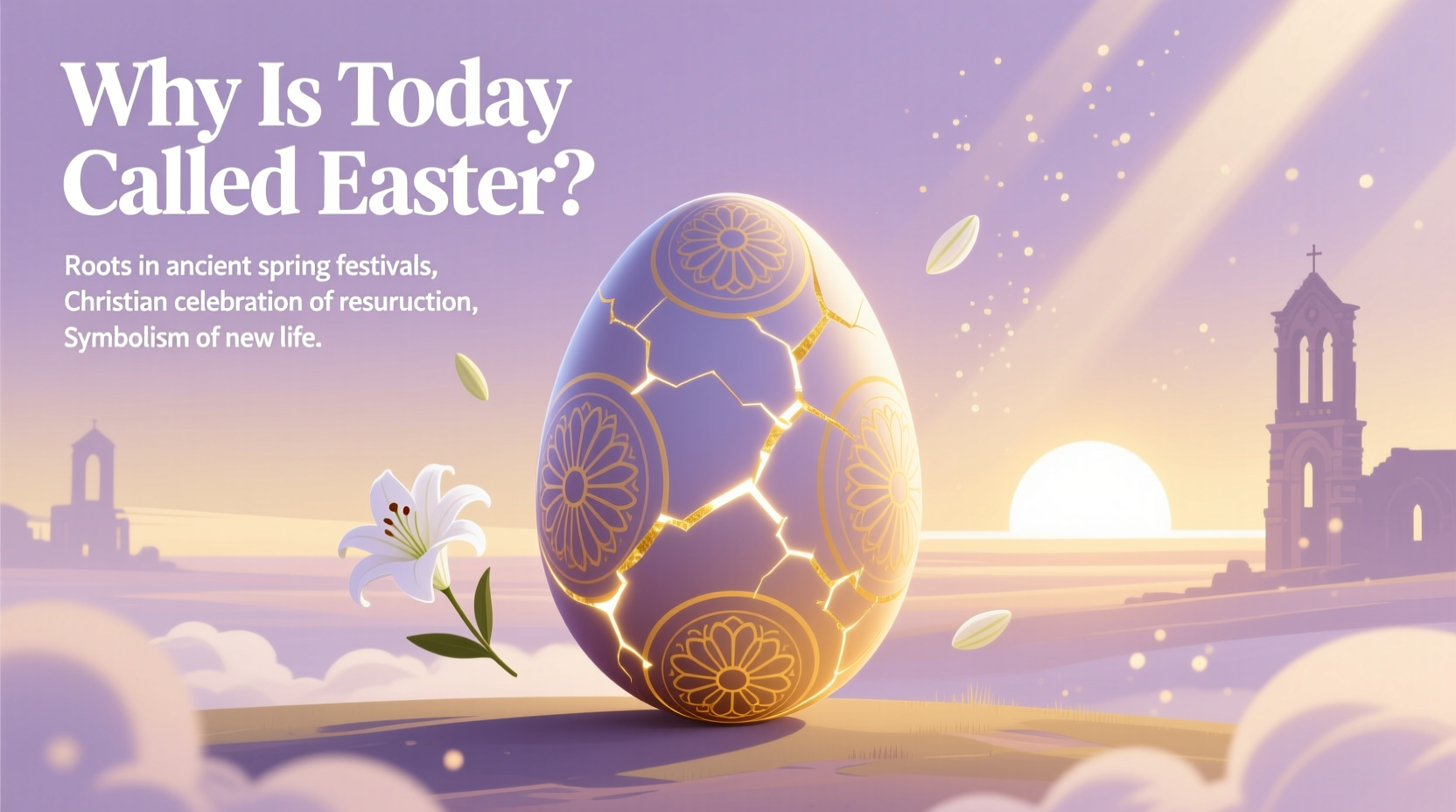
The term why is today called Easter traces back to ancient spring festivals and early Christian traditions that merged over centuries. The word ‘Easter’ most likely originates from ‘Eostre’ or ‘Ostara,’ a Germanic goddess of spring and dawn, whose festival was celebrated during the vernal equinox. As Christianity spread across Europe, the Church adopted and reinterpreted local customs, aligning the celebration of Christ’s resurrection with existing springtime festivities. This fusion gave rise to the name ‘Easter’ for the most important Christian holiday commemorating Jesus’ victory over death. Understanding why is today called Easter requires exploring linguistic roots, religious transformation, and cultural synthesis that shaped one of the world’s most widely observed holidays.
The Etymological Roots of ‘Easter’
The English word ‘Easter’ has no direct biblical origin, unlike terms such as ‘Pascha’ used in many other languages (derived from the Hebrew ‘Pesach,’ meaning Passover). Its unique naming stems from early Anglo-Saxon traditions. The Venerable Bede, an 8th-century English monk and historian, wrote in his work De Temporum Ratione (“The Reckoning of Time”) that the month corresponding to April was called ‘Eosturmonath’ (Easter month), named after the goddess Eostre. During this time, the Anglo-Saxons held feasts to honor her, celebrating renewal, fertility, and the arrival of spring.
While archaeological evidence of worship dedicated specifically to Eostre remains limited, linguistic analysis supports the existence of a Proto-Germanic dawn goddess *Austri, linked to the direction ‘east’ and the concept of dawn. Similar deities appear in other Indo-European cultures—such as Ushas in Vedic tradition and Eos in Greek mythology—suggesting a broader cultural archetype tied to light overcoming darkness, a theme that resonates deeply with the Christian narrative of resurrection.
Christian Adaptation of Pagan Spring Festivals
As Christianity expanded into northern Europe, missionaries often incorporated local customs into Christian observances to ease conversion. This practice, known as inculturation, allowed converts to retain familiar seasonal celebrations while reorienting their meaning toward Christian theology. Thus, the pre-Christian spring festival honoring Eostre became associated with the resurrection of Jesus Christ, which also symbolizes new life and triumph over death.
The timing reinforced this alignment: both the pagan festival and Easter occur around the spring equinox when daylight begins to surpass night, symbolizing hope and rebirth. By the 4th century, the Council of Nicaea (325 CE) established that Easter would be celebrated on the first Sunday after the first full moon following the vernal equinox, anchoring it within the natural calendar while distinguishing it from the Jewish Passover date.
Linguistic Exceptions: Why Most Languages Don’t Call It ‘Easter’
Interestingly, English and some Germanic languages (like German ‘Ostern’) are nearly alone in using a name derived from a pagan goddess. In contrast, Romance, Slavic, and Semitic languages use variations of ‘Pascha,’ rooted in the Hebrew word for Passover. For example:
| Language | Term for Easter | Origin |
|---|---|---|
| Spanish | Pascua | From Latin Pascha, ultimately from Hebrew Pesach |
| French | Pâques | Latin Pascha |
| Italian | Pasqua | Latin Pascha |
| Russian | Пасха (Paskha) | Direct borrowing of Greek Pascha |
| Arabic | عيد الفصح (Eid al-Fusħ) | Means ‘Feast of the Passover’ |
| German | Ostern | Related to ‘east’ and possibly Eostre |
| English | Easter | Anglo-Saxon ‘Eostre’ |
This divergence highlights how cultural context shaped religious terminology. While most of the Christian world emphasizes Easter’s connection to Passover—when Jesus was crucified—English-speaking regions preserved a distinct linguistic heritage reflecting their pre-Christian past.
Symbolism and Modern Traditions Linked to the Name
Many Easter customs reflect both its Christian meaning and earlier spring associations. The Easter bunny, for instance, originated in German folklore as the “Osterhase,” a hare that laid eggs for children who left out baskets—symbols of fertility and new life. Similarly, Easter eggs represent both the tomb of Christ (from which he emerged) and ancient symbols of creation and regeneration.
Even the practice of wearing new clothes at Easter echoes older traditions of renewal. In medieval times, people wore white garments to symbolize purity during baptismal ceremonies held at Easter. Today, the “Easter bonnet” tradition persists in some communities, especially in the southern United States, blending fashion with spiritual symbolism.
Common Misconceptions About the Name ‘Easter’
One widespread myth is that the word ‘Easter’ appears in the Bible, thereby validating its divine origin. However, in the King James Version (KJV), Acts 12:4 uses the word ‘Easter’ once, but this is now understood as a mistranslation. The original Greek text refers to ‘Pascha’ (Passover), and modern translations correctly render it as such. Scholars agree this was an error influenced by the liturgical season rather than accurate exegesis.
Another misconception is that Easter is purely a pagan holiday disguised as Christianity. While it absorbed elements of spring festivals, the core doctrine of resurrection is central to Christian belief and predates any localized customs. The date calculation, theological focus, and scriptural foundation firmly anchor Easter in Christian tradition, even if the name carries cultural baggage.
Regional Variations in Observance and Naming
Easter is observed globally, but practices vary significantly. In predominantly Christian countries like the United States, Canada, Australia, and much of Europe, Easter includes church services, family meals, egg hunts, and commercial activities. Some nations treat it as a public holiday, closing businesses and schools.
In Eastern Orthodox churches, Easter (called “Pascha”) often falls on a different date due to the use of the Julian calendar instead of the Gregorian. This can result in Easter being celebrated up to five weeks later than in Western Christianity. Countries like Russia, Greece, Ukraine, and Serbia follow this tradition, maintaining unique liturgies, fasting periods, and customs such as midnight processions and red-dyed eggs.
In non-Christian-majority countries, Easter may still be recognized culturally or commercially. For example, Japan and South Korea see increased confectionery sales and themed events, though religious observance is minimal. Meanwhile, Muslim-majority nations generally do not observe Easter, except where Christian minorities exist, such as in Egypt or Indonesia.
How the Date of Easter Is Determined
Unlike fixed holidays, Easter is a moveable feast. Its date changes annually based on lunar cycles and the solar calendar. According to the formula set by the First Council of Nicaea:
- Easter Sunday is the first Sunday after the first full moon occurring on or after March 21 (the ecclesiastical approximation of the vernal equinox).
- If the full moon falls on a Sunday, Easter is delayed by one week to avoid coinciding with Passover.
This system ensures Easter always occurs between March 22 and April 25 in the Western Church. In 2026, for example, Easter will fall on March 29. In 2025, it was on April 20, and in 2027, it will be on April 4. These fluctuations often prompt questions like “When is Easter this year?” or “Why does Easter change every year?”—queries driven by the holiday’s complex scheduling.
Practical Tips for Observing Easter Today
Whether celebrating religiously or culturally, here are actionable steps to engage meaningfully with Easter:
- Check Local Church Services: Many denominations hold special events including sunrise services, Holy Week liturgies, and Good Friday reflections. Verify times online or through community bulletins.
- Plan Family Activities: Organize egg decorating, storytelling about the resurrection, or charitable acts like donating to food banks in the spirit of renewal.
- Understand Retail Hours: Major retailers often close or have reduced hours on Good Friday and Easter Sunday, especially in conservative regions. Always check individual store policies before planning shopping trips.
- Explore Cultural Traditions: Try making traditional foods like hot cross buns (UK), paska bread (Eastern Europe), or lamb dishes (Mediterranean), connecting culinary heritage with seasonal themes.
- Educate Children Thoughtfully: Balance fun elements like the Easter bunny with age-appropriate discussions about the holiday’s deeper significance.
Conclusion: Why ‘Easter’ Endures as a Name and Celebration
The question why is today called Easter opens a window into the dynamic interplay between language, religion, and culture. Though the name likely honors an ancient goddess of dawn, its meaning has been profoundly reshaped by two millennia of Christian faith. Today, ‘Easter’ signifies more than just a seasonal shift—it represents hope, redemption, and the enduring human desire for renewal. Whether observed through solemn worship or joyful family rituals, the holiday continues to evolve while retaining its central message: life emerges from darkness, and spring follows winter.
Frequently Asked Questions
Why is it called Easter and not Resurrection Day?
While ‘Resurrection Sunday’ describes the event, ‘Easter’ reflects the historical and linguistic development of the holiday in English-speaking cultures, rooted in both Christian tradition and pre-existing spring festivals.
Is Easter mentioned in the Bible?
The word ‘Easter’ appears only once in the King James Bible (Acts 12:4), but scholars agree it should read ‘Passover.’ The concept of Christ’s resurrection, however, is central to the New Testament.
Do all Christians celebrate Easter on the same day?
No. Western Christians (Catholic and Protestant) use the Gregorian calendar, while many Eastern Orthodox churches use the Julian calendar, leading to different dates, sometimes weeks apart.
What is the link between Easter and Passover?
Jesus celebrated the Last Supper during Passover, and his crucifixion and resurrection occurred during the Passover week. Hence, Easter’s timing is linked to the Jewish festival, symbolizing fulfillment of Old Testament prophecies.
Are there efforts to rename Easter?
Some theologians and linguists have proposed using ‘Resurrection Sunday’ to emphasize Christian doctrine, but ‘Easter’ remains dominant in English due to tradition and widespread usage.




 浙公网安备
33010002000092号
 浙B2-20120091-4