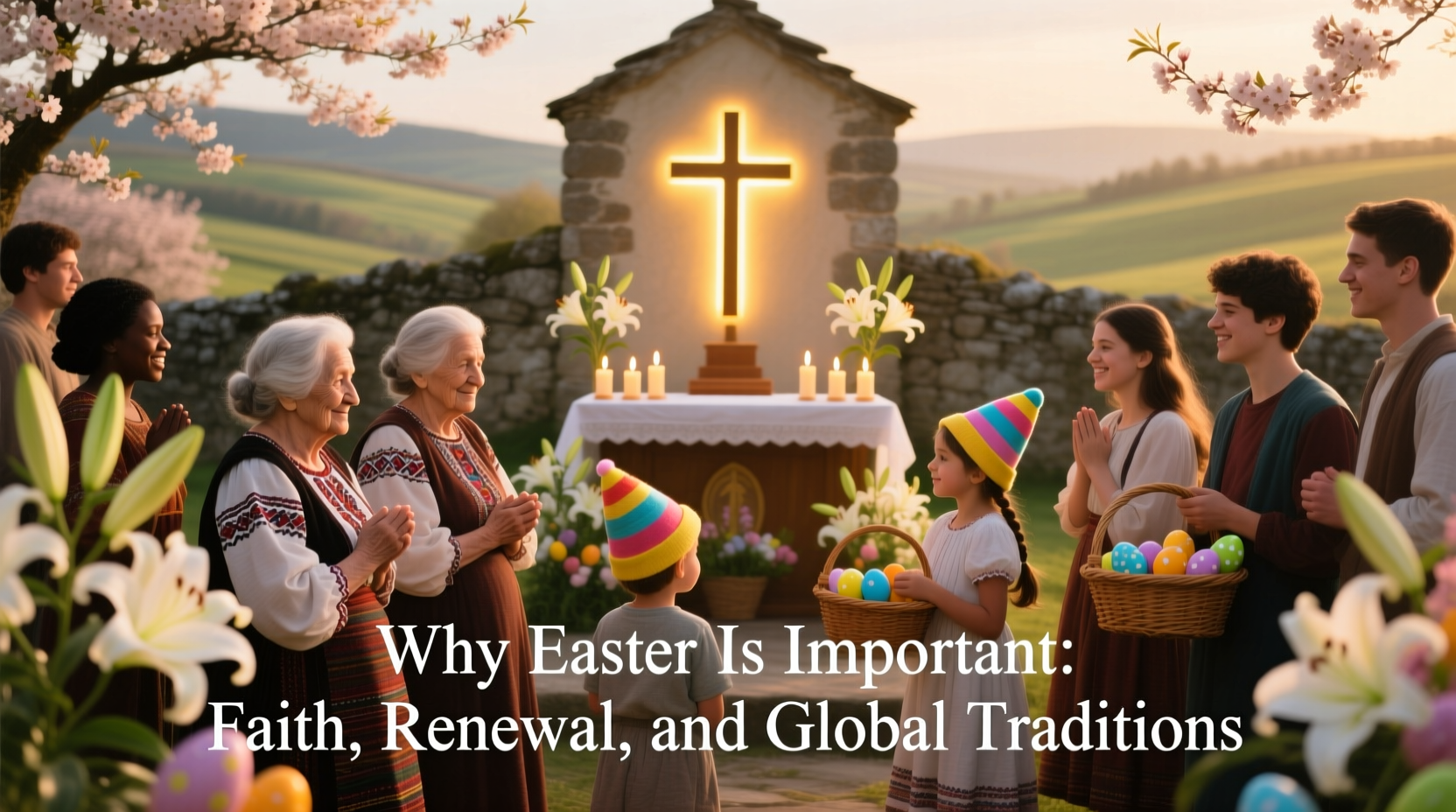
Easter is important because it commemorates the resurrection of Jesus Christ, the cornerstone of Christian faith and a powerful symbol of hope, renewal, and redemption. This central event in Christianity not only defines the spiritual meaning of the season but also inspires widespread cultural traditions, from egg hunts to family gatherings. Understanding why Easter is important reveals its deep roots in religious doctrine, historical evolution, and universal themes of rebirth that resonate across generations and continents.
The Religious Significance of Easter
At its core, Easter is the most sacred day in the Christian liturgical calendar. It marks the resurrection of Jesus Christ three days after his crucifixion, as described in the New Testament. This event affirms the belief that Jesus conquered death, offering eternal life to believers. For millions around the world, Easter Sunday is not just a holiday—it’s a profound declaration of faith.
The week leading up to Easter, known as Holy Week, includes key observances such as Palm Sunday (Jesus’ entry into Jerusalem), Maundy Thursday (the Last Supper), Good Friday (the crucifixion), and the Easter Vigil (held on Saturday night). These rituals allow Christians to reflect on sacrifice, love, and divine grace. The resurrection story provides a message of hope: even in darkness, light can emerge.
Churches hold special services, often beginning before dawn, symbolizing the moment when followers discovered the empty tomb. Hymns like 'Christ the Lord Is Risen Today' echo through sanctuaries, reinforcing communal joy and spiritual renewal. For many believers, attending an Easter service is essential—a way to reaffirm their commitment to faith and connect with a larger spiritual community.
Historical Origins and Evolution of Easter
The origins of Easter trace back to early Christianity, though its timing and customs have evolved over centuries. Unlike fixed holidays, Easter is a moveable feast, calculated based on the lunar calendar. It falls on the first Sunday after the first full moon following the spring equinox—usually between March 22 and April 25.
This method stems from efforts to align Easter with the Jewish festival of Passover, during which Jesus’ crucifixion occurred. Early church councils, notably the Council of Nicaea in 325 CE, standardized the date calculation to unify observance across Christendom. However, Eastern Orthodox churches use the Julian calendar, so their Easter often occurs later than Western celebrations.
Over time, Easter absorbed pre-Christian spring festivals celebrating fertility and renewal. Symbols like eggs and rabbits—once associated with pagan deities and seasonal rebirth—were reinterpreted within a Christian context. Eggs came to represent new life in Christ; the rabbit, though less directly linked, became part of popular tradition through folklore and commercialization.
Cultural Traditions Around the World
While rooted in religion, Easter has become a global cultural phenomenon. Different countries observe it in unique ways, blending spiritual practices with local customs. Here are some notable examples:
| Country | Tradition | Significance |
|---|---|---|
| Italy | Scoppio del Carro (Explosion of the Cart) in Florence | A fireworks-laden cart is ignited to ensure good harvests and blessings. |
| Spain | Semana Santa processions with hooded penitents | Dramatic parades depict scenes from the Passion of Christ. |
| Poland | Śmigus-Dyngus (water fights on Easter Monday) | Playful tradition symbolizing purification and flirtation. |
| Australia | Easter Bilby instead of Bunny | Promotes awareness of endangered native species. |
| United States | Easter egg hunts and parades | Families gather for festive activities centered on children. |
These diverse expressions highlight how Easter serves both religious and social functions—uniting communities, preserving heritage, and fostering intergenerational connection.
Secular Celebrations and Commercial Influence
Beyond the church, Easter has grown into a major cultural event shaped by media, marketing, and family traditions. The image of the Easter Bunny, popularized in 19th-century Germany and brought to America by immigrants, now dominates secular celebrations. Children eagerly await baskets filled with candy, chocolate eggs, and toys.
Retailers capitalize on the holiday with themed decorations, confectionery displays, and clothing lines. Supermarkets stock jelly beans, marshmallow peeps, and chocolate bunnies months in advance. While some criticize the commercialization of Easter, others see it as a way to make the holiday accessible and joyful for all ages, regardless of religious affiliation.
Schools and communities host egg-decorating contests, parades, and charity events. In cities like New York, the annual Easter Parade along Fifth Avenue draws thousands, showcasing elaborate hats and costumes. These festivities emphasize creativity, family bonding, and public celebration.
Symbolism and Meaning Behind Easter Customs
Many Easter traditions carry layered meanings. Consider the following symbols:
- Eggs: Long a symbol of new life, decorated eggs were exchanged in ancient Persia and Egypt. Christians adopted them to represent the empty tomb and resurrection.
- Lilies: White lilies bloom in spring and are used in churches to signify purity, hope, and the resurrection.
- The Lamb: Represents Jesus as the 'Lamb of God' who takes away sins. Roast lamb is a traditional Easter meal in many cultures.
- Crosses and Crucifixes: Central to Christian worship, they remind believers of sacrifice and salvation.
Understanding these symbols enriches the experience of Easter, whether observed religiously or culturally.
Regional Differences in Observance
Easter is celebrated in over 100 countries, but practices vary widely. In predominantly Christian nations like the Philippines and Brazil, Passion plays draw massive crowds. In contrast, in secular societies like Sweden, Easter blends witch folklore (children dress as 'Easter witches') with chocolate feasts.
In some regions, Good Friday is a public holiday with strict regulations—such as alcohol sales bans in parts of the Caribbean and Ireland. Meanwhile, Australia and New Zealand treat Easter weekend as a time for travel and outdoor recreation.
Eastern Orthodox countries like Greece and Russia celebrate with midnight services, candlelight processions, and red-dyed eggs symbolizing Christ’s blood. Because their calendars differ, Orthodox Easter may fall one to five weeks after Western Easter. Travelers should verify local dates and customs when planning visits.
How to Prepare for Easter: Practical Tips
Whether observing Easter spiritually or socially, preparation enhances the experience. Here are actionable steps:
- Check Church Schedules: Confirm service times, especially for sunrise services or special liturgies.
- Plan Family Activities: Organize egg hunts, meals, or craft projects for children.
- Shop Early: Popular items like specialty chocolates or floral arrangements sell out quickly.
- Learn the Calendar: Since Easter changes yearly, mark your calendar—e.g., Easter 2026 falls on March 29 (Western) and April 5 (Orthodox).
- Support Local Traditions: Attend community events or donate to charities involved in Easter outreach programs.
Misconceptions About Easter
Several myths surround Easter. One common misconception is that the holiday is purely commercial or pagan in origin. While modern celebrations include secular elements, its foundation remains deeply theological. Another myth is that Easter always falls on the same date—it does not, due to its lunar-based calculation.
Some believe the Easter Bunny has ancient religious roots, but it originated in 17th-century German folklore as the 'Osterhase,' a hare that laid eggs for well-behaved children. Its integration into Christian culture was gradual and largely influenced by immigration and media.
The Enduring Importance of Easter
So, why is Easter important? Because it transcends a single day of celebration. It embodies enduring human values—hope amid despair, forgiveness over vengeance, and life overcoming death. For Christians, it affirms the promise of eternal life. For others, it offers a moment to reconnect with nature, family, and tradition.
In a world often marked by division and uncertainty, Easter provides a unifying theme of renewal. It encourages reflection, gratitude, and kindness. Whether through prayer, a shared meal, or watching children hunt for eggs, people find meaning in this springtime celebration.
Frequently Asked Questions
Why is Easter important to Christians?
Easter is important to Christians because it celebrates the resurrection of Jesus Christ, affirming core beliefs about salvation, victory over sin, and eternal life.
Why does the date of Easter change every year?
Easter’s date depends on the lunar cycle and the spring equinox. It falls on the first Sunday after the first full moon following March 21, causing annual variation.
Is Easter only a religious holiday?
No, while rooted in Christianity, Easter is also widely celebrated as a cultural and family-oriented holiday with secular traditions like egg hunts and the Easter Bunny.
What’s the difference between Western and Orthodox Easter?
Western churches use the Gregorian calendar; Orthodox churches follow the Julian calendar. This often results in different dates for Easter Sunday.
How can I explain the true meaning of Easter to children?
Use age-appropriate language to share the story of Jesus’ resurrection, emphasizing themes of love, sacrifice, and new beginnings. Pair it with symbolic activities like decorating crosses or planting seeds.




 浙公网安备
33010002000092号
浙公网安备
33010002000092号 浙B2-20120091-4