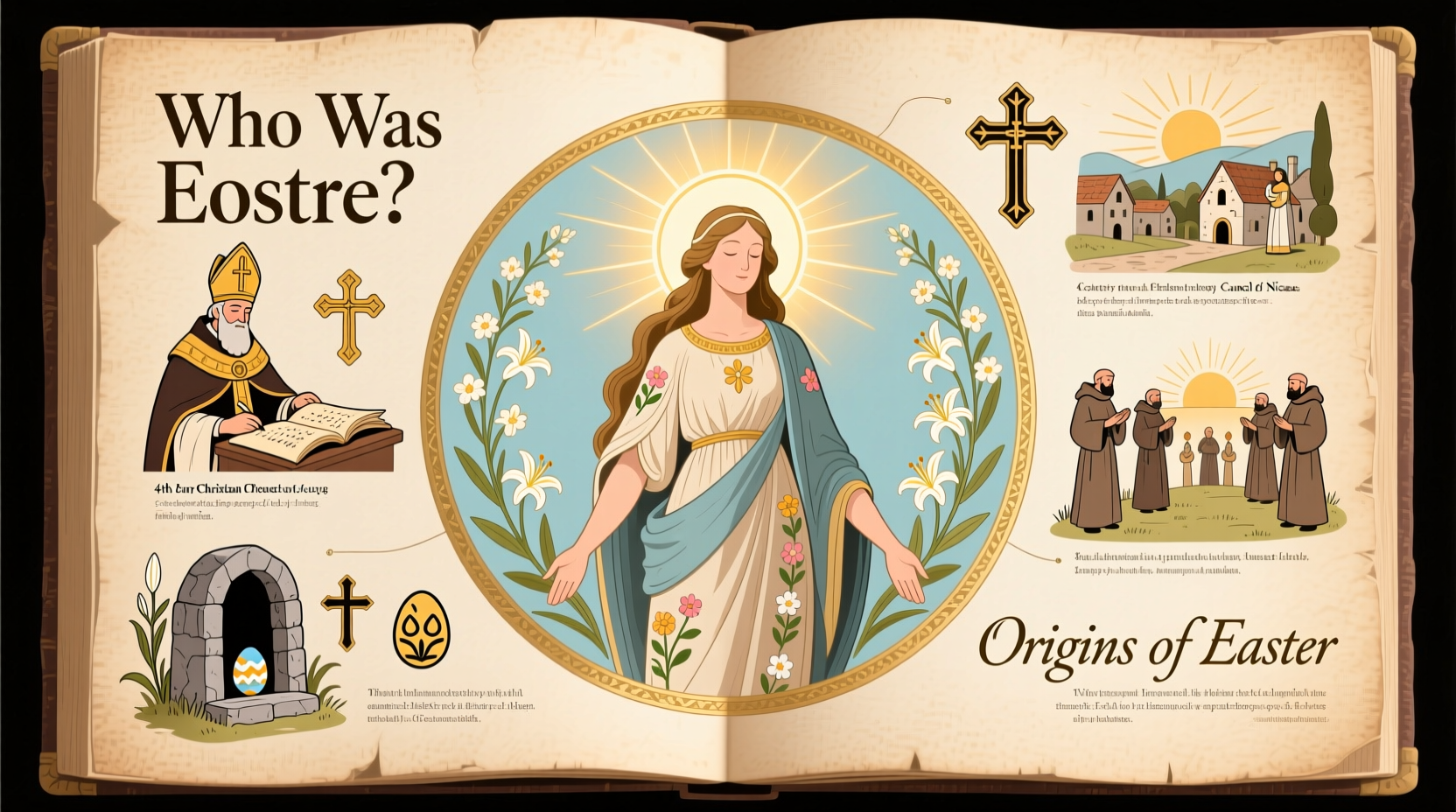
Easter is not a person, so the question 'who was Easter' stems from a common misunderstanding about the origin of the holiday’s name. The term Easter likely derives from Eostre (or Ostara), a pre-Christian goddess associated with spring and fertility in ancient Germanic paganism. While there is limited historical evidence about Eostre, early writings by the Venerable Bede suggest that the month of April was once named “Eosturmonath” in her honor, which later became linked with the Christian celebration of the resurrection of Jesus Christ. Therefore, understanding who was Easter leads us not to a specific individual but to a complex blend of mythological, cultural, and religious influences that shaped one of the most significant holidays in the Christian calendar.
The Pagan Roots of Easter: Who Was Eostre?
To explore who was Easter in historical terms, we must examine the Anglo-Saxon goddess Eostre. The primary source referencing her comes from the 8th-century monk Bede, who wrote in his work De Temporum Ratione (“The Reckoning of Time”) that the English people once celebrated a spring festival dedicated to Eostre. This festival occurred during the month corresponding to modern April, aligning with the vernal equinox and the renewal of life in nature.
Though archaeological or literary evidence for Eostre outside of Bede's account is scarce, many scholars believe she may have been part of a broader Indo-European tradition of dawn and fertility goddesses—figures like the Norse Eos, the Greek Eos, and the Roman Aurora. These deities symbolized light, rebirth, and the arrival of spring, themes that resonate strongly with the modern symbolism of Easter, such as eggs and rabbits.
The connection between Eostre and the Christian Easter is largely linguistic and calendrical. When Christianity spread through England, church leaders often adapted existing pagan festivals into Christian observances to ease conversion. Thus, the timing of Christ’s resurrection—which occurs around the same time as the spring equinox—was merged with the existing spring celebrations, including those honoring Eostre. Over time, the name “Easter” became fixed in English and some German-speaking regions (where it’s called Ostern), while most other languages use variations of “Pascha,” derived from the Hebrew word for Passover (Pesach).
Christian Transformation: From Pagan Festival to Resurrection Celebration
While the name Easter may have pagan roots, the holiday itself centers on the foundational event of Christianity: the resurrection of Jesus Christ following his crucifixion. According to the New Testament, Jesus rose from the dead on the third day after his death, an event commemorated on Easter Sunday. This theological significance far outweighs any etymological connections to pre-Christian traditions in terms of religious practice.
The date of Easter is determined using a lunisolar calendar, meaning it follows both the moon and the solar year. Specifically, Easter falls on the first Sunday after the first full moon following the spring equinox (March 21). Because of this calculation, Easter can occur as early as March 22 or as late as April 25 in the Gregorian calendar used by Western Christians. Eastern Orthodox churches often celebrate Easter on a different date due to their use of the Julian calendar for liturgical purposes.
This moveable feast impacts many aspects of cultural and commercial life, including school holidays, retail promotions, and family gatherings. Understanding who was Easter in a symbolic sense means recognizing how a single term encapsulates layers of history—from ancient fertility rites to profound spiritual renewal.
Symbols of Easter: Eggs, Bunnies, and Their Origins
One reason the question who was Easter persists is because of the holiday’s rich symbolism, much of which predates Christianity. Two of the most iconic symbols—the Easter egg and the Easter bunny—have roots in pre-Christian spring festivals.
- Easter Eggs: Long associated with new life and fertility, decorated eggs were part of spring rituals in ancient Persia, Egypt, and among Slavic peoples. In Christian tradition, they came to represent the empty tomb of Jesus and the idea of resurrection. Today, egg hunts and chocolate eggs are central to secular Easter celebrations, especially in countries like the United States, Canada, and the UK.
- Easter Bunny: The legend of a rabbit bringing eggs originated in 18th-century Germany among Lutheran communities. Known as “Osterhase,” this hare would lay colored eggs in nests prepared by children. German immigrants brought this tradition to America, where it evolved into the modern Easter Bunny figure. Despite its popularity, the bunny has no biblical basis and reflects the blending of folk traditions with religious holidays.
These symbols illustrate how cultural practices evolve over time, absorbing older meanings while acquiring new ones. They also show why people might wonder who was Easter—because the holiday feels like it should be tied to a person, much like Santa Claus is linked to Christmas.
Global Observance: Which Countries Celebrate Easter?
Easter is observed worldwide, though customs vary significantly by region. Below is a table summarizing how different countries celebrate the holiday:
| Country | Religious Observance | Secular Traditions | Public Holiday? |
|---|---|---|---|
| United States | Church services, Good Friday solemnity | Easter egg hunts, family dinners, Easter Bunny | Yes (Good Friday in some states) |
| Italy | Vatican Easter Mass, processions | Easter lamb dinner, regional festivals | Yes |
| Australia | Church attendance, Sunrise services | Easter Bilby instead of Bunny (to protect native species) | Yes |
| Spain | Semana Santa parades with religious statues | No major secular figures; focus remains religious | Yes |
| Japan | Limited Christian observance | Commercial events, pastel fashion, themed cafes | No |
In predominantly Christian nations, Easter is typically a public holiday marked by religious services and family meals. In more secular or non-Christian countries, Easter is often celebrated commercially, with candy sales, themed decorations, and seasonal marketing campaigns. For example, in Japan, despite minimal religious observance, Easter has gained popularity as a romantic or aesthetic holiday akin to Valentine’s Day.
Common Misconceptions About Easter
Several myths surround the origins and meaning of Easter. Clarifying these helps answer the deeper intent behind queries like who was Easter:
- Easter was invented by the Catholic Church: While the Church formalized the date and liturgy, many elements of Easter predate Christianity and were incorporated gradually.
- The Easter Bunny is a Christian symbol: It is not. The bunny entered Easter traditions in the 1700s through German folklore.
- All Christians celebrate Easter on the same day: No. Western churches (Catholic and Protestant) follow the Gregorian calendar, while Eastern Orthodox churches use the Julian calendar, leading to different dates.
- Eostre was a widely worshipped goddess: There is only one clear historical reference to her (from Bede), so her prominence is debated among historians.
How to Prepare for Easter: Religious and Secular Perspectives
Whether observing Easter for religious or cultural reasons, preparation enhances the experience:
- For Christians: Lent begins 40 days before Easter (excluding Sundays) and involves fasting, prayer, and almsgiving. Holy Week includes Palm Sunday, Maundy Thursday, Good Friday, and culminates in the Easter Vigil on Saturday night.
- For Families: Plan egg hunts, purchase baskets, and coordinate meals. Many supermarkets stock specialty items like hot cross buns, marshmallow peeps, and chocolate bunnies weeks in advance.
- For Travelers: Easter weekend often sees increased travel, especially in Europe and North America. Book accommodations early, particularly if attending major events like the Pope’s Urbi et Orbi blessing in Vatican City.
- For Educators: Use Easter as a teaching opportunity about cultural syncretism—how religions absorb and reinterpret local customs.
Verifying Local Easter Dates and Customs
Because Easter’s date changes annually and practices differ by location, it’s wise to verify key details:
- Check official church websites for service times and special events.
- Review local government announcements for public holiday schedules.
- Consult school calendars for vacation periods.
- Look at retailer hours—many stores close on Good Friday or Easter Sunday, especially in religious regions.
Frequently Asked Questions
Is Easter always in April?
No. Although Easter most commonly falls in April, it can occur as early as March 22. For example, Easter Sunday in 2024 was on March 31, while in 2025 it will be on April 20.
Why does the date of Easter change every year?
Easter is based on the lunar cycle and the spring equinox. It is set as the first Sunday after the first full moon following March 21, making it a moveable feast.
Are there different Easters for different religions?
Yes. Most Western Christian denominations celebrate Easter based on the Gregorian calendar, while Eastern Orthodox churches use the Julian calendar, resulting in a different date—sometimes several weeks apart.
What is the link between Passover and Easter?
Jesus’ Last Supper was a Passover meal, and his crucifixion occurred during the Jewish festival of Passover. The word “Easter” in most languages (e.g., French “Pâques,” Spanish “Pascua”) comes from “Pascha,” the Greek form of “Pesach” (Passover).
Did the Romans invent Easter?
No. Easter developed gradually within early Christianity, influenced by Jewish traditions (Passover) and later incorporating local European customs. The Roman Church helped standardize its date but did not “invent” the holiday.




 浙公网安备
33010002000092号
浙公网安备
33010002000092号 浙B2-20120091-4