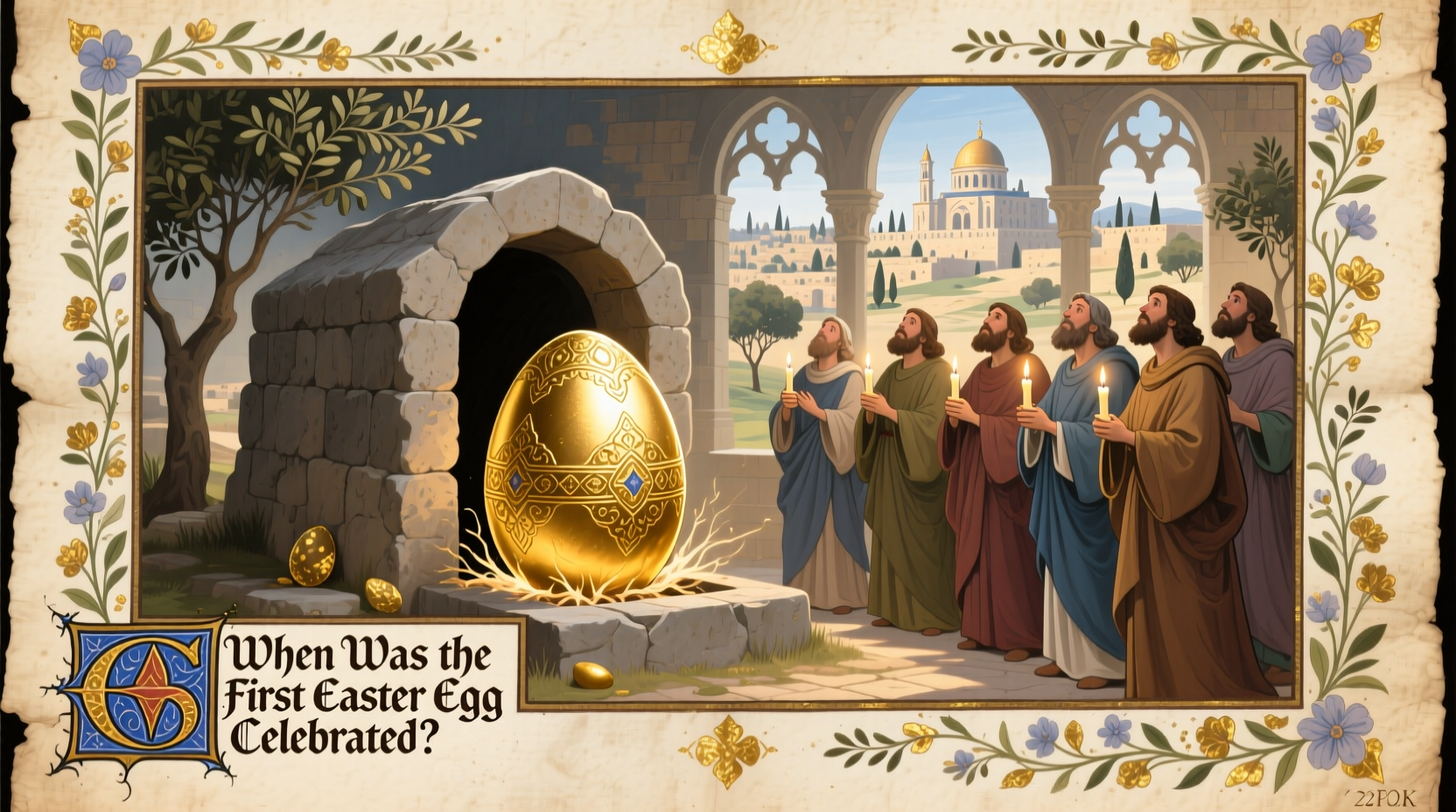
The first recorded use of the Easter egg as a symbolic object in connection with the Christian celebration of Easter dates back to at least the early medieval period, with historical evidence suggesting that decorated eggs were used in Eastern European Christian communities by the 13th century. However, the roots of the Easter egg tradition extend even further into pre-Christian, pagan spring festivals celebrating fertility and renewal—making the origin of the first Easter egg a blend of religious transformation and cultural adaptation. While no single date marks the very first Easter egg, scholars generally agree that the practice emerged gradually between the 8th and 13th centuries, merging ancient customs with Christian theology.
Historical Origins of the Easter Egg
The concept of using eggs as symbols of new life predates Christianity by thousands of years. Ancient civilizations—including the Persians, Egyptians, and Romans—celebrated spring equinox festivals that incorporated eggs as representations of rebirth and fertility. These traditions coincided with the natural world’s renewal after winter, making the egg a powerful metaphor across cultures.
When Christianity spread throughout Europe, church leaders often adapted existing pagan customs to help convert local populations. The timing of Easter, which is linked to the Jewish Passover and the vernal equinox, aligned closely with these spring festivals. As a result, the egg was reinterpreted within a Christian context: it came to symbolize the resurrection of Jesus Christ—the breaking open of the tomb mirroring a chick hatching from an egg.
One of the earliest documented references to Easter eggs appears in the writings of Bede, an 8th-century English monk. In his work De Temporum Ratione (“The Reckoning of Time”), he notes that the month of April was once called Eosturmonath (named after the goddess Eostre), during which feasts involving painted eggs were held. Although Bede does not explicitly describe Easter eggs tied to Christian observance, later historians interpret this as evidence of syncretism—the blending of old and new beliefs.
Eastern Orthodox Traditions and the Red Egg
In the Eastern Orthodox Church, the tradition of dyeing eggs red became especially prominent. According to legend, Mary Magdalene brought a white egg to the Roman Emperor Tiberius to announce the resurrection of Christ, saying, “Christ has risen!” Sceptical, the emperor claimed that would be as impossible as the egg turning red. At that moment, the egg miraculously turned blood-red—a sign interpreted as divine confirmation.
This story, though apocryphal, helped solidify the red Easter egg as a central symbol in countries like Greece, Ukraine, Russia, and Bulgaria. By the 12th century, official church records indicate that priests blessed baskets of red eggs on Easter morning. The color red represented both the joy of resurrection and the blood of Christ shed on the cross.
Ukrainian pysanky, intricately decorated wax-resist eggs, date back to at least the 13th century and reflect a fusion of Slavic folk art and Christian symbolism. These ornate creations suggest that by this time, the Easter egg had evolved beyond simple decoration into a meaningful craft tradition.
The Introduction of Chocolate and Candy Eggs
While real eggs remained the standard for centuries, the modern idea of edible Easter eggs made of chocolate originated in 19th-century Europe. The first known chocolate Easter egg was created in France and Germany around the 1820s–1830s, when confectioners began experimenting with molded chocolate.
In 1873, J.S. Fry & Sons of England produced the first mass-market chocolate Easter egg, followed closely by Cadbury, which introduced its own version in 1875. These early chocolates were dark, hollow, and relatively simple compared to today’s elaborate designs. Nevertheless, they marked a turning point in how Easter eggs were perceived—not just as symbols but as gifts and treats, especially for children.
By the early 20th century, chocolate eggs had become popular across Western Europe and North America. Companies began including small toys or candies inside, laying the foundation for modern surprise-filled eggs. Today, brands like Lindt, Godiva, and Kinder produce millions of chocolate Easter eggs annually, transforming the tradition into a global commercial phenomenon.
Cultural Variations in Easter Egg Practices
Easter egg customs vary widely around the world, reflecting regional histories and religious practices. Below is a table summarizing key differences:
| Country | Tradition | Material/Type | Significance |
|---|---|---|---|
| Ukraine | Pysanka egg decorating | Real egg with wax-resist dyes | Spiritual protection and ancestral heritage |
| Greece | Red eggs cracked at midnight Mass | Hard-boiled, dyed red | Symbolizes Christ's resurrection |
| Germany | Ostereier hunt in gardens/forests | Chocolate or plastic fillable eggs | Children’s game tied to springtime |
| United States | Easter egg rolls and basket deliveries | Plastic eggs with candy or real dyed eggs | Family-centered celebration with secular elements |
| Australia | Easter Bilby instead of Bunny; limited egg hunts | Chocolate bilbies and eggs | Environmental awareness and cultural identity |
Common Misconceptions About the First Easter Egg
Several myths surround the origins of the Easter egg. One common misconception is that the Easter bunny brings eggs because rabbits lay them—an obvious biological error. In reality, the association comes from German Lutheran traditions of the 17th century, where the Osterhase (Easter Hare) judged children's behavior and delivered eggs only to well-behaved ones. This tale merged with broader spring fertility imagery.
Another myth is that Easter eggs are purely a Christian invention. As explored earlier, their roots lie in pre-Christian symbolism, and the church adopted rather than created the tradition. Additionally, some believe chocolate eggs have always been part of Easter, but they only emerged about 200 years ago—long after the religious symbolism was established.
How to Explore the History of Easter Eggs Today
For those interested in experiencing or learning more about the history of Easter eggs, several practical steps can deepen understanding:
- Visit museums: Institutions like the V&A Museum in London or the Ukrainian Museum in New York City feature exhibits on traditional egg art, including pysanky and Fabergé eggs.
- Participate in workshops: Many cultural centers offer classes in egg decorating using historic techniques such as batik or natural dyes.
- Read primary sources: Works like Bede’s Reckoning of Time or Orthodox liturgical texts provide insight into early Christian interpretations of Easter symbols.
- Compare global practices: Engage with international communities or watch documentaries showing diverse Easter celebrations—from Greek midnight services to American White House Easter Egg Rolls.
Modern Significance and Commercialization
Today, Easter eggs serve multiple roles: religious symbol, family tradition, artistic expression, and consumer product. The global market for chocolate Easter eggs alone exceeds $10 billion annually, according to industry reports. Retailers begin stocking shelves as early as January, with peak sales occurring in March and April.
Despite commercialization, many families maintain meaningful rituals. Some still hand-decorate real eggs using onion skins, beets, or turmeric. Others incorporate storytelling, passing down legends about Mary Magdalene or Slavic folklore. Churches may hold egg-blessing ceremonies, reinforcing the spiritual dimension.
At the same time, environmental concerns have led to increased interest in reusable plastic eggs, wooden ornaments, or plant-based dyes. Sustainability-minded consumers seek alternatives to foil-wrapped chocolates and single-use plastics, signaling a shift toward more conscious celebrations.
FAQs About the First Easter Egg
- What year was the first Easter egg used?
- There is no exact year, but historical evidence shows decorated Easter eggs were used in Christian contexts by the 12th–13th centuries, with symbolic egg use dating back to pre-Christian spring festivals.
- Were Easter eggs originally chocolate?
- No, the first Easter eggs were real chicken or goose eggs, often dyed red or decorated. Chocolate Easter eggs were first made in Europe in the early 1800s.
- Who invented the Easter egg tradition?
- No single person invented it. The tradition evolved over centuries, combining pagan spring symbols with Christian teachings about resurrection.
- Why do we associate eggs with Easter?
- Eggs symbolize new life and rebirth, aligning with both the arrival of spring and the Christian belief in Jesus’ resurrection after death.
- Is there a biblical reference to Easter eggs?
- No, the Bible does not mention Easter eggs. Their inclusion in Easter celebrations developed through cultural and liturgical traditions, not scriptural mandate.




 浙公网安备
33010002000092号
 浙B2-20120091-4