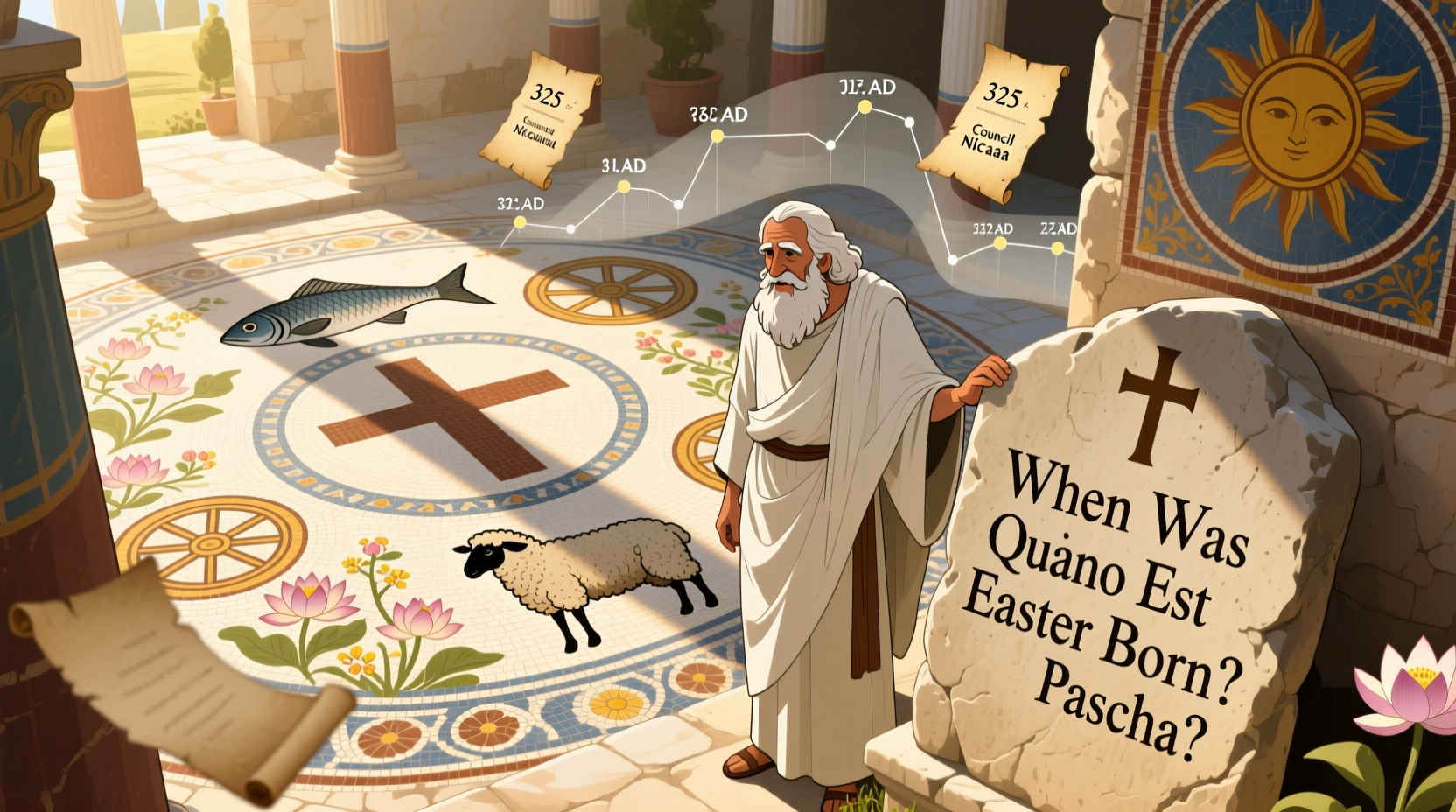
The origins of Easter are deeply rooted in both religious and cultural history, and understanding when Easter was born requires exploring not a single date of inception, but rather the gradual development of a tradition that evolved over centuries. The celebration we now recognize as Easter emerged in the early Christian church as a way to commemorate the resurrection of Jesus Christ, with its theological foundations established by the 2nd century CE. While there is no exact year when Easter was 'born' like a modern holiday might be declared, historical evidence shows that Easter began taking shape during the 100s to 300s CE, particularly through debates about the proper date for observing Christ’s resurrection—known as the Quartodeciman controversy. This makes phrases like the origin of Easter celebration or when did the Easter tradition start more accurate reflections of how this holiday developed organically within early Christianity.
Historical Origins: How Early Christians Shaped Easter
Easter did not appear suddenly; it evolved from Jewish Passover traditions and early Christian worship practices. The resurrection of Jesus, described in the New Testament, occurred during the time of Passover, which linked the new faith closely to existing Hebrew festivals. By the mid-2nd century, Christian communities were already observing a annual festival celebrating the resurrection, though they disagreed on when it should be held.
The term “Easter” itself has complex linguistic roots. In Greek, the word for Easter is Pascha, derived from the Hebrew word for Passover, Pesach. This connection underscores the theological continuity early Christians saw between the liberation of Israel from Egypt and the salvation brought by Christ’s resurrection.
One of the earliest recorded discussions about Easter comes from the Quartodeciman controversy in the late 100s CE. Churches in Asia Minor celebrated Easter on Nisan 14—the same day as Passover—regardless of the day of the week. Meanwhile, Roman churches insisted on celebrating Easter on the following Sunday, emphasizing the Lord's Day. This disagreement prompted bishops to debate and eventually led to efforts at standardization.
The Council of Nicaea and the Standardization of Easter
A major turning point in answering when was the Easter celebration formalized came in 325 CE with the First Council of Nicaea. Convened by Emperor Constantine I, this ecumenical council sought to unify Christian doctrine and practice across the Roman Empire. One of its key decisions was establishing a uniform method for calculating the date of Easter.
It was decided that Easter would fall on the first Sunday after the first full moon following the vernal (spring) equinox. This ensured that Easter remained connected to the astronomical calendar while distinguishing it from the Jewish Passover calculation. Though the council didn’t invent Easter, it marked the moment when the official timing of Easter became standardized across most of Christendom.
This decision helped solidify Easter as a central feast in the liturgical year. Over time, regional variations diminished, especially as the Julian calendar—and later the Gregorian calendar—was adopted across Europe.
Linguistic Evolution: Where Did the Word 'Easter' Come From?
While many languages use derivatives of Pascha (e.g., Pâques in French, Pasqua in Italian), English uses the term "Easter." Scholars believe this name may derive from Eostre (or Ostara), a Germanic goddess associated with spring and fertility, mentioned briefly by the Venerable Bede in his 8th-century work De Temporum Ratione.
However, some modern scholars question whether Eostre was widely worshipped or if Bede inferred her existence based on place names. Regardless, the timing of Easter aligns with ancient spring festivals celebrating renewal and rebirth, suggesting cultural blending between pre-Christian customs and Christian theology.
Thus, while the birth of the Easter holiday is firmly grounded in Christian belief, its name and certain symbols—like eggs and rabbits—likely absorbed elements from earlier seasonal celebrations.
How Is the Date of Easter Determined Today?
Understanding how Easter dates are calculated each year helps clarify why the holiday moves annually. According to the rules set forth in Nicaea:
- Easter falls on the first Sunday after the Paschal Full Moon.
- The Paschal Full Moon is the ecclesiastical full moon on or after March 21 (the fixed date of the vernal equinox).
- Therefore, Easter can occur as early as March 22 or as late as April 25 in the Gregorian calendar.
For example:
- In 2024, Easter Sunday was on March 31.
- In 2025, Easter will be celebrated on April 20.
- In 2026, Easter falls on April 5.
Eastern Orthodox Churches often celebrate Easter on a different date because they follow the Julian calendar for liturgical purposes and use slightly different calculations for the full moon.
Cultural Expansion: When Did Easter Become a Widespread Holiday?
After the Council of Nicaea, Easter gradually spread throughout Europe as Christianity expanded. Missionaries carried the observance into Germany, Britain, Scandinavia, and Slavic regions. By the Middle Ages, Easter had become one of the most important feasts in the Christian calendar, second only to Christmas in significance.
Medieval celebrations included special church services, fasting before Easter (what we now call Lent), and festive meals after the long abstinence. The idea of Easter eggs, symbolizing new life, became popular during this era, though their decoration varied by region.
In England and parts of Northern Europe, the tradition of egg rolling and egg decorating emerged. In Eastern Europe, elaborately painted eggs (like Ukrainian pysanky) became an art form. These customs reflect how local cultures adapted the core message of resurrection into tangible expressions.
Modern Celebrations: Secular and Religious Aspects
Today, Easter is observed globally in both religious and secular forms. For Christians, Easter Sunday marks the culmination of Holy Week, including Maundy Thursday, Good Friday, and the Easter Vigil. Church attendance peaks during this period, especially among Catholic, Orthodox, and Protestant denominations.
At the same time, commercial and cultural traditions have grown around Easter, such as the Easter Bunny, candy hunts, and family gatherings. These aspects are particularly prominent in countries like the United States, Canada, Australia, and the UK.
Retailers prepare months in advance for increased demand in chocolate, greeting cards, clothing, and home decor. Many families treat Easter as a springtime celebration of renewal, regardless of religious affiliation.
| Year | Date of Easter (Western) | Date of Easter (Orthodox) |
|---|---|---|
| 2024 | March 31 | May 5 |
| 2025 | April 20 | April 20 |
| 2026 | April 5 | April 12 |
| 2027 | March 28 | May 2 |
| 2028 | April 16 | April 16 |
Global Observance: Which Countries Celebrate Easter?
Easter is officially recognized in numerous countries around the world, particularly those with strong Christian traditions. Some nations treat it as a public holiday, closing government offices and schools. Examples include:
- United States: No federal holiday, but widely observed; Good Friday and Easter Monday are holidays in some states.
- United Kingdom: Good Friday and Easter Monday are bank holidays.
- Australia and New Zealand: Public holidays for Good Friday and Easter Monday.
- Canada: Federal statutory holiday on Good Friday; Easter Monday is also a holiday in some provinces.
- Germany, France, Italy, Spain: National holidays during the Easter period.
- Philippines, Brazil, Mexico: Major religious observances with processions and masses.
- Russia and Greece: Eastern Orthodox Easter is a significant cultural and religious event.
In predominantly non-Christian countries, Easter may still be acknowledged in expatriate communities or tourist areas, though not as a national holiday.
Common Misconceptions About the Origin of Easter
Several myths persist about when Easter originated and what it represents:
- Myth: Easter was invented by the Roman Catholic Church in the Middle Ages.
Fact: Easter observances date back to the 2nd century, long before the medieval period. - Myth: Easter is purely a pagan holiday disguised as Christianity.
Fact: While some symbols overlap with spring festivals, the core meaning centers on Christ’s resurrection—a distinctly Christian doctrine. - Myth: All Christians celebrate Easter on the same date.
Fact: Due to calendar differences, Eastern and Western churches often observe Easter on different Sundays.
How to Prepare for Easter: Tips for Families and Communities
Whether observing Easter religiously or culturally, preparation enhances the experience. Here are practical tips:
- Religious Preparation: Attend Lenten services, participate in fasting or almsgiving, and read Scripture passages related to Holy Week.
- Family Activities: Plan an Easter egg hunt, bake traditional foods (like hot cross buns or lamb), or create handmade decorations.
- Educational Engagement: Teach children about the meaning of Easter using age-appropriate books or videos that explain both historical and symbolic aspects.
- Community Involvement: Volunteer at church events, donate baskets to shelters, or host inclusive gatherings that welcome diverse backgrounds.
Verifying Local Easter Dates and Practices
Because Easter dates vary slightly depending on denomination and location, always verify specific observances:
- Check your local church’s website for service times and special events.
- Review school and government holiday schedules to confirm closures.
- Consult national tourism or religious affairs websites for country-specific information.
- Use online liturgical calendars to track future Easter dates up to several decades ahead.
Frequently Asked Questions
- When was the first Easter celebration?
- The first known observances of Easter occurred in the 2nd century CE, particularly during debates over the Quartodeciman practice of celebrating Christ’s resurrection on Nisan 14.
- Why does the date of Easter change every year?
- Easter follows a lunar calendar tied to the vernal equinox, so its date shifts annually based on the first Sunday after the Paschal Full Moon.
- Do all Christians celebrate Easter on the same day?
- No. Western Christians (Catholic and Protestant) usually celebrate on a different date than Eastern Orthodox Christians due to calendar and calculation differences.
- Is Easter mentioned in the Bible?
- The event of Christ’s resurrection is central to the New Testament, though the word "Easter" appears only once in older English translations (Acts 12:4) and refers to Passover.
- What is the oldest known Easter tradition?
- One of the oldest traditions is the Easter Vigil, a nighttime service dating back to the 3rd century, marking the transition from Lent to Easter with light, baptism, and communion.





 浙公网安备
33010002000092号
浙公网安备
33010002000092号 浙B2-20120091-4