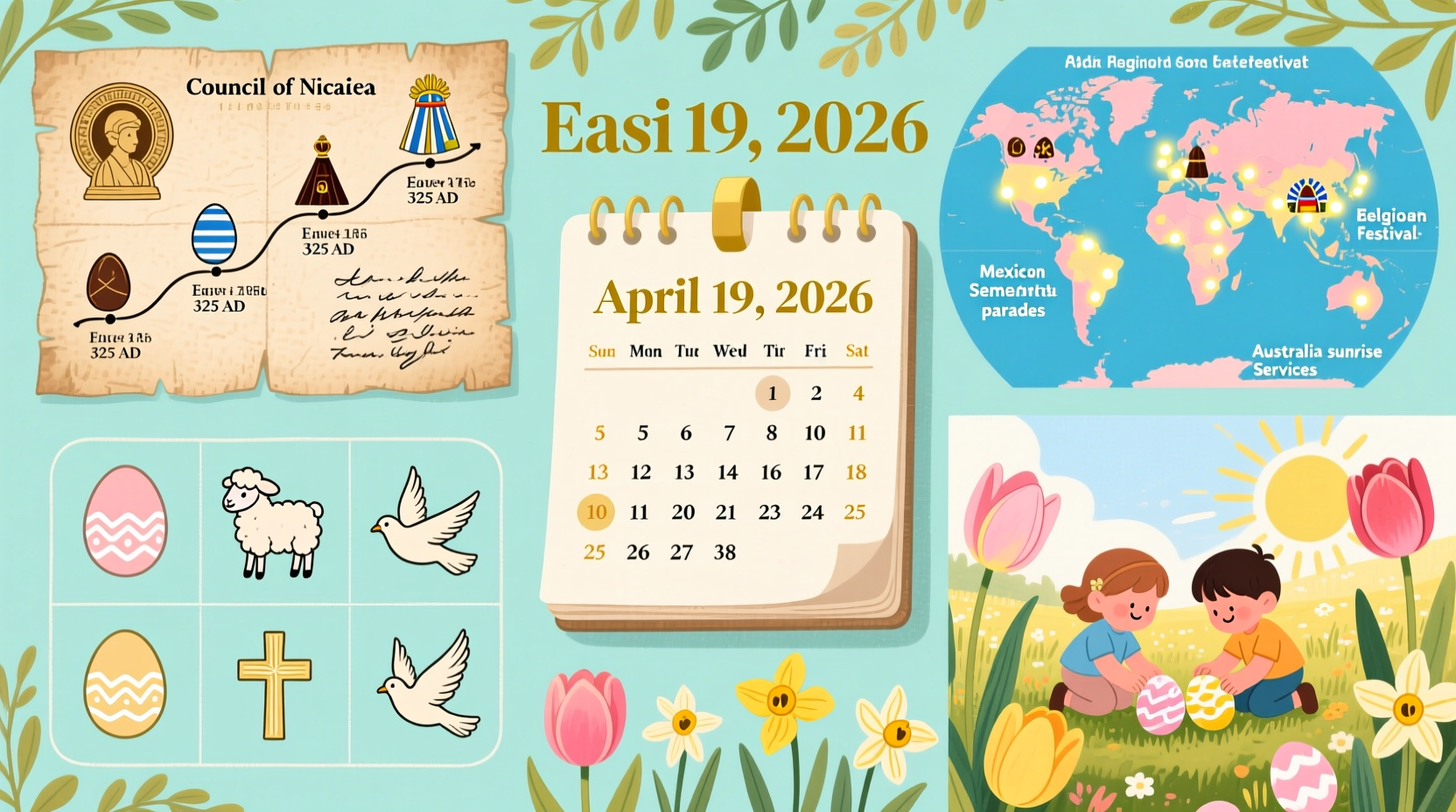
Easter 2026 will be celebrated on Sunday, April 5th. This date applies to both Western Christianity, which follows the Gregorian calendar, and most Eastern Orthodox churches, as the calculation aligns in that year. Understanding when is Easter 2026 involves recognizing the unique lunar-based formula used to determine its timing—a method rooted in centuries of religious tradition and astronomical observation. Unlike fixed holidays such as Christmas, Easter’s shifting date often prompts questions about its scheduling, significance, and variations across cultures.
The Calculation Behind Easter’s Date
Easter does not fall on a fixed calendar date; instead, it is determined by a combination of solar and lunar cycles. In Western Christianity, Easter Sunday is set as the first Sunday after the first full moon following the spring equinox (March 21). This system was established during the Council of Nicaea in 325 AD to standardize the celebration across Christendom.
This means Easter can occur as early as March 22 or as late as April 25 in the Gregorian calendar. For example:
- 2024: March 31
- 2025: April 20
- 2026: April 5
- 2027: March 28
Eastern Orthodox churches use the Julian calendar for liturgical purposes, which often results in a different date—typically one to five weeks later than Western Easter. However, in 2026, both observances coincide on April 5 due to alignment between the two calendrical systems.
Why Does Easter’s Date Change Every Year?
The variability of Easter stems from its origins in Jewish Passover, which itself is based on the lunar calendar. Early Christians wanted Easter to follow Passover since Jesus’ resurrection occurred after Passover according to the Gospels. Thus, linking Easter to the full moon ensured this connection.
The term “Paschal full moon” refers to a calculated ecclesiastical approximation of the actual astronomical full moon, not necessarily the exact night sky event. This symbolic date helps maintain consistency within church calendars regardless of geographical location or annual fluctuations in lunar visibility.
Global Observance: Which Countries Celebrate Easter?
Easter is observed in over 100 countries worldwide, either as a religious holiday, public holiday, or cultural celebration. While predominantly celebrated in Christian-majority nations, many secular communities also participate in festive activities like egg hunts and family gatherings.
Key countries where Easter is widely celebrated include:
| Country | Public Holiday? | Notable Traditions |
|---|---|---|
| United States | No (but widely observed) | Easter egg hunts, church services, family meals |
| United Kingdom | Yes (Good Friday & Easter Monday) | Chocolate eggs, parades, royal events |
| Australia | Yes (four-day weekend) | Easter Bilby instead of Bunny, community festivals |
| Italy | Yes | Religious processions, Scoppio del Carro in Florence |
| Brazil | Yes | Church vigils, traditional sweets, Passion plays |
| Russia | Yes (Orthodox Easter) | Midnight liturgies, kulich bread, painted eggs |
In predominantly Catholic or Protestant nations, Good Friday and Easter Sunday are central to Holy Week observances. Some countries extend the holiday with Easter Monday as a day off work and school, facilitating extended family time and travel.
Regional Differences in Easter Dates
One of the most frequently asked questions related to when is Easter concerns discrepancies between Western and Eastern celebrations. The primary reason lies in the use of different calendars:
- Western Churches: Use the Gregorian calendar (introduced in 1582).
- Eastern Orthodox Churches: Continue using the older Julian calendar for calculating feast days.
Because the Julian calendar is currently 13 days behind the Gregorian, the spring equinox is considered to be on April 3 instead of March 21. Additionally, Orthodox churches rely on specific ecclesiastical tables rather than modern astronomical data, leading to occasional divergence.
For instance, while Easter 2026 coincides on April 5, in 2025 Western Easter was on April 20, but Orthodox Easter fell on April 27. Travelers and interfaith families should verify local dates each year through official church bulletins or national holiday calendars.
Common Misconceptions About Easter’s Timing
Several myths persist about how Easter’s date is decided:
- Myth: Easter always occurs in April.
Fact: It can fall in March (e.g., March 27, 2016; March 31, 2024). - Myth: The Pope decides Easter each year.
Fact: The date is computed mathematically; no annual decision-making is involved. - Myth: All Christians celebrate Easter on the same day.
Fact: Denominational and calendrical differences lead to multiple observance dates globally.
How to Prepare for Easter: Practical Tips
Whether observing Easter religiously or culturally, preparation enhances the experience. Here are actionable steps:
- Check Local Church Schedules: Services for Palm Sunday, Maundy Thursday, Good Friday, and Easter Sunday vary by denomination and congregation.
- Plan Family Activities: Organize egg decorating kits, plan outdoor hunts, or prepare traditional dishes like lamb, hot cross buns, or paska bread.
- Shop Early: Chocolate eggs, candy, and seasonal decorations sell out quickly. Consider ethical brands or homemade alternatives.
- Verify Retail Hours: Many stores close on Good Friday and Easter Sunday, especially in Europe and Latin America. Supermarkets may open limited hours. Always check individual retailer websites before heading out.
- Travel Planning: If visiting family or attending services elsewhere, book transportation and accommodations well in advance—Easter weekend sees high demand.
Secular vs. Religious Significance
While Easter commemorates the resurrection of Jesus Christ in Christian theology, it has also evolved into a broader cultural event. Secular symbols like the Easter Bunny and colored eggs originate from pre-Christian spring festivals celebrating fertility and renewal.
In some countries, including Germany and Sweden, children believe an Easter fox or witch delivers eggs. These adaptations reflect how local folklore blends with religious practice. Despite commercialization, many people still attend church services, fast during Lent, or engage in charitable acts during Holy Week.
Future Easter Dates at a Glance
To help readers plan ahead, here are upcoming Easter Sundays:
| Year | Western Easter | Orthodox Easter |
|---|---|---|
| 2025 | April 20 | April 27 |
| 2026 | April 5 | April 5 |
| 2027 | March 28 | May 2 |
| 2028 | April 16 | April 16 |
| 2029 | April 1 | April 8 |
Note that Orthodox dates may shift slightly depending on whether the church uses revised Julian calculations or strictly adheres to historical tables.
Verifying Easter Dates Locally
Due to regional, denominational, and institutional differences, individuals should confirm key details locally:
- Consult official diocesan or parish websites for service times.
- Review government holiday announcements for public closures.
- Check school calendars—many districts have spring breaks aligned with Easter.
- Monitor retail chains’ operating hours via their customer service portals.
Frequently Asked Questions
Why isn’t Easter on the same date every year?
Easter’s date depends on the lunar cycle and the spring equinox. It's set as the first Sunday after the first full moon following March 21, causing annual variation.
Do all countries celebrate Easter on April 5, 2026?
Most will observe it then, but some Orthodox communities might celebrate later if they follow divergent calendrical calculations. Always verify local practices.
Is Good Friday a public holiday everywhere?
No. It is recognized in the UK, Australia, and several Caribbean nations, but not federally in the U.S., though some states observe it.
Can Easter ever fall in March?
Yes. The earliest possible date is March 22. Recent examples include March 23, 2008, and March 27, 2016. In 2024, Easter was on March 31.
How is the Easter date calculated for Orthodox churches?
Orthodox churches use the Julian calendar and a fixed method based on ecclesiastical tables, often resulting in a later date than Western Easter, though alignment occurs periodically—as in 2026.




 浙公网安备
33010002000092号
浙公网安备
33010002000092号 浙B2-20120091-4