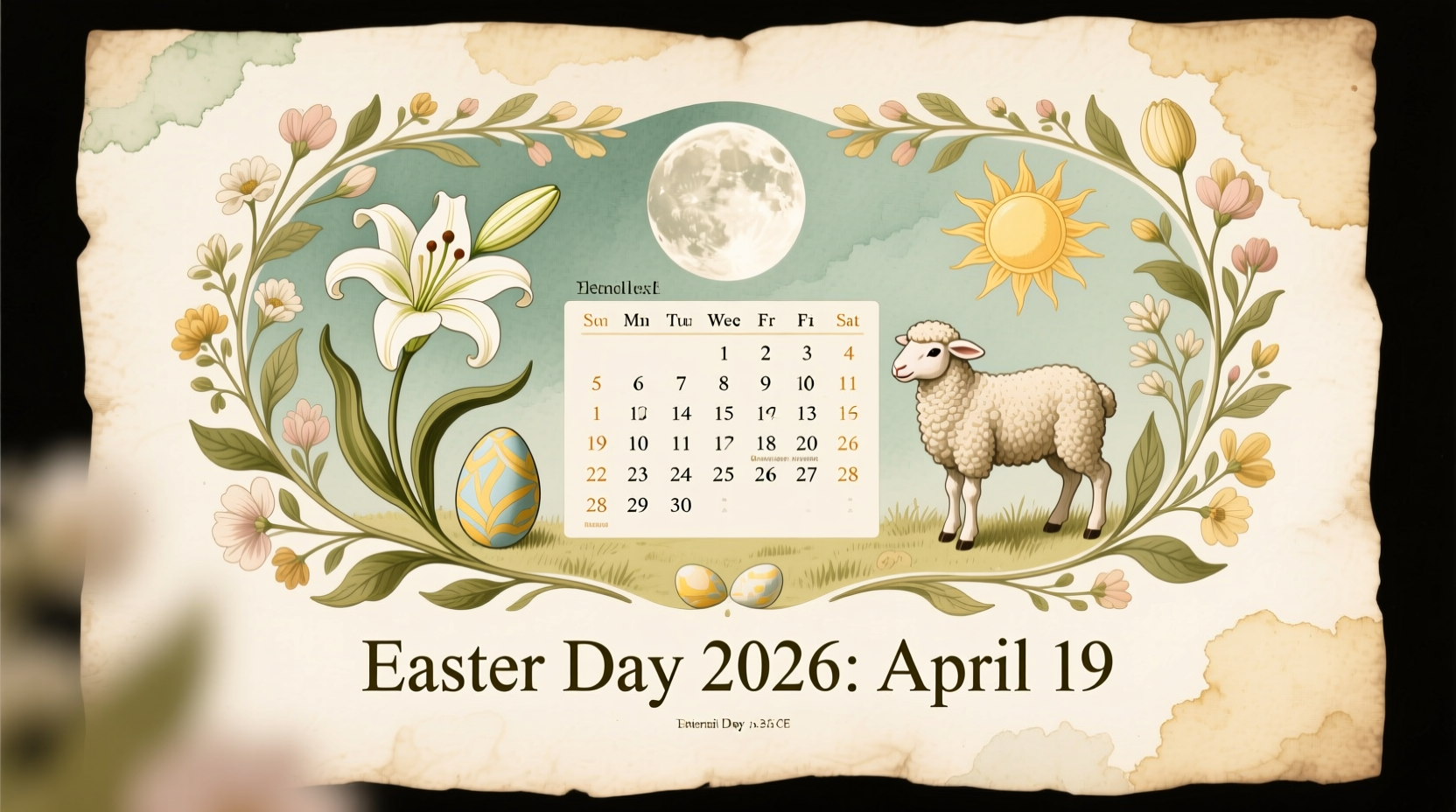
Easter day in 2026 will be celebrated on Sunday, April 5th. The exact determination of when Easter day is determined each year follows a unique ecclesiastical rule rooted in both astronomical observation and historical Christian tradition. Specifically, Easter falls on the first Sunday after the first full moon following the vernal (spring) equinox in the Northern Hemisphere. This method of calculating the date—known as the Computus—explains why the timing of Easter shifts annually, typically occurring between March 22 and April 25. Understanding when Easter day is determined involves exploring not only religious customs but also calendar systems, lunar cycles, and global variations in observance.
How Is the Date of Easter Calculated?
The process of determining when Easter day is determined relies on a combination of solar and lunar calendars. Unlike fixed holidays such as Christmas (December 25), Easter is a moveable feast. Its date is set using the following criteria:
- The vernal equinox is fixed at March 21 for ecclesiastical purposes, regardless of the actual astronomical event.
- The 'ecclesiastical full moon' is calculated using tables rather than direct lunar observation.
- Easter Sunday is the first Sunday after this ecclesiastical full moon.
This system was established during the First Council of Nicaea in 325 CE to standardize the celebration of Easter across all Christian churches. However, differences in calendar systems—specifically between the Gregorian and Julian calendars—lead to discrepancies between Western and Eastern Orthodox churches.
Western vs. Eastern Orthodox Easter Dates
One common source of confusion about when Easter day is determined lies in the difference between Western Christianity (Catholic and Protestant) and Eastern Orthodoxy. While both follow similar principles, they use different calendars:
- Western Churches: Use the Gregorian calendar, introduced by Pope Gregory XIII in 1582 to correct drift in the Julian calendar.
- Eastern Orthodox Churches: Continue using the older Julian calendar for liturgical calculations, which currently runs 13 days behind the Gregorian.
As a result, Orthodox Easter often occurs later than Western Easter—sometimes by several weeks. In 2026, for example, Western Easter falls on April 5, while Orthodox Easter will be observed on April 12.
Why Does the Date of Easter Change Every Year?
The variability in when Easter day is determined stems from its dependence on lunar phases within a solar calendar framework. The early church wanted Easter to align symbolically with the Jewish Passover, which itself is based on the lunisolar Hebrew calendar. Since lunar months do not perfectly match solar years, the full moon after the spring equinox can fall on different dates each year. Therefore, Easter must be recalculated annually.
This interplay between astronomy and theology makes Easter one of the most complex holidays to schedule. It's also why phrases like “when is Easter Sunday in 2026” or “how is the date of Easter decided” are frequently searched online each winter.
Historical Development of Easter Dating
The quest to determine when Easter day is determined has deep historical roots. Before the Council of Nicaea, various Christian communities celebrated Easter on different dates, leading to disunity. Some followed the Quartodeciman practice of observing Easter on Nisan 14 (the day of the Jewish Passover), regardless of the weekday, while others insisted it should always be on a Sunday.
The council resolved that Easter must be celebrated universally on a Sunday, independent of the Hebrew calendar, yet still linked to the spring equinox and full moon. Over time, mathematical tables were developed to predict these events without relying on actual observations, ensuring consistency across regions.
In the 6th century, Dionysius Exiguus created the Anno Domini dating system and contributed significantly to the Easter calculation tables used in medieval Europe. Later, the Gregorian reform refined these computations to maintain alignment with the solar year.
Modern Tools for Determining Easter’s Date
Today, you don’t need advanced astronomy knowledge to know when Easter day is determined. Numerous digital tools and official church publications provide accurate dates decades in advance. Most major calendars—including Google Calendar, Apple Calendar, and printed planners—include Easter Sunday automatically.
Additionally, many government and religious websites publish liturgical calendars well ahead of time. For instance, the Vatican releases annual liturgical guides, and national statistical offices often include religious holidays in public holiday listings.
If you're planning events, travel, or retail operations around Easter, checking an authoritative calendar source ensures accuracy. Retailers, schools, and transportation services often adjust schedules based on Easter’s shifting date, so提前 verification is essential.
Global Observance of Easter
While the method of determining when Easter day is determined is standardized among most Christian denominations, the extent of public observance varies widely by country. Below is a breakdown of nations where Easter is recognized as a public or cultural holiday:
| Country | Public Holiday? | Key Observances |
|---|---|---|
| United States | Yes (Good Friday & Easter Monday vary by state) | Easter parades, egg hunts, church services |
| United Kingdom | Yes (Good Friday and Easter Monday) | Bank holidays, royal messages, family gatherings |
| Canada | Yes (Good Friday; Easter Monday federal) | Religious services, community meals |
| Australia | Yes (Good Friday and Easter Monday) | Hot cross buns, Easter bilby campaigns |
| Germany | Yes (both Good Friday and Easter Monday) | Osterbaum (Easter trees), church bells silent on Holy Saturday |
| Brazil | Yes (Good Friday and Easter Sunday) | Passion plays, processions |
| Russia | No official public holiday, but widely observed | Orthodox Easter with midnight services, kulich bread |
| Japan | No | Limited commercial awareness; some churches observe |
| India | Yes (in部分地区) | Celebrated by Christian minorities; regional closures |
| Saudi Arabia | No | Private worship allowed for expatriates; no public celebrations |
Note: Even within countries, local laws may affect business hours and school closures. Always verify specific regulations through municipal or employer announcements.
Common Misconceptions About Easter’s Date
Several myths persist about when Easter day is determined:
- Myth: Easter is always the second Sunday in April.
Reality: While common, this isn't true. In 2026, it's April 5—the first Sunday. In 2029, it will fall on March 25. - Myth: The full moon used is the actual observed moon.
Reality: It's an ecclesiastical approximation, not dependent on real-time skywatching. - Myth: All Christians celebrate Easter on the same day.
Reality: Due to calendar differences, Orthodox Christians often celebrate a week or more later.
Preparing for Easter: Practical Tips
Knowing when Easter day is determined allows individuals, families, and organizations to plan effectively. Consider the following tips:
- For Families: Schedule egg hunts, meals, and travel early. Many parks and community centers book up quickly.
- For Retailers: Adjust inventory for seasonal items like chocolate eggs, greeting cards, and pastel clothing. Easter is the second-largest candy-selling holiday in the U.S. after Halloween.
- For Employers: Clarify work policies for Good Friday and Easter Monday, especially if operating internationally.
- For Travelers: Book accommodations and transport in advance. European cities see increased tourism during Holy Week.
- For Religious Leaders: Prepare liturgical materials, coordinate volunteer schedules, and confirm service times across Palm Sunday, Maundy Thursday, Good Friday, and Easter Vigil.
Future Easter Dates (2026–2030)
To help with long-term planning, here are the upcoming dates for Western Easter Sunday:
- 2026: April 5
- 2027: March 28
- 2028: April 16
- 2029: March 25
- 2030: April 14
These dates are fixed under the Gregorian calendar rules and will not change. Orthodox Easter dates differ and are calculated separately each year.
Verifying Local Easter Schedules
Even though we know when Easter day is determined globally, local practices may vary. Schools, banks, and government offices might close on Good Friday or Easter Monday, but this isn't universal. For example:
- In the U.S., Good Friday is not a federal holiday, though some states (like Connecticut and Texas) recognize it.
- In Canada, Easter Monday is a federal statutory holiday, but Quebec treats it as a commemorative day without paid leave.
- In Australia, all states observe public holidays over the Easter weekend.
To avoid confusion, consult official sources such as:
- Your national government’s public holiday list
- Local school district calendars
- Employer HR policies
- Church bulletins or diocesan websites
Conclusion
Understanding when Easter day is determined involves more than just marking a date on the calendar. It connects astronomy, history, religion, and culture into a single annual event. In 2026, Easter Sunday will be observed on April 5 in Western Christianity, while Eastern Orthodox believers will celebrate on April 12. The calculation method—based on the first Sunday after the ecclesiastical full moon following the March 21 equinox—ensures that Easter remains a dynamic and symbolic holiday tied to renewal and resurrection.
Frequently Asked Questions
When is Easter Sunday in 2026?
Easter Sunday in 2026 falls on April 5 for Western Christian churches.
Why does the date of Easter change every year?
Easter’s date depends on the lunar cycle and the spring equinox, making it a moveable feast that shifts annually between March 22 and April 25.
Do all countries celebrate Easter on the same day?
No. Western churches use the Gregorian calendar, while most Orthodox churches use the Julian calendar, resulting in different dates.
Is Easter a public holiday worldwide?
No. While widely observed in Christian-majority nations, many countries do not recognize Easter as an official public holiday.
How far in advance can Easter dates be predicted?
Easter dates can be calculated centuries in advance using established ecclesiastical rules and mathematical models.




 浙公网安备
33010002000092号
 浙B2-20120091-4