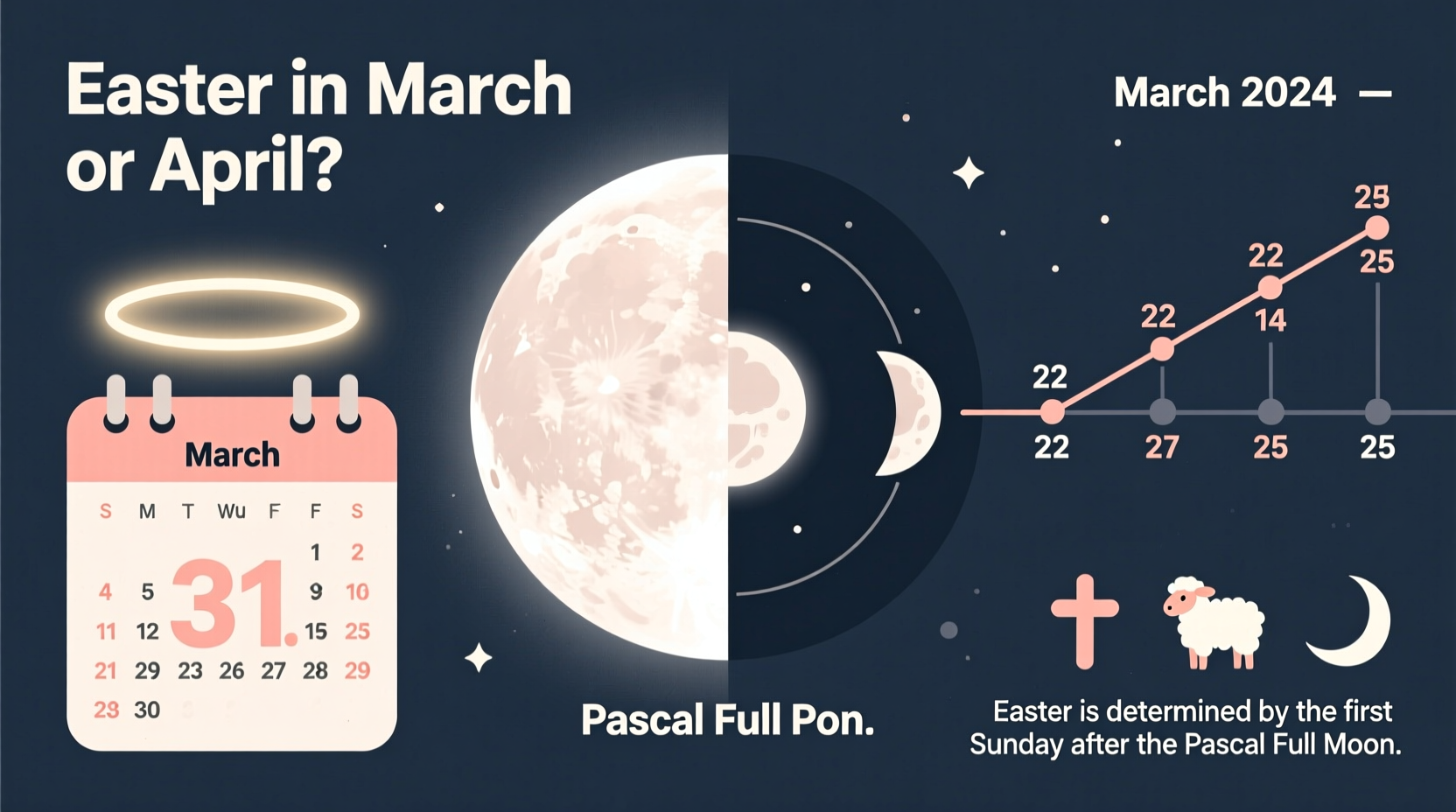
Easter occurs in either March or April each year, depending on the ecclesiastical calendar, with most celebrations falling in April. The specific month for Easter is determined by a calculation based on the first Sunday after the first full moon following the spring equinox—making what month Easter is in a variable but predictable event. For example, in 2026, Easter Sunday will fall on April 5th, placing it firmly in April. While Easter can occur as early as March 22nd, this is rare; most years see Easter celebrated in early to mid-April. This lunar-based system explains why the month of Easter shifts annually, unlike fixed-date holidays such as Christmas.
When Exactly Is Easter Celebrated?
The exact date of Easter changes every year because it is based on a lunisolar calendar rather than the standard Gregorian calendar used in civil life. Specifically, Easter Sunday is set as the first Sunday after the Paschal Full Moon—the first full moon that occurs on or after the vernal (spring) equinox, which is fixed at March 21st for ecclesiastical purposes. This means Easter can fall anytime between March 22nd and April 25th.
Here are the upcoming dates for Easter Sunday:
| Year | Easter Date | Month |
|---|---|---|
| 2024 | March 31 | March |
| 2025 | April 20 | April |
| 2026 | April 5 | April |
| 2027 | March 28 | March |
| 2028 | April 16 | April |
As shown, Easter alternates between March and April. In 2026, for instance, Easter is in April, specifically on April 5th. This variability often leads people to ask, why does Easter change dates every year? The answer lies in its historical and religious roots.
Historical Origins of Easter’s Variable Date
The tradition of calculating Easter's date stems from early Christianity and the desire to align the holiday with Jewish Passover, during which Jesus’ crucifixion and resurrection occurred according to the New Testament. Passover itself is tied to the Hebrew lunar calendar, beginning on the 15th day of Nisan, which typically falls in March or April.
In 325 CE, the Council of Nicaea established a unified method for determining Easter to ensure consistency across Christian churches. They decreed that Easter would be celebrated on the first Sunday after the first full moon following the vernal equinox. However, different Christian traditions use slightly different calendars:
- Western Christianity (Catholic and Protestant): Uses the Gregorian calendar.
- Eastern Christianity (Orthodox): Uses the older Julian calendar, which often results in a later Easter date—sometimes several weeks after Western Easter.
This divergence means that while Western Easter in 2026 is on April 5th, Orthodox Easter may fall on April 12th or later, depending on the region and calendar calculations.
Why Does Easter Fall in March or April?
The reason Easter lands in either March or April is directly tied to astronomical events and seasonal cycles. The vernal equinox marks the beginning of spring in the Northern Hemisphere, symbolizing renewal and rebirth—themes central to the Christian celebration of resurrection. By anchoring Easter to this natural phenomenon, the Church emphasized the connection between spiritual and physical renewal.
However, because lunar months do not perfectly align with solar months, the full moon after the equinox can occur as early as March 21st or as late as April 18th. Adding the requirement that Easter must fall on a Sunday pushes the latest possible date to April 25th.
Thus, when someone asks, what month is Easter in, the answer depends on the year and the interplay between the moon, equinox, and Sunday. Most frequently, Easter occurs in April due to the average timing of the Paschal Full Moon.
Geographic and Cultural Variations in Easter Observance
While Easter is primarily a Christian holiday, its observance—and even the question of what month Easter is in—can vary significantly around the world. Over 100 countries officially recognize Easter as a public or religious holiday, including the United States, Canada, Australia, the United Kingdom, Germany, Brazil, and South Africa.
In predominantly Catholic or Protestant nations, Easter is typically observed according to the Western (Gregorian) calendar. Countries like Italy, Spain, and Mexico hold elaborate Holy Week processions leading up to Easter Sunday in April. In contrast, many Eastern European countries such as Russia, Greece, and Serbia follow the Orthodox tradition, celebrating Easter later—often in late April or even early May under the Julian calendar.
Some countries treat both Good Friday and Easter Monday as public holidays, extending the break. For example:
- Australia: Public holidays on Good Friday and Easter Monday; Easter Sunday is a family-centered day.
- Germany: Good Friday is strictly observed (no public entertainment), while Easter Sunday and Monday are festive.
- United States: No federal holiday, but many businesses close on Good Friday in Catholic-heavy regions; schools and universities often have an entire spring break week.
These regional differences affect not only when Easter is celebrated but also how communities prepare and what activities take place.
Common Misconceptions About Easter’s Timing
Despite its long-standing calculation method, several misconceptions persist about when Easter occurs:
- Misconception: Easter is always in April.
Reality: While most Easters fall in April, approximately one in three occur in March. For example, Easter was on March 31, 2024, and will return to March 28 in 2027. - Misconception: The full moon used is the actual astronomical event.
Reality: The Church uses a “calculated” or “ecclesiastical” full moon based on tables, not real-time observations. This can differ from the true astronomical full moon by a day or two. - Misconception: All Christians celebrate Easter on the same day.
Reality: Due to calendar differences, Orthodox and Western Christians often celebrate on different Sundays. In 2026, Western Easter is April 5th, while Orthodox Easter is likely April 12th.
Understanding these nuances helps clarify why answers to questions like when is Easter 2026 or what month is Easter celebrated require context about denomination and location.
How to Prepare for Easter: Practical Tips
Whether you're observing Easter religiously or culturally, planning ahead ensures a meaningful experience. Here are practical steps based on the known date range for Easter:
- Check the exact date early: Since Easter shifts annually, mark your calendar once the date is confirmed (usually published years in advance).
- Plan travel and gatherings: Many families reunite for Easter meals. Book accommodations early if traveling, especially in popular tourist destinations during spring breaks.
- Prepare religious observances: Churches often host special services from Palm Sunday through Easter Sunday. Choirs, altar servers, and volunteers should coordinate schedules well in advance.
- Shop smart: Retailers begin Easter promotions in February. Look for deals on chocolate, decorations, and clothing before peak demand in March and April.
- Understand local business hours: In countries where Good Friday is a public holiday, banks, government offices, and some stores may close. Verify operating hours locally.
Future Easter Dates: What to Expect Beyond 2026
If you’re planning long-term events, weddings, or vacations, knowing future Easter dates can help avoid conflicts. Below is a preview of Easter Sundays over the next decade:
| Year | Easter Sunday | Month |
|---|---|---|
| 2029 | April 1 | April |
| 2030 | April 21 | April |
| 2031 | April 13 | April |
| 2032 | March 28 | March |
| 2033 | April 17 | April |
| 2034 | April 9 | April |
| 2035 | March 25 | March |
| 2036 | April 13 | April |
| 2037 | April 5 | April |
| 2038 | March 28 | March |
As seen, Easter returns to March periodically, though April remains the most common month. In fact, from 2020 to 2050, about 70% of Easter Sundays fall in April.
Frequently Asked Questions (FAQs)
What month is Easter in 2026?
Easter Sunday in 2026 falls on April 5th, so it is celebrated in April.
Can Easter ever be in March?
Yes, Easter can occur in March. The earliest possible date is March 22nd, though this is rare. More commonly, Easter falls on March 28th or 31st, as it did in 2024 and will again in 2027.
Why does the date of Easter change every year?
Easter’s date changes because it is based on the lunar cycle and the spring equinox. It is always the first Sunday after the first full moon following March 21st, leading to variation between March 22nd and April 25th.
Do all countries celebrate Easter on the same day?
No. Western Christian churches (Catholic and Protestant) usually celebrate on the same Sunday, but Eastern Orthodox churches often observe Easter on a different date—sometimes one to five weeks later—due to using the Julian calendar.
How far in advance are Easter dates announced?
Easter dates are calculated centuries in advance using mathematical formulas. Major religious institutions and governments publish Easter dates decades ahead, so you can reliably plan for events like Easter 2026 or beyond.




 浙公网安备
33010002000092号
 浙B2-20120091-4