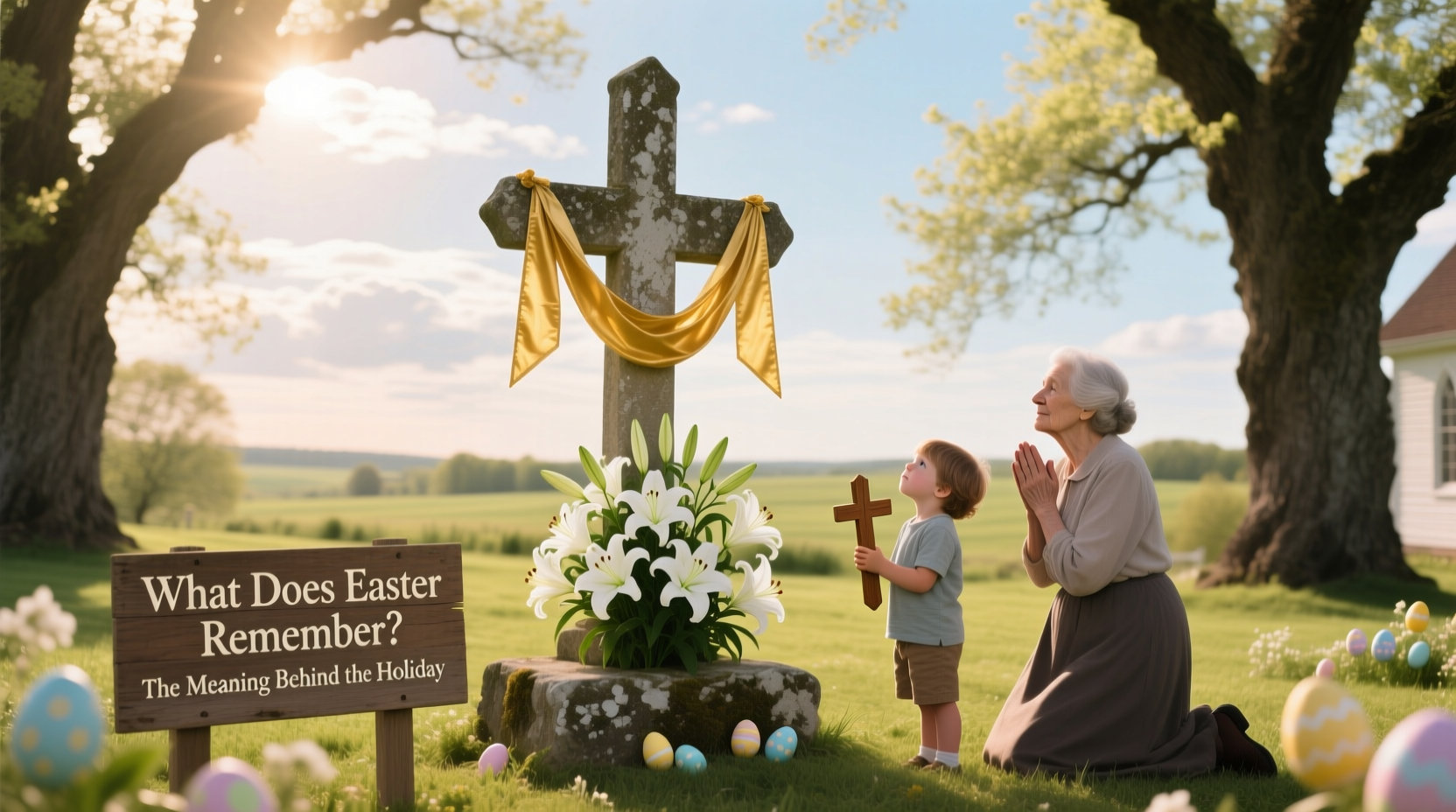
Easter remembers the resurrection of Jesus Christ from the dead, a cornerstone of Christian belief that affirms life over death and hope over despair. This sacred event, described in the New Testament, occurred three days after Jesus was crucified at Calvary. What does Easter remember? It commemorates not just a historical moment, but a spiritual transformation—Christ’s victory over sin and death, offering salvation to believers. As one of the most significant events in the Christian liturgical calendar, Easter is observed through church services, symbolic rituals, family gatherings, and cultural customs such as egg decorating and the Easter Bunny, which blend religious meaning with seasonal renewal.
The Religious Significance of Easter
At its core, what Easter remembers is the fulfillment of biblical prophecy. According to the Gospels—Matthew, Mark, Luke, and John—Jesus was arrested, tried, and sentenced to death by crucifixion under Roman authority. He was buried in a tomb sealed with a stone. On the third day, women who went to anoint his body discovered the tomb empty. Angels announced that Jesus had risen, appearing afterward to his disciples and others over a period of 40 days before ascending into heaven.
This resurrection is not merely a miraculous story; it is the foundation of Christian theology. The Apostle Paul wrote in 1 Corinthians 15:17, “If Christ has not been raised, your faith is futile.” Thus, Easter is more than a memorial—it is a celebration of divine power and eternal life. Churches around the world hold special services on Easter Sunday, often beginning at dawn to symbolize the light of Christ emerging from darkness.
Lent, Holy Week, and the Journey to Easter
To fully understand what Easter remembers, one must consider the broader context of the liturgical year. The weeks leading up to Easter are marked by Lent—a 40-day period (excluding Sundays) of fasting, prayer, and repentance. Lent begins on Ash Wednesday and reflects Jesus’ 40 days of temptation in the wilderness.
Holy Week, the final week of Lent, includes several key observances:
- Palm Sunday: Commemorates Jesus’ triumphal entry into Jerusalem, where crowds welcomed him with palm branches.
- Maundy Thursday: Marks the Last Supper, during which Jesus instituted the Eucharist and commanded his followers to love one another.
- Good Friday: Observes the crucifixion and death of Jesus. Many churches hold solemn services, including the veneration of the cross.
- Holy Saturday: A day of quiet reflection, representing the time Jesus spent in the tomb.
- Easter Sunday: Celebrates the resurrection with joyous worship, music, and communal feasting.
These observances deepen the spiritual understanding of what Easter remembers—not only the joy of resurrection but also the sacrifice and suffering that preceded it.
Historical Origins of Easter
The roots of Easter extend back to early Christianity, though its name and some customs have connections to pre-Christian traditions. The word 'Easter' is believed by many scholars to derive from 'Ēostre,' a Germanic goddess associated with spring and fertility. However, this theory remains debated among historians. In most other languages, the holiday's name comes from the Hebrew 'Pesach' (Passover), reflecting the close link between the Jewish festival and the timing of Christ’s crucifixion.
Early Christians celebrated the resurrection annually, but disagreements arose over the correct date. Some followed the Jewish lunar calendar, celebrating on the 14th of Nisan (the date of Passover), regardless of the day of the week. Others insisted on observing Easter on a Sunday, the day of Christ’s resurrection. This controversy led to the Council of Nicaea in 325 CE, where church leaders established a unified method: Easter would fall on the first Sunday after the first full moon following the vernal equinox (March 21). This system, based on astronomical calculations, ensures that Easter occurs between March 22 and April 25.
Cultural Traditions and Symbols of Easter
While Easter remembers the resurrection of Jesus, many of its popular symbols have evolved over centuries, blending religious meaning with folk customs. Common elements include:
- Easter Eggs: Represent new life and rebirth. In ancient times, eggs were forbidden during Lent, making their consumption on Easter a festive act. Today, families decorate eggs, organize hunts, and give chocolate versions as gifts.
- The Easter Bunny: Originating in German folklore, the 'Osterhase' was a hare that laid eggs for children. Immigrants brought this tradition to America in the 18th century, where it became a secular symbol of the holiday.
- Easter Lilies: These white flowers symbolize purity and the resurrection. They are commonly used in church decorations and given as gifts.
- Easter Parades: Historically held in cities like New York, these processions feature elaborate hats and formal attire, reflecting the idea of dressing in 'new clothes' for a new season.
Though some of these customs may seem disconnected from the religious message, they often serve as entry points for teaching children about the deeper meaning of what Easter remembers.
Global Observance of Easter
Easter is celebrated in nearly every country with a Christian population, but practices vary widely. Understanding how different cultures observe the holiday reveals the diversity within a shared remembrance.
| Country | Unique Traditions | Religious Emphasis |
|---|---|---|
| Italy | Elaborate processions; 'La Pasquetta' picnic on Easter Monday | Strong focus on Catholic liturgy and papal blessings |
| Mexico | Passion plays ('Via Crucis'); burning of Judas effigies | Deeply religious, especially in rural communities |
| United States | Easter egg rolls at the White House; church services and family meals | Mix of religious and commercial traditions |
| Greece | Midnight church services; cracking red-dyed eggs | Eastern Orthodox observance with ancient rites |
| Australia | Easter Bilby instead of Bunny (to protect native species) | Secular celebrations dominate; lower church attendance |
In predominantly Orthodox countries like Russia and Serbia, Easter is calculated using the Julian calendar, often resulting in a later date than Western celebrations. This difference underscores the complexity of what Easter remembers across denominational lines.
Common Misconceptions About Easter
Several myths surround Easter, sometimes obscuring its true significance. One common misconception is that Easter is purely a pagan holiday co-opted by Christianity. While some symbols have pre-Christian origins, the central event—the resurrection—is firmly rooted in Christian scripture and doctrine. The timing alignment with spring festivals is more coincidental than intentional.
Another misunderstanding is that Easter is simply about bunnies and candy. While commercialization has shifted public perception in some regions, the majority of practicing Christians still prioritize church attendance and spiritual reflection. Surveys indicate that over 60% of Americans attend religious services on Easter Sunday, making it one of the most-attended church days of the year.
How to Observe Easter Meaningfully
For those seeking to honor what Easter remembers in a personal or family setting, consider these practical suggestions:
- Attend a Sunrise Service: Experience the symbolism of light overcoming darkness by joining a dawn worship gathering.
- Read the Resurrection Account: Spend time reading Matthew 28, Mark 16, Luke 24, or John 20 together as a family.
- Create a Resurrection Garden: Use soil, rocks, and a small tomb figurine to visually represent the Easter story.
- Limit Commercial Focus: Balance egg hunts and treats with discussions about sacrifice, love, and new beginnings.
- Support Charitable Causes: Reflect Christ’s compassion by donating to food banks or shelters during Holy Week.
Easter Dates and Future Observances
Because Easter follows a lunisolar calendar, its date changes each year. Here are upcoming dates to help plan observances:
- 2024: March 31
- 2025: April 20
- 2026: April 5
- 2027: March 28
- 2028: April 16
Note that Eastern Orthodox churches may celebrate on different dates due to calendar variations. Always verify local church schedules for accuracy.
Conclusion: Why Easter Still Matters
What does Easter remember? It preserves the memory of a transformative event—the resurrection of Jesus Christ—that continues to inspire faith, hope, and renewal across generations. Whether observed through solemn prayer, joyful celebration, or quiet reflection, Easter invites people to contemplate the enduring power of redemption and the promise of new life. Amid evolving cultural expressions, the heart of the holiday remains unchanged: a declaration that love and life triumph over death.
Frequently Asked Questions
What does Easter remember in simple terms?
Easter remembers the resurrection of Jesus Christ from the dead, which Christians believe happened three days after his crucifixion.
Why is Easter important to Christians?
It is the most important Christian holiday because it celebrates the foundation of their faith—Jesus’ victory over death and the promise of eternal life.
Do all Christians celebrate Easter on the same day?
No. Western churches (Catholic and Protestant) use the Gregorian calendar, while many Eastern Orthodox churches follow the Julian calendar, leading to different dates.
Are Easter eggs mentioned in the Bible?
No, Easter eggs are not biblical. They are symbolic traditions developed over time to represent new life and resurrection.
How can I explain Easter to a child?
Use age-appropriate language: "Jesus died on Good Friday, but came back to life on Easter Sunday. We celebrate because His love is stronger than death." Pair this with stories, crafts, or a visit to church.





 浙公网安备
33010002000092号
浙公网安备
33010002000092号 浙B2-20120091-4