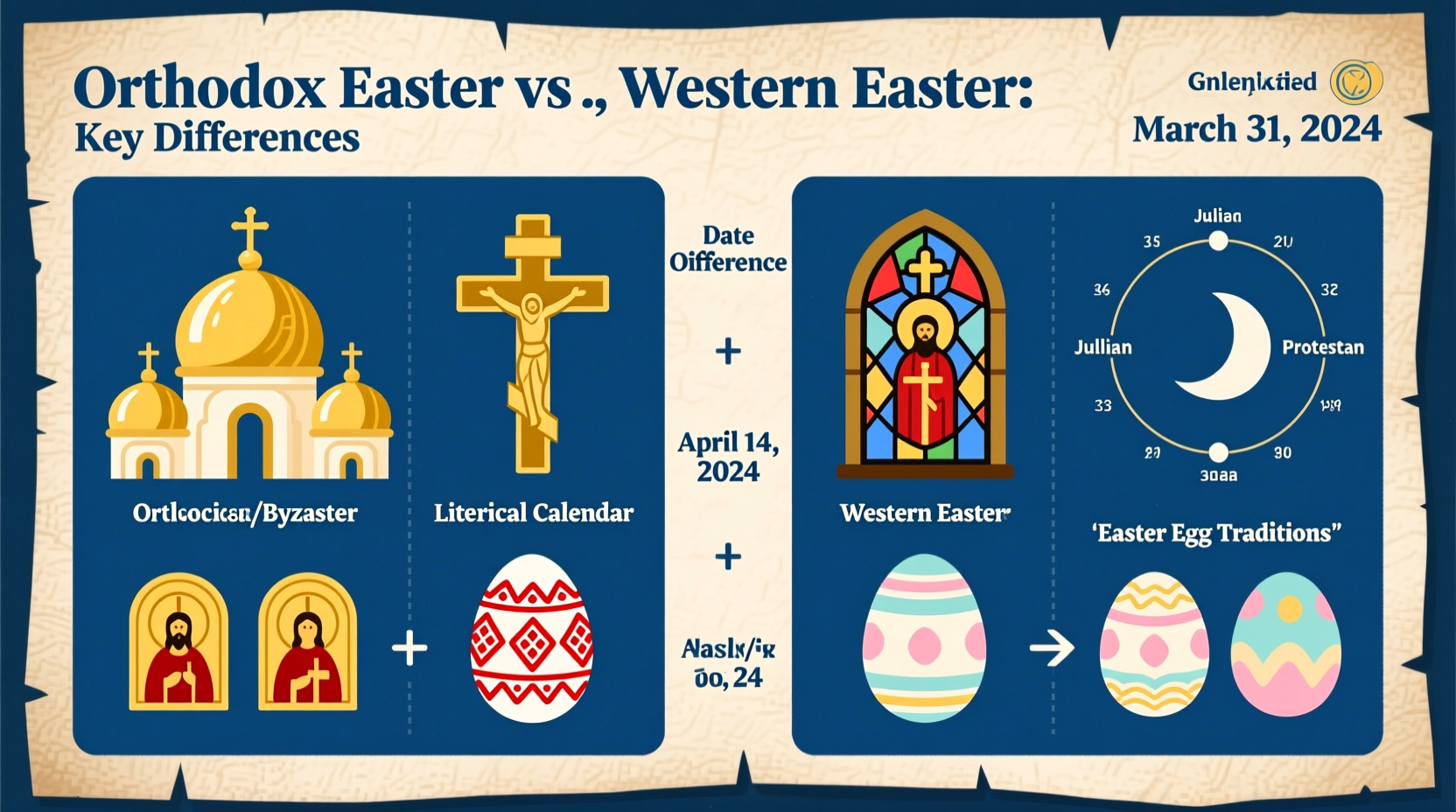
Yes, Orthodox Easter is different from Western Easter in both date and tradition. The primary reason is Orthodox Easter different lies in the use of the Julian calendar by many Eastern Orthodox churches, as opposed to the Gregorian calendar used by Western Christian denominations. This discrepancy frequently results in Orthodox Easter falling one to five weeks later than its Western counterpart. In addition to timing, theological emphasis, liturgical practices, and cultural customs further distinguish Orthodox Easter celebrations, making it a unique and deeply spiritual event for millions around the world.
Why Is Orthodox Easter Different? Understanding the Calendar Divide
The most significant factor behind why is Orthodox Easter different stems from the two calendars used by Christian churches: the Julian and the Gregorian. Introduced by Pope Gregory XIII in 1582, the Gregorian calendar corrected inaccuracies in the older Julian system, which had miscalculated the solar year by about 11 minutes. Over centuries, this small error accumulated, causing the equinox to drift earlier.
Western churches (Catholic and Protestant) adopted the Gregorian calendar, aligning Easter with the astronomical spring equinox on March 21. However, many Eastern Orthodox churches continue using the Julian calendar for religious purposes. As of the 21st century, the Julian calendar is 13 days behind the Gregorian, meaning that even if both traditions calculate Easter based on the same lunar rules, they start from different dates.
Furthermore, Orthodox churches follow an additional rule: Easter must come after the Jewish Passover, based on early church tradition. This ensures that Christ’s resurrection is celebrated in proper sequence relative to His crucifixion during Passover. Western Christianity does not strictly observe this requirement, contributing further to the divergence in dates.
How Are the Dates of Orthodox and Western Easter Calculated?
Easter is a moveable feast, meaning its date changes each year. It is traditionally set as the first Sunday after the first full moon following the spring equinox. But how each church defines these elements varies:
- Western Easter Calculation: Uses the Gregorian calendar and an ecclesiastical approximation of the full moon (called the Paschal Full Moon).
- Orthodox Easter Calculation: Based on the Julian calendar’s equinox (April 3 Gregorian) and the actual astronomical full moon observed from Jerusalem.
This combination often pushes Orthodox Easter into April or even May on the Gregorian calendar. For example, in 2024, Western Easter fell on March 31, while Orthodox Easter was celebrated on May 5. In 2025, Western Easter is on April 20, and Orthodox Easter will be on April 20 as well — a rare alignment. Such coincidences occur roughly once every decade.
Historical Roots of the Calendar Split
The divergence between Orthodox and Western Easter isn’t just technical—it reflects deeper historical and ecclesiastical divisions. After the Great Schism of 1054, when the Eastern (Orthodox) and Western (Roman Catholic) Churches formally split, liturgical practices began evolving independently.
When Pope Gregory XIII introduced calendar reform in 1582, most Orthodox churches rejected it, viewing it as a unilateral change without ecumenical consensus. They maintained the Julian calendar for religious observances, preserving continuity with ancient traditions. Even today, countries like Russia, Ukraine, Serbia, and Mount Athos adhere to the old calendar for feasts, including Easter.
Some Orthodox churches, such as those in Greece, Cyprus, and Romania, have adopted the Revised Julian calendar for fixed feasts but still use the original Julian method for calculating Easter to preserve unity across the Orthodox world.
Cultural and Liturgical Differences in Celebration
Beyond the calendar, is Orthodox Easter different in practice? Absolutely. While both traditions celebrate the resurrection of Jesus Christ, the way it's observed varies significantly in tone, ritual, and community involvement.
In Orthodox communities, Holy Week is marked by intense spiritual preparation. Services grow longer and more solemn as the week progresses. On Good Friday, processions with the Epitaphios (a cloth icon depicting Christ’s body) are common. Midnight Divine Liturgy on Holy Saturday is the centerpiece of Orthodox Easter, beginning in darkness and culminating in the proclamation: “Christ is Risen!” Congregants light candles from the Holy Light brought from Jerusalem, symbolizing the light of resurrection.
In contrast, Western Easter often includes sunrise services, Easter egg hunts, and family brunches. While deeply religious for many, the holiday has also become commercialized, with major retailers promoting candy, decorations, and clothing.
| Aspect | Western Easter | Orthodox Easter |
|---|---|---|
| Calendar Used | Gregorian | Julian (for calculation) |
| Typical Date Range | March 22 – April 25 | April 4 – May 8 (Gregorian) |
| Lent Duration | 40 days (excluding Sundays) | 48 days (stricter fast) |
| Key Service | Sunrise service or Sunday Mass | Midnight Paschal Liturgy |
| Common Traditions | Egg hunts, bunnies, brunches | Red eggs, lamb dinners, candlelight processions |
| Fasting Rules | Vary; often abstinence on Fridays | No meat, dairy, fish, oil, or wine on strict days |
Geographic Distribution: Where Is Orthodox Easter Celebrated?
Orthodox Easter is observed primarily in countries with strong Eastern Orthodox traditions. These include:
- Russia
- Greece
- Ukraine
- Serbia
- Georgia
- Romania
- Bulgaria
- Cyprus
- North Macedonia
- Belarus
In these nations, Orthodox Easter is often a public holiday with closed government offices, schools, and many businesses. Public transport may run on reduced schedules. Travelers should check local announcements, especially in rural areas where celebrations can affect accessibility.
Even in diaspora communities—such as Greek Americans, Russian Canadians, or Serbian Australians—Orthodox Easter remains a vital cultural touchstone, celebrated with traditional foods, church services, and family gatherings.
Practical Implications: How the Difference Affects Daily Life
For travelers, expatriates, or international workers, understanding is Orthodox Easter different matters for planning. If you're visiting Athens in April, your hotel might be fully booked during Orthodox Holy Week. In Moscow, banks and post offices close for several days around Easter.
Retailers in Orthodox-majority countries often adjust hours. Supermarkets may shut down completely on Good Friday and Easter Sunday. Restaurants typically stay open but focus on traditional meals like roasted lamb, magiritsa (a soup made after Lent), and tsoureki (sweet bread).
If you’re scheduling business meetings, avoid Holy Thursday through Easter Monday. Many professionals take extended leave. Online services may experience delays, particularly in customer support from local companies.
Common Misconceptions About Orthodox Easter
Several myths persist about why is Orthodox Easter different. Let’s clarify them:
Misconception 1: Orthodox Easter is always later.
While usually true, there are years when both Easters coincide—like 2025 and 2028. This happens when the full moon and Sunday alignment fall in a narrow window acceptable to both systems.
Misconception 2: All Orthodox churches use the same calendar.
No. Some Orthodox churches (e.g., Finnish Orthodox Church) follow the Gregorian calendar for Easter. Others, like the Russian Orthodox Church, strictly use the Julian. Unity in calculation exists only among churches under the Ecumenical Patriarchate of Constantinople.
Misconception 3: The difference is only about religion.
It’s also cultural and national identity. In countries like Serbia or Georgia, celebrating Easter on the traditional date reinforces heritage and resistance to external influence.
Tips for Observing or Participating in Orthodox Easter
Whether you're attending a service or hosting guests, here’s how to respectfully engage:
- Check Local Dates: Don’t assume Easter is on the same weekend worldwide. Use reliable sources like official church websites or timeanddate.com to confirm Orthodox Easter dates annually.
- Attend the Midnight Liturgy: If invited, go. Arrive early—services draw large crowds. Dress modestly (shoulders covered, no shorts).
- Bring a Gift: Red-dyed eggs or a bottle of wine are thoughtful. Avoid giving flowers before Easter; they symbolize life and are saved for after the Resurrection.
- Respect Fasting Periods: If dining with Orthodox families before Easter, don’t pressure them to eat non-fasting foods. Many abstain until midnight on Holy Saturday.
- Learn the Greeting: Say “Christos Anesti” (Greek) or “Khristos Voskrese” (Slavic), meaning “Christ is Risen.” The response is “Alithos Anesti” or “Voistinu Voskrese” (“Truly He is Risen!”).
Will the Two Easters Ever Unite?
There have been multiple efforts to unify the date of Easter. In 1997, the World Council of Churches proposed a common formula using modern astronomical data and a fixed meridian (Jerusalem time). But implementation stalled due to theological sensitivities and concerns over losing tradition.
Some theologians argue that unity would strengthen global Christian witness. Others believe the diversity reflects the richness of Christian expression. For now, separate dates remain the norm—but dialogue continues.
Frequently Asked Questions
Why is Orthodox Easter sometimes weeks after Western Easter?
Because Orthodox churches use the Julian calendar and require Easter to follow Passover, leading to later dates based on lunar cycles and calendar offsets.
Do any Orthodox churches celebrate Easter on the same day as Western churches?
Occasionally, yes—when the calculated dates align, such as in 2025. But most follow the Julian-based calculation, resulting in different Sundays.
What countries celebrate Orthodox Easter as a public holiday?
Russia, Greece, Ukraine, Serbia, Bulgaria, Romania, Georgia, and others with major Orthodox populations recognize it officially.
Can I find out the Orthodox Easter date for future years?
Yes. Reliable sources include the website of the Ecumenical Patriarchate, Orthodox Church calendars, or tools like timeanddate.com, which list both Western and Orthodox dates.
Is the food different during Orthodox Easter?
Yes. Traditional dishes include lamb, red eggs, cheese pies, and sweet breads like tsoureki. Many foods break the Lenten fast, emphasizing richness and celebration after austerity.





 浙公网安备
33010002000092号
浙公网安备
33010002000092号 浙B2-20120091-4