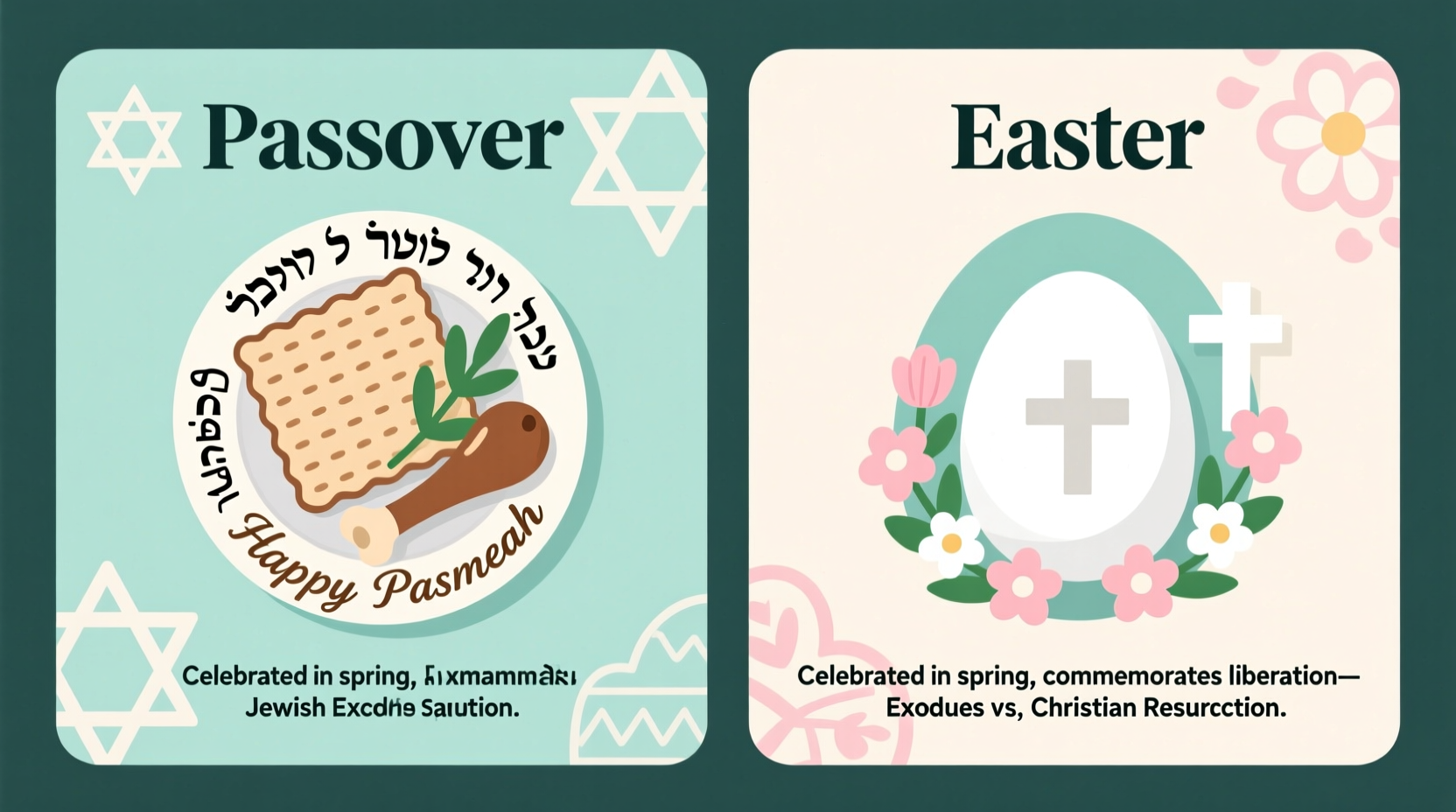
Is Easter the Passover? No, Easter and Passover are not the same, but they are deeply connected through history, timing, and religious tradition. While Easter is a Christian celebration of Jesus Christ's resurrection, Passover (or Pesach) is a Jewish festival commemorating the liberation of the Israelites from Egyptian slavery. Despite their distinct theological meanings, the two holidays often occur around the same time each year due to their shared roots in the spring lunar calendar. Understanding the relationship between Easter and Passover—such as how early Christians derived Easter’s timing from Passover—reveals a rich tapestry of cultural and religious interconnection that continues to shape both observances today.
Historical Origins: The Link Between Easter and Passover
The connection between Easter and Passover begins in the New Testament. According to the Gospels, Jesus’ final days—his Last Supper, crucifixion, and resurrection—took place during the Jewish festival of Passover. The Last Supper is widely believed by scholars to have been a Passover Seder, the ritual meal marking the beginning of the eight-day holiday. This places the events central to Christian theology directly within the context of a Jewish religious observance.
Passover dates back over 3,000 years and is rooted in the biblical Book of Exodus. It celebrates the moment when God 'passed over' the homes of the Israelites during the tenth plague in Egypt, leading to Pharaoh’s release of the Hebrew slaves. The word 'Passover' itself comes from this divine act of protection. In contrast, Easter emerged later as Christianity spread throughout the Roman Empire. Early Christians began celebrating the resurrection annually, initially aligning it with Passover, since Jesus’ death and resurrection occurred during that week.
Over time, however, the two holidays diverged in both calculation and practice. While Passover follows the Hebrew calendar—beginning on the 15th day of Nisan—Easter was eventually standardized by the Council of Nicaea in 325 CE to fall on the first Sunday after the first full moon following the vernal equinox. This means Easter can occur anywhere from March 22 to April 25 in the Gregorian calendar, while Passover always starts on Nisan 15, which usually falls in March or April.
Religious Significance: Different Meanings, Shared Themes
Though linked historically, Easter and Passover carry fundamentally different religious meanings. For Jews, Passover is a celebration of national and spiritual freedom. It emphasizes themes of liberation, identity, and divine intervention. Families gather for the Seder meal, which includes symbolic foods like matzah (unleavened bread), maror (bitter herbs), and charoset (a sweet paste representing mortar used by enslaved Israelites).
For Christians, Easter represents the cornerstone of faith: the resurrection of Jesus Christ. It signifies victory over sin and death and offers hope of eternal life. The period leading up to Easter, known as Lent, involves fasting, prayer, and reflection, culminating in Holy Week—which includes Maundy Thursday (commemorating the Last Supper), Good Friday (the crucifixion), and Easter Sunday (the resurrection).
Despite these differing focuses, both holidays share powerful themes: redemption, renewal, and new beginnings. Springtime symbolizes rebirth in both traditions—whether it’s the physical exodus from Egypt or the spiritual rebirth offered through Christ’s resurrection. These overlapping motifs help explain why the two festivals remain closely associated in public consciousness, even among those unfamiliar with their theological distinctions.
Calendar Differences: Why Easter and Passover Don’t Always Align
One common source of confusion is why Easter and Passover don’t always fall on the same date—even though they’re astronomically linked. The answer lies in the calendars used by each tradition.
Passover follows the Hebrew lunisolar calendar, which adjusts lunar months with periodic leap months to keep seasons aligned. Nisan 15 always corresponds to the full moon after the spring equinox. However, because the Hebrew calendar operates independently of the Gregorian system, the date shifts each year relative to modern civil calendars.
Easter, on the other hand, uses a calculated approximation based on the Gregorian calendar and ecclesiastical full moon tables. While originally tied to the actual Jewish calendar, most Christian churches now use a fixed method that doesn't rely on real-time astronomical observation or Jewish announcements. As a result, Easter sometimes precedes or follows Passover by several weeks.
For example, in 2025, Passover begins on the evening of April 12, while Easter Sunday falls on April 20—eight days later. In 2026, Passover starts on April 1, and Easter is celebrated on April 5—just four days after Passover begins. In some years, such as 2019, the two holidays overlapped significantly, with Good Friday falling midway through Passover week.
| Year | Passover Start (Evening) | Easter Sunday | Days Between |
|---|---|---|---|
| 2024 | April 22 | March 31 | Easter 22 days before |
| 2025 | April 12 | April 20 | Easter 8 days after |
| 2026 | April 1 | April 5 | Easter 4 days after |
| 2027 | March 29 | March 28 | Easter 1 day before |
Cultural Observances and Modern Practices
In multicultural societies, many people participate in or acknowledge both holidays without necessarily adhering to either faith. Interfaith families may blend traditions, hosting Seders with Christian guests or incorporating symbolic eggs into Passover meals (though traditional observance prohibits leavened products, including most forms of yeast-raised bread).
Some churches hold special services referencing the Exodus story during Holy Week, drawing parallels between the liberation from Egypt and salvation through Christ. Others avoid direct references to maintain theological clarity. Meanwhile, Jewish communities generally treat Passover as a self-contained festival, though some progressive congregations explore interfaith dialogue during this season.
Commercially, both holidays influence retail patterns. Grocery stores stock up on matzah, wine, and horseradish for Passover, while also selling chocolate bunnies, jelly beans, and pastel decorations for Easter. In countries like the United States, Canada, Australia, and the UK, Easter Monday is a public holiday in some regions, while Passover is observed privately by Jewish communities unless specific accommodations are made by employers or schools.
Misconceptions About Easter and Passover
Several misconceptions persist about the relationship between Easter and Passover:
- Misconception 1: Easter is just another name for Passover. While related, they are separate holidays with unique origins, rituals, and meanings.
- Misconception 2: Jesus died on Passover day. The Gospels suggest the crucifixion occurred during Passover week, but there is debate over whether the Last Supper was a true Seder or took place a day earlier.
- Misconception 3: All Christians base Easter on the Jewish calendar. Most Western churches use a fixed formula; only some Eastern Orthodox churches still consult lunar cycles more closely aligned with Jewish calculations.
- Misconception 4: Eggs are part of Passover tradition. Eggs appear on the Seder plate as a symbol of mourning and sacrifice, but egg hunts and colored eggs are purely Easter customs with pagan associations absorbed into Christian practice.
How to Respectfully Navigate Both Holidays
For educators, coworkers, and community leaders, understanding the distinction between Easter and Passover promotes inclusivity. Here are practical tips:
- Acknowledge both holidays in workplace communications if relevant—avoid saying “Happy Easter” to all employees if some observe Passover instead.
- Learn key dates annually using online calendars or apps that track religious holidays.
- Support dietary needs: During Passover, observant Jews avoid chametz (leavened grain). Providing kosher-for-Passover options shows respect.
- Encourage interfaith education in schools or organizations by inviting guest speakers or sharing accurate resources.
Frequently Asked Questions
Is Easter based on Passover?
Yes, Easter originated in relation to Passover. The crucifixion and resurrection of Jesus occurred during Passover week, and early Christians celebrated Easter concurrently. Over time, the date was formalized independently.
Can Easter and Passover ever fall on the same day?
They can overlap, especially when Easter Sunday occurs during the seven or eight days of Passover. However, they rarely begin on the exact same date due to differing calendar systems.
Why does Easter change dates but Passover seems more consistent?
Both holidays vary yearly. Passover always starts on Nisan 15 in the Hebrew calendar (March–April), while Easter is set by a complex lunar calculation in the Gregorian calendar, causing fluctuations between March 22 and April 25.
Do any Christian groups celebrate Passover?
Some Messianic Jews and certain Protestant denominations hold Christianized Seders to connect Jesus’ life to Jewish roots, though mainstream Judaism views these as theological reinterpretations.
Are there similarities in symbols between Easter and Passover?
Yes—both include themes of sacrifice and deliverance. Lamb is central: the Passover lamb whose blood protected the Israelites, and Jesus referred to as the 'Lamb of God.' Unleavened bread also appears in both—the matzah of Passover and the bread of the Eucharist.





 浙公网安备
33010002000092号
浙公网安备
33010002000092号 浙B2-20120091-4