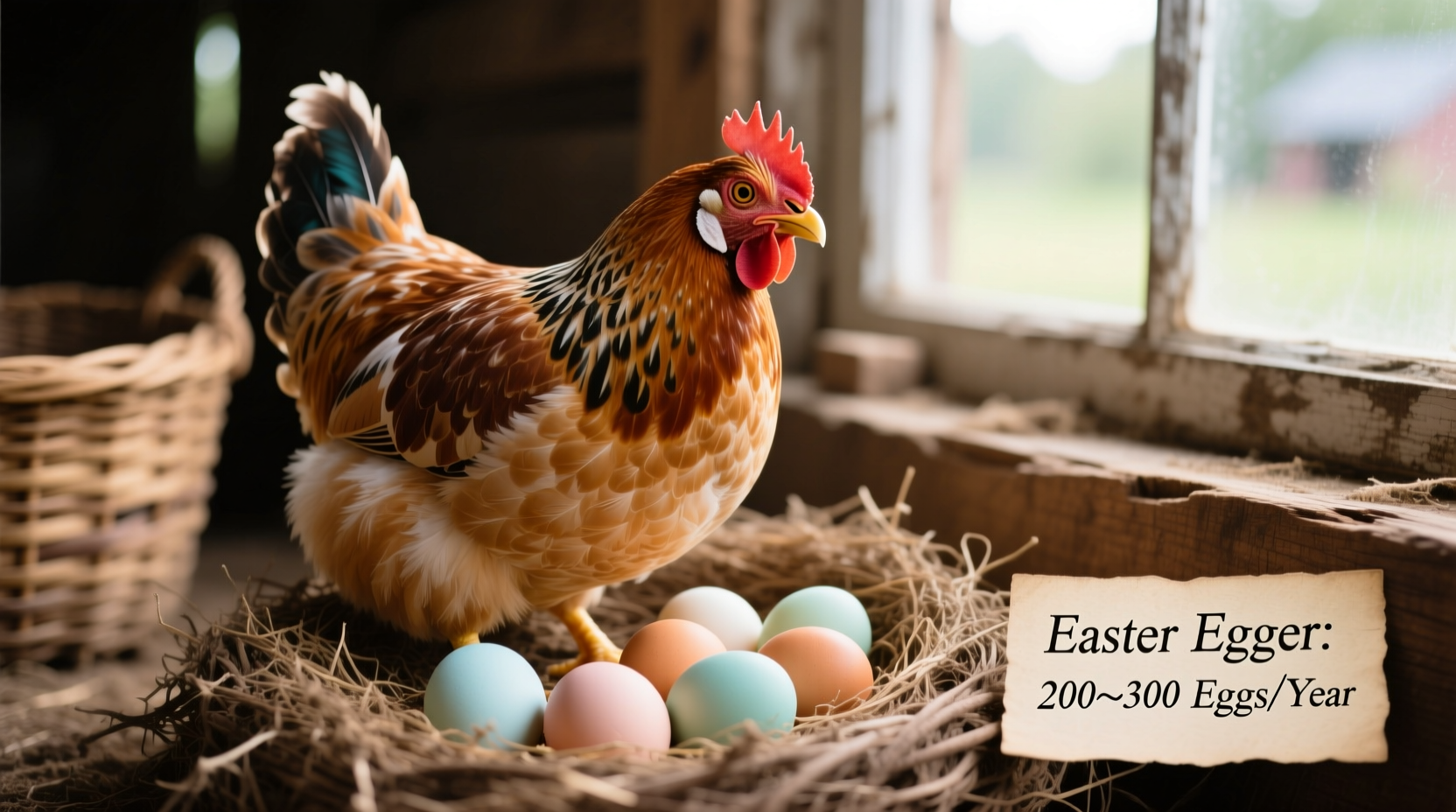
An Easter Egger chicken typically lays between 200 and 280 large eggs per year, making it a reliable backyard layer valued for both productivity and colorful eggshells. This range in annual egg output is influenced by several factors including the hen’s genetics, diet, access to daylight, stress levels, and overall health—key considerations for anyone asking how many eggs does an Easter Egger lay when planning a small flock. Unlike commercial hybrids bred solely for maximum output, Easter Eggers offer a balance of consistent laying and unique appearance, with eggs ranging from blue and green to olive and even pinkish hues.
Understanding the Easter Egger Chicken
The term “Easter Egger” doesn’t refer to a standardized breed but rather to any chicken that carries the gene for laying colored eggs and often displays mixed heritage, usually stemming from crosses involving Ameraucanas or Araucanas. Because they are not a recognized breed by the American Poultry Association, Easter Eggers vary widely in appearance, temperament, and laying patterns. Their unpredictable genetics are part of their charm—but also mean that egg production can differ significantly from one bird to another.
Easter Eggers inherit the blue egg gene (oocyan) from their Araucana ancestry. However, because they are crossbred, not all will pass this trait uniformly. Some may lay sky-blue eggs, others mossy green (if they also carry the brown egg pigment), and a few may even surprise owners with lavender-tinted shells. The variability extends beyond color: feather patterns, comb types, and earlobe colors can differ dramatically across individuals within the same flock.
Factors That Influence Egg Production in Easter Eggers
While the average healthy Easter Egger will lay around 250 eggs annually under optimal conditions, actual output depends heavily on multiple environmental and biological variables. Understanding these helps answer the broader question of how many eggs does an Easter Egger lay in a year, and how to maximize yield.
Diet and Nutrition
A balanced diet is crucial for sustained egg production. Hens require approximately 16–18% protein in their feed during peak laying periods. Layer pellets or crumbles should be the primary food source, supplemented with fresh greens, vegetables, and occasional treats like mealworms or scratch grains—but never at the expense of complete nutrition.
Calcium is especially important; without enough, hens may produce thin-shelled or soft eggs. Providing free-choice oyster shell allows birds to self-regulate calcium intake. Dehydration also reduces laying frequency, so clean, fresh water must be available daily.
Daylight Exposure
Like most chickens, Easter Eggers rely on light to regulate their reproductive cycles. They need about 14 hours of daylight per day to maintain consistent laying. In winter months, natural daylight drops below this threshold in many regions, leading to reduced or paused egg production.
Some keepers use artificial lighting in coops to extend the photoperiod and sustain winter laying. However, this practice is debated among poultry enthusiasts. While effective, it may contribute to long-term fatigue or shortened laying careers if overused. A more natural approach involves accepting seasonal dips in production and allowing hens to rest during shorter days.
Age and Lifespan of Laying
Easter Eggers begin laying at around 5 to 7 months of age. Peak production occurs during their first two years. After that, egg numbers gradually decline—typically by 10–20% each year. By age 5 or 6, many hens lay infrequently or stop altogether.
It's important to set realistic expectations: while some sources claim Easter Eggers lay “almost every day,” this refers to peak performance in young hens, not lifelong output. Over the course of her lifetime, a single Easter Egger may lay roughly 800 to 1,200 eggs, depending on care and longevity.
Stress and Environment
Chickens are sensitive creatures. Sudden changes, predators, overcrowding, extreme temperatures, or loud noises can cause stress-induced pauses in laying. Ensuring a secure coop, predator-proof fencing, adequate space (minimum 4 square feet per bird inside, 10 outside), and routine care supports steady egg production.
Breeders often note that Easter Eggers are friendly, curious, and adaptable—traits that help them thrive in diverse environments. But even resilient birds need consistency. Frequent handling, predictable feeding times, and protection from drafts or dampness improve both welfare and productivity.
Comparing Easter Eggers to Other Backyard Breeds
To better understand how many eggs an Easter Egger lays, it helps to compare them with other common backyard chickens. Below is a comparison table highlighting key traits:
| Breed | Avg. Annual Egg Count | Egg Color | Temperament | Hardiness |
|---|---|---|---|---|
| Easter Egger | 200–280 | Blue, Green, Olive | Friendly, Curious | Moderate to High |
| Leghorn | 280–320 | White | Active, Skittish | High |
| Plymouth Rock | 200–260 | Brown | Calm, Docile | High |
| Ameraucana | 200–250 | Blue | Gentle, Quiet | Moderate |
| Golden Comet | 250–300 | Brown | Tame, Productive | Moderate |
As shown, Easter Eggers rank competitively in terms of egg volume, falling just behind high-output hybrids like Leghorns and Golden Comets. What sets them apart is the visual appeal of their eggs and their engaging personalities, which make them favorites among hobby farmers and families with children.
Common Misconceptions About Easter Egger Egg Laying
Several myths persist about Easter Eggers and their productivity. Addressing these clarifies what potential owners should realistically expect when exploring how many eggs does an Easter Egger chicken lay.
- Myth: All Easter Eggers lay blue eggs. Truth: While they carry the blue egg gene, the presence of brown pigment (from other breeds in their lineage) can result in green or olive eggs. Not all will lay true blue.
- Myth: They lay every single day. Truth: Even at peak production, most hens take periodic breaks. No chicken lays 365 days a year without interruption.
- Myth: More color means better nutrition. Truth: Eggshell color has no impact on flavor or nutritional value. Blue and brown eggs are nutritionally equivalent.
- Myth: Easter Eggers are a pure breed. Truth: They are hybrid crosses, not recognized as a formal breed, which contributes to variation in laying rates and appearance.
Tips for Maximizing Easter Egger Egg Production
If your goal is to get the most from your flock, consider these proven strategies:
- Provide a consistent feeding schedule using high-quality layer feed. Avoid sudden diet changes.
- Ensure proper coop ventilation and temperature control. Extreme heat or cold suppresses laying.
- Minimize stressors such as predators, loud noises, or frequent disruptions.
- Collect eggs daily to prevent broodiness or breakage.
- Monitor for molting, which typically occurs once a year and halts egg production temporarily as energy goes toward feather regrowth.
- Keep accurate records of individual hen performance to identify top layers and manage flock health.
When to Expect First Eggs and Seasonal Patterns
Most Easter Eggers start laying between 5 and 7 months old, though some may begin later depending on hatch date and maturity rate. Pullets raised in spring often begin laying in late summer or early fall. Those hatched in fall may not lay until the following spring.
Seasonal laying patterns follow natural rhythms. Production peaks in spring and early summer when daylight increases and temperatures stabilize. It declines in late fall and winter due to shorter days and colder weather. Some flocks may experience a “second wind” in late winter if conditions improve.
Health Considerations and Signs of Decline
Regular observation helps detect issues early. Signs of declining health or productivity include:
- Reduced appetite or water intake
- Dull combs or pale wattles
- Feather loss outside of molting season
- Lethargy or isolation from the flock
- Soft-shelled or misshapen eggs
Parasites (internal and external), infections, or reproductive disorders like impacted oviducts can impair laying. Routine deworming, clean bedding, and veterinary consultation when needed support long-term productivity.
Frequently Asked Questions
Do Easter Eggers lay eggs in winter?
Some do, especially if supplemental light and warmth are provided. However, most reduce or pause laying during short winter days unless artificially stimulated.
Are Easter Egger eggs safe to eat?
Absolutely. The color of the shell does not affect edibility, taste, or safety. All eggs from healthy hens are safe to consume when stored properly.
Why did my Easter Egger stop laying?
Common reasons include aging, molting, stress, illness, insufficient light, or poor nutrition. Evaluate recent changes in environment, diet, or flock dynamics.
Can you predict egg color from the hen’s appearance?
Not reliably. While blue-earlobed birds often lay colored eggs, there’s no guaranteed way to determine egg color just by looking at a chick or adult hen—especially in mixed-breed Easter Eggers.
How long do Easter Eggers live?
With good care, they typically live 6 to 8 years, sometimes longer. Their productive laying life spans about 2–4 years.




 浙公网安备
33010002000092号
 浙B2-20120091-4