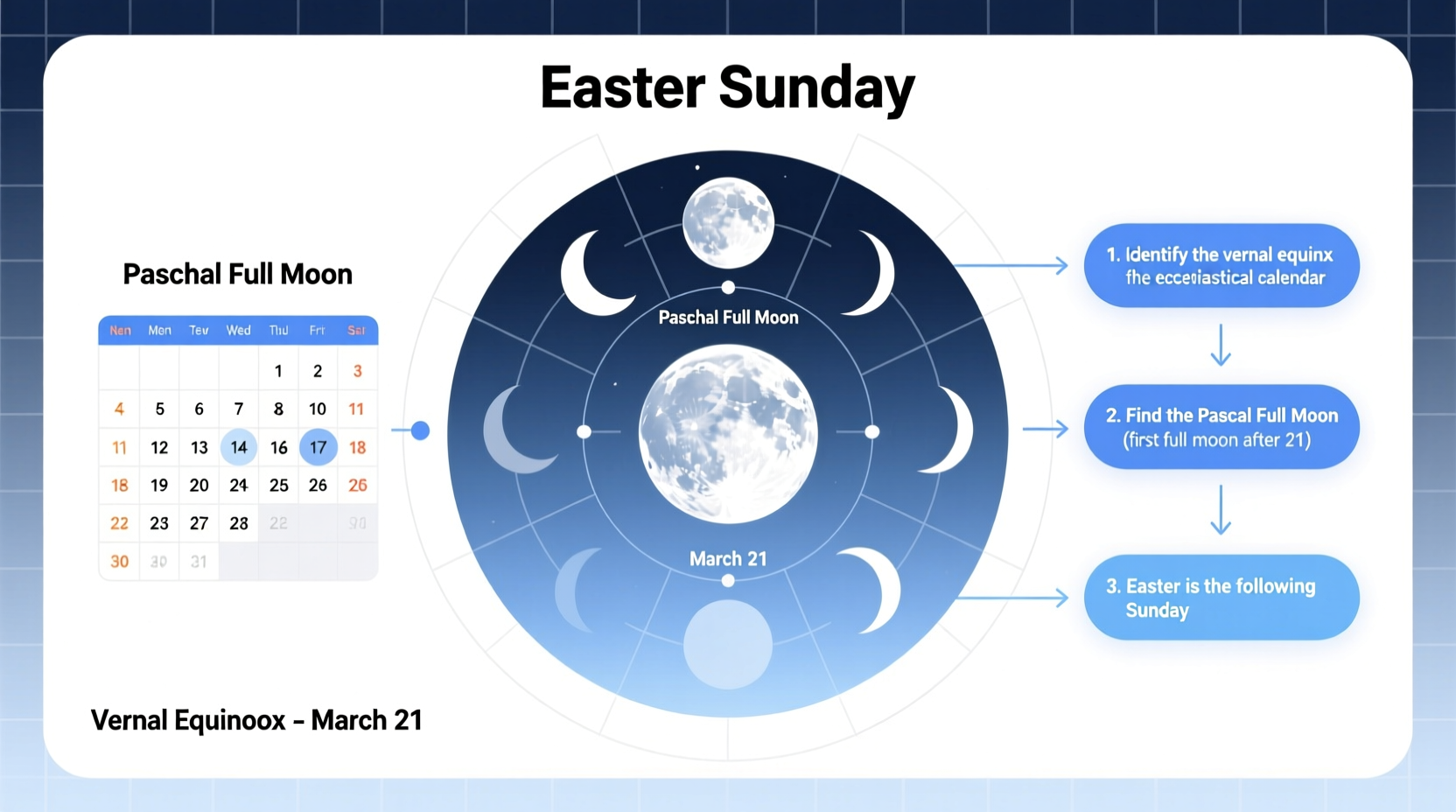
The date of Easter is set annually based on a calculation known as the ecclesiastical full moon following the spring equinox, making it a moveable feast that varies from year to year. Specifically, Easter Sunday falls on the first Sunday after the first full moon that occurs on or after March 21—the official date of the vernal equinox in church tradition. This method, rooted in both astronomical observation and religious decree, explains why the question how is the Easter date set continues to intrigue historians, theologians, and calendar enthusiasts alike. As a result, Easter can occur as early as March 22 or as late as April 25 in the Gregorian calendar used by Western Christian churches.
Historical Origins of the Easter Dating System
The system for determining when Easter is celebrated has deep historical roots, stretching back to the early centuries of Christianity. Before a standardized method was adopted, different Christian communities celebrated Easter on varying dates, often leading to confusion and theological disputes. The pivotal moment in resolving this inconsistency came at the First Council of Nicaea in 325 CE.
Convened by Emperor Constantine I, the council sought to unify Christian practices across the Roman Empire. One of its key decisions was to establish an independent method for calculating Easter, separating it from the Jewish lunar calendar upon which the timing of Passover—and thus early Easter observances—had previously depended. The council decreed that Easter should be celebrated on the same day by all Christians and that it should never coincide with the Jewish Passover.
To achieve this uniformity, the council endorsed a formula based on the solar and lunar cycles: Easter would fall on the first Sunday after the first ecclesiastical full moon following the vernal equinox. While the actual astronomical equinox can vary slightly each year, the church fixed the date at March 21 for consistency. This decision laid the foundation for what is now known as the computus, the calculation used to determine Easter’s date.
How the Ecclesiastical Full Moon Differs from the Astronomical Full Moon
A common point of confusion when exploring how is the Easter date set involves the difference between the ecclesiastical full moon and the actual astronomical full moon. The ecclesiastical version is not based on real-time celestial observations but rather on a set of tables developed in antiquity, known as the Metonic cycle—a 19-year cycle that approximates the relationship between the solar year and the phases of the Moon.
These tables allow the Church to predict the occurrence of the full moon without relying on modern astronomy. As a result, the ecclesiastical full moon may differ by up to two days from the true astronomical event. For example, in some years, the actual full moon may occur before March 21, but if the ecclesiastical calculation places the 'full moon' on or after that date, Easter will still be scheduled accordingly.
This distinction is crucial for understanding why Easter sometimes appears misaligned with lunar events visible in the sky. However, the use of fixed tables ensures predictability and global consistency in liturgical planning.
Differences Between Western and Eastern Easter Dates
One of the most frequently asked follow-up questions to how is the Easter date set is why Eastern Orthodox churches often celebrate Easter on a different date than Western Christian denominations. The answer lies in the use of different calendars and slightly varied computational methods.
Western churches—including Roman Catholic and Protestant traditions—use the Gregorian calendar, introduced by Pope Gregory XIII in 1582 to correct inaccuracies in the Julian calendar. Eastern Orthodox churches, however, continue to use the older Julian calendar for liturgical purposes. Because the Julian calendar is currently 13 days behind the Gregorian, the equinox and full moon calculations differ.
Additionally, the Orthodox churches apply a stricter rule: Easter must follow the Jewish Passover, even if the ecclesiastical full moon precedes it. This adherence to post-Passover timing further contributes to the divergence. As a result, Orthodox Easter (also called Pascha) typically falls one to five weeks after Western Easter, though occasionally the dates align.
| Year | Western Easter | Orthodox Easter |
|---|---|---|
| 2024 | March 31 | May 5 |
| 2025 | April 20 | April 20 |
| 2026 | April 5 | April 12 |
| 2027 | March 28 | May 2 |
Practical Implications of a Moveable Feast
Because Easter’s date shifts annually, it affects numerous cultural, religious, and economic activities. Schools, government offices, and businesses in many countries schedule holidays around Easter, including Good Friday and Easter Monday. Retailers plan marketing campaigns, chocolate manufacturers ramp up production, and churches organize special services—all dependent on knowing well in advance how is the Easter date set.
For individuals and families, the variability means that travel plans, religious observances, and meal preparations must be adjusted each year. In countries like the United States, Australia, and the United Kingdom, where Easter Monday is not a federal holiday but is observed in some sectors, employers may choose whether to grant time off. It's advisable to check local regulations or company policies when planning around the Easter weekend.
Common Misconceptions About Easter’s Date
Several myths persist about how Easter is determined. One widespread misconception is that Easter is simply the first Sunday in April. While it often falls in early April, it can occur in late March, as seen in 2016 (March 27) and expected again in 2025 (April 20). Another myth is that Easter follows the actual full moon visible in the sky. As previously explained, it follows a calculated ecclesiastical moon, not real-time astronomy.
Some also believe that Easter’s date is arbitrary or politically influenced. In reality, it is governed by precise mathematical rules established over 1,700 years ago. Though attempts have been made to fix Easter on a permanent date—such as the second Sunday in April—these proposals have not gained universal acceptance due to theological and traditional resistance.
How to Predict Future Easter Dates
Understanding how is the Easter date set allows one to forecast future dates with reasonable accuracy. A simple method involves checking the spring equinox (fixed at March 21), identifying the next ecclesiastical full moon, and finding the following Sunday. For those who prefer ready-made references, online calculators and ecclesiastical tables provide dates decades in advance.
For example, in 2026, the ecclesiastical full moon falls on Saturday, April 4. Therefore, Easter Sunday is set for April 5. In 2027, the full moon occurs on March 27, making Easter fall on March 28. These predictions are consistent across Catholic and most Protestant denominations.
For Orthodox dates, one must convert the Julian calendar date to the Gregorian equivalent. In 2026, the Orthodox full moon occurs on April 1 (Julian), which corresponds to April 14 (Gregorian), with Easter falling on April 12 (due to additional alignment rules).
Regional Variations and Public Observances
While the method of setting Easter is standardized within religious traditions, public observance varies significantly by country. Over 100 countries recognize Easter in some form, with many granting national holidays for Good Friday and/or Easter Monday.
- United States: No federal holiday, but Good Friday is observed in some states (e.g., Florida, Hawaii). Easter Sunday is widely celebrated culturally.
- Germany: Both Good Friday and Easter Monday are national holidays.
- Australia: Good Friday, Easter Saturday, Easter Sunday, and Easter Monday are public holidays in most states.
- Greece: A predominantly Orthodox country, Greece observes Easter with great solemnity, with Holy Week processions and midnight Resurrection services.
- Philippines: Known for intense religious observances, including reenactments of the crucifixion.
Travelers and international businesses should verify local customs and operating hours, as retail stores, banks, and transportation services may have reduced schedules.
Efforts to Fix the Date of Easter
In recent decades, there have been discussions among Christian leaders about establishing a fixed date for Easter to simplify scheduling and enhance unity. Proposals include setting Easter on the second or third Sunday in April. The World Council of Churches convened a consultation in Aleppo, Syria, in 1997, recommending a common method based on actual astronomical data—using the real equinox and full moon as observed from Jerusalem.
However, no agreement has been reached due to logistical challenges and resistance from traditionalists. Until such time as consensus emerges, the current system—however complex—remains in place.
Frequently Asked Questions
- Why does Easter’s date change every year?
- Easter’s date changes because it is based on the lunar cycle and the spring equinox. It is always the first Sunday after the first full moon on or after March 21.
- What is the earliest and latest possible date for Easter?
- The earliest possible date is March 22; the latest is April 25, based on the Gregorian calendar used by Western churches.
- Why do Orthodox churches celebrate Easter on a different date?
- They use the Julian calendar for religious calculations and require Easter to follow the Jewish Passover, leading to a later celebration.
- Is Easter always after Passover?
- In Western Christianity, not necessarily. In Eastern Orthodoxy, yes—Easter must come after Passover according to church rules.
- Will Easter ever be on the same date every year?
- Currently, no. Although proposals exist to fix the date, they have not been adopted by major Christian denominations.




 浙公网安备
33010002000092号
 浙B2-20120091-4