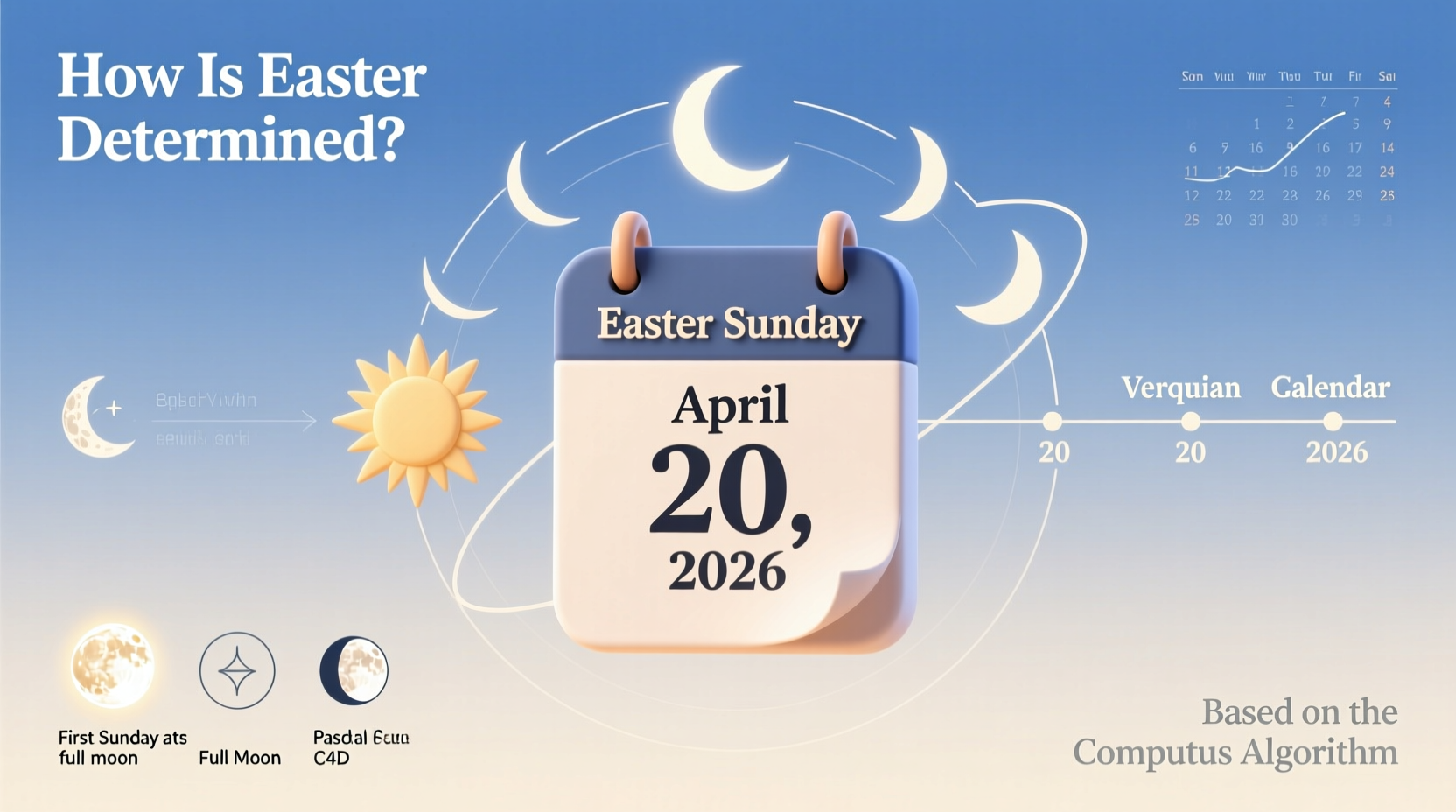
Easter in 2026 falls on Sunday, April 5. The exact date of Easter each year is determined by a unique calculation known as how Easter falls, which links the holiday to both the lunar cycle and the spring equinox. Specifically, Easter is observed on the first Sunday after the first full moon following the vernal (spring) equinox in the Northern Hemisphere. This method, rooted in ecclesiastical tradition, means that Easter can occur as early as March 22 or as late as April 25 in the Gregorian calendar. Understanding how Easter falls helps explain its shifting date and global variations in celebration.
Why Does Easter’s Date Change Every Year?
Unlike fixed holidays such as Christmas (December 25), Easter is a movable feast. Its date changes annually because it is based on a combination of solar and lunar cycles rather than a set calendar date. The rule established by the First Council of Nicaea in 325 CE states: Easter is celebrated on the first Sunday after the Paschal Full Moon, which is the first ecclesiastical full moon on or after March 21.
This system blends astronomy with religious tradition. March 21 is taken as the fixed date for the spring equinox in church calculations, even though the astronomical equinox may fall on March 19, 20, or 21 depending on the year. The ‘full moon’ referenced is not always the actual astronomical event but an approximation called the ecclesiastical full moon, derived from ancient tables like the Metonic cycle—a 19-year pattern used to predict lunar phases.
The Historical Origins of How Easter Falls
The method behind how Easter falls dates back to early Christianity’s effort to align the commemoration of Jesus Christ’s resurrection with Jewish Passover, which also follows a lunisolar calendar. However, early Christian communities disagreed on whether Easter should be celebrated on a specific day of the week or tied directly to Passover (which occurs on the 14th of Nisan in the Hebrew calendar).
To resolve these disputes, Emperor Constantine convened the Council of Nicaea in 325 AD. The council decided that Easter should be universally celebrated on a Sunday, independent of the Jewish calendar, to emphasize the resurrection as a distinct Christian observance. This decision laid the foundation for the computus—the complex calculation used to determine Easter’s date in both Western (Roman Catholic and Protestant) and Eastern (Orthodox) churches.
Differences Between Western and Eastern Easter Dates
One of the most common sources of confusion about how Easter falls is that Eastern Orthodox churches often celebrate Easter on a different date than Western churches. This discrepancy arises from two key factors:
- Different Calendars: Most Western churches use the Gregorian calendar (introduced in 1582), while many Eastern Orthodox churches still follow the older Julian calendar for liturgical purposes.
- Different Full Moon Tables: The Orthodox Church uses the Julian-based ecclesiastical full moon, which can differ by several days from the Gregorian version.
As a result, Orthodox Easter typically occurs one to five weeks later than Western Easter. In 2026, for example, Western Easter is on April 5, but Orthodox Easter will fall on April 12. Occasionally, the dates align—such as in 2025, when both East and West observe Easter on April 20.
When Is Easter Over the Next Decade?
Understanding how Easter falls becomes clearer when examining upcoming dates. Below is a table showing Easter Sunday dates from 2025 to 2035 in the Western Christian tradition:
| Year | Easter Date (Western) | Easter Date (Orthodox) |
|---|---|---|
| 2025 | April 20 | April 20 |
| 2026 | April 5 | April 12 |
| 2027 | March 28 | May 2 |
| 2028 | April 16 | April 16 |
| 2029 | April 1 | April 8 |
| 2030 | April 21 | April 28 |
| 2031 | April 13 | May 4 |
| 2032 | March 28 | May 2 |
| 2033 | April 17 | April 24 |
| 2034 | April 9 | April 16 |
| 2035 | March 25 | May 6 |
This variation illustrates how how Easter falls depends on precise astronomical approximations and calendar systems. Notably, 2035 features one of the earliest possible Easters—March 25—while 2027 and 2032 see relatively early Orthodox celebrations due to calendar drift.
Which Countries Celebrate Easter and How?
Easter is observed in over 100 countries worldwide, either as a religious holiday, a public holiday, or both. While its significance varies, the core theme remains the resurrection of Jesus Christ in Christian theology.
Countries where Easter is widely celebrated include:
- United States & Canada: Public schools and government offices close on Good Friday or Easter Monday in some regions; families attend church services, hold egg hunts, and share festive meals.
- United Kingdom: Banks close on Good Friday and Easter Monday; traditions include hot cross buns and chocolate eggs.
- Australia & New Zealand: Easter long weekend includes ANZAC Day preparations in April; local customs blend Christian worship with secular festivities.
- Germany & France: Religious processions, fasting during Lent, and elaborate church ceremonies mark the season.
- Greece & Russia: As predominantly Orthodox nations, they follow the Julian calendar for Easter, leading to later dates and deeply traditional observances like midnight liturgies and red-dyed eggs.
In Latin America, especially in Mexico, Brazil, and Peru, Holy Week (Semana Santa) involves dramatic reenactments, processions, and fasting. In contrast, in non-Christian-majority countries like Japan or South Korea, Easter is primarily commercialized, centered around candy sales and family activities, with limited religious observance.
Common Misconceptions About How Easter Falls
Despite its widespread recognition, several myths persist about how Easter falls:
- Misconception 1: “Easter is always the second Sunday in April.”
Reality: While often in April, Easter can fall in late March (e.g., March 27, 2016; March 25, 2035). - Misconception 2: “The full moon seen in the sky determines Easter.”
Reality: It’s based on the ecclesiastical full moon, not the actual astronomical event. - Misconception 3: “All Christians celebrate Easter on the same day.”
Reality: Due to calendar differences, Eastern and Western churches often celebrate on different Sundays. - Misconception 4: “Easter moves randomly each year.”
Reality: The date follows a predictable 19-year Metonic cycle, making it calculable decades in advance.
How to Prepare for Easter: Practical Tips
Whether observing Easter religiously or culturally, planning ahead ensures meaningful participation. Here are actionable steps based on understanding how Easter falls:
- Mark Your Calendar Early: Since Easter shifts annually, add it to your planner as soon as the date is confirmed (available up to 100 years in advance via ecclesiastical tables).
- Check Local Holiday Schedules: Retailers, banks, and transit systems may have altered hours on Good Friday and Easter Monday. Verify with official websites or local authorities.
- Plan Travel Accordingly: Easter weekend is a peak travel time in many countries. Book accommodations and transportation well in advance, especially if attending services or visiting family.
- Participate in Community Events: Churches, schools, and towns host egg hunts, charity drives, and sunrise services. Look for local listings starting in February.
- Understand Regional Differences: If traveling internationally, research whether the destination observes Western or Orthodox Easter, and adjust plans accordingly.
Religious vs. Secular Observances of Easter
The way people engage with Easter varies significantly. For practicing Christians, the period begins with Lent—a 40-day season of reflection and penance ending at Easter Sunday. Key events include Palm Sunday, Maundy Thursday, Good Friday (commemorating the crucifixion), and the Easter Vigil.
Secular celebrations, particularly in Western societies, focus more on symbols like the Easter Bunny, colored eggs, and chocolate. These traditions stem from pre-Christian spring festivals associated with fertility and renewal, later incorporated into Christian culture. Despite this blending, the central theological message of resurrection remains dominant in religious contexts.
Will Easter Ever Be Fixed on a Permanent Date?
In recent years, there has been discussion among Christian leaders about establishing a fixed date for Easter—such as the second Sunday in April—to simplify scheduling and unify observance across denominations. Proponents argue this would reduce confusion and make planning easier for schools, businesses, and international travelers.
However, challenges remain. Any change would require agreement between Roman Catholic, Protestant, and Orthodox churches—an unlikely prospect given historical divisions. Additionally, altering a tradition rooted in astronomy and centuries-old doctrine faces strong resistance from liturgical scholars and religious communities.
For now, how Easter falls will continue to follow the traditional computus, preserving its unique link between faith, nature, and timekeeping.
Frequently Asked Questions
What is the earliest and latest possible date for Easter?
The earliest Easter can occur is March 22, and the latest is April 25, based on the ecclesiastical rules governing how Easter falls. These extremes are rare; most Easters fall between late March and mid-April.
Why does Easter sometimes fall after Passover and sometimes before?
Although originally linked to Passover, the church separated Easter’s calculation to ensure it always falls on a Sunday. Because the ecclesiastical full moon may precede or follow the actual Jewish calendar date, Easter can occur before or after Passover in the modern calendar.
How far in advance can Easter dates be predicted?
Easter dates can be calculated centuries ahead using the 19-year Metonic cycle and standardized ecclesiastical tables. All Western Easter dates through 2100 are already known and published by astronomical almanacs and religious authorities.
Do all U.S. states close on Good Friday or Easter Monday?
No. Good Friday is a federal holiday only in some states (e.g., Connecticut, Texas, Hawaii). Easter Monday is not a federal holiday, though certain cities with large Catholic populations (like Baltimore) may observe it locally.
Can the date of Easter affect other holidays?
Yes. Many Christian liturgical seasons depend on Easter. For example, Ash Wednesday (start of Lent) is 46 days before Easter, Pentecost is 49 days after, and Ascension Day is 39 days after. Changes in Easter’s date shift these observances accordingly.




 浙公网安备
33010002000092号
浙公网安备
33010002000092号 浙B2-20120091-4