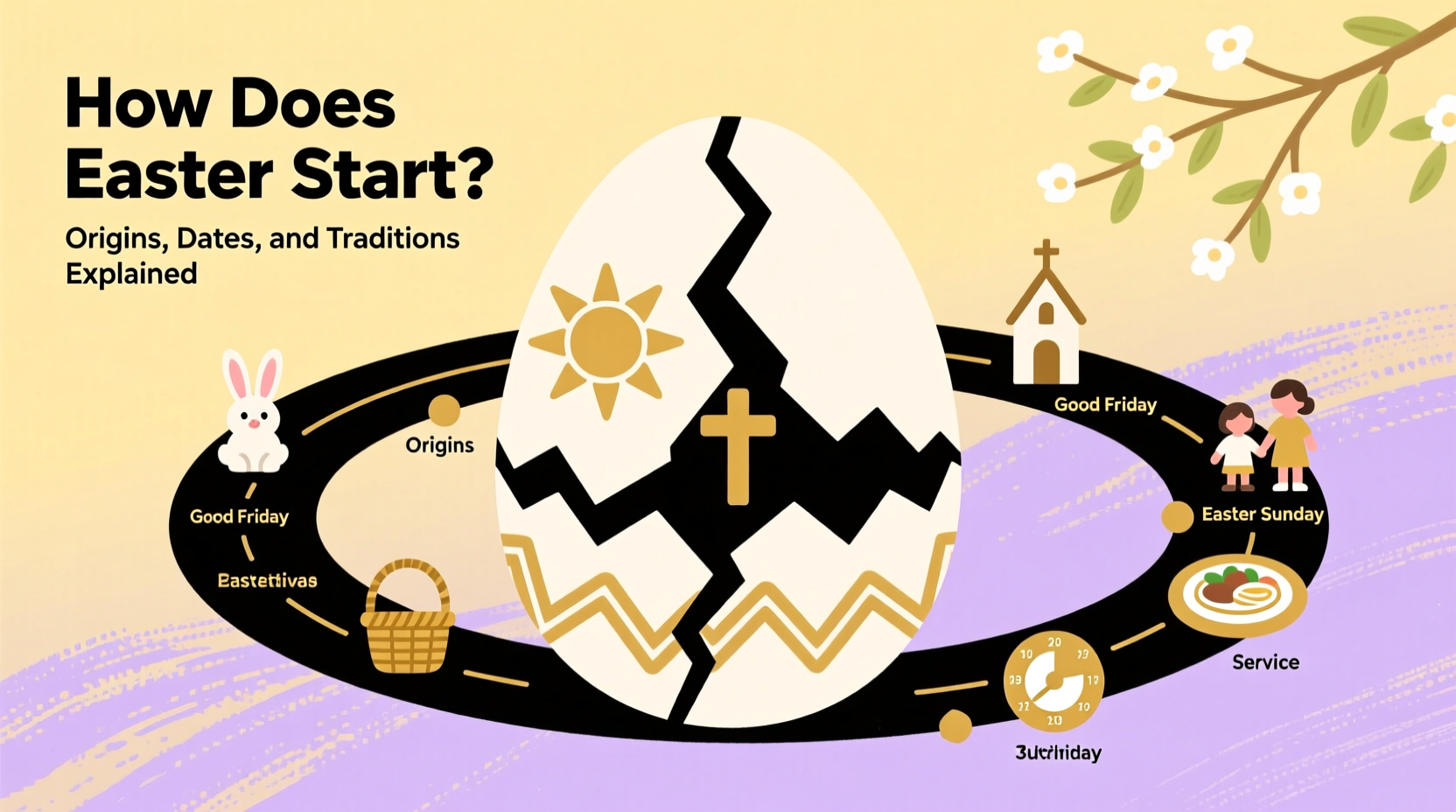
How does Easter start? Easter begins on the first Sunday after the Paschal Full Moon, which follows the spring equinox—this astronomical and religious timing determines when Easter is celebrated each year. The process of how Easter starts is rooted in a combination of lunar cycles, early Christian tradition, and ecclesiastical calculations, making it a moveable feast that can fall as early as March 22 or as late as April 25. Understanding how Easter starts involves exploring not only the date-setting mechanism but also the historical evolution, theological significance, and cultural practices that mark the beginning of this sacred season.
The Date of Easter: How Is It Determined?
Easter does not fall on a fixed calendar date like Christmas (December 25). Instead, how Easter starts each year depends on a complex formula tied to both astronomy and church tradition. According to the decision made at the Council of Nicaea in 325 CE, Easter is set for the first Sunday after the first full moon occurring on or after the vernal (spring) equinox, observed as March 21 regardless of the actual astronomical event. This full moon is known as the Paschal Full Moon.
Because the lunar cycle doesn't align perfectly with the Gregorian calendar, the date of Easter changes annually. For example:
| Year | Date of Easter Sunday | Region(s) |
|---|---|---|
| 2024 | March 31 | Western Christianity |
| 2025 | April 20 | Western Christianity |
| 2026 | April 5 | Western Christianity |
| 2025 | April 20 | Catholic & Protestant Churches |
| 2025 | April 27 | Eastern Orthodox Church* |
*Note: Eastern Orthodox churches use the Julian calendar for liturgical purposes, which often results in a later Easter date.
Historical Origins: How Did Easter Begin?
To understand how Easter starts, one must trace its origins back to early Christianity and Jewish tradition. Easter commemorates the resurrection of Jesus Christ, described in the New Testament as occurring three days after his crucifixion—on a Sunday following the Passover festival. Passover itself is based on the Hebrew lunar calendar, beginning on the 15th day of Nisan, usually in March or April.
The early Christian church sought to honor the connection between Christ’s death and resurrection and the Jewish Passover while establishing an independent method for calculating the date. By the 4th century, disagreements over the correct date led to the Council of Nicaea standardizing the observance. This council established the rule still used today: Easter falls on the first Sunday after the first ecclesiastical full moon following March 21.
This system reflects the desire to maintain symbolic continuity with springtime renewal and agricultural rebirth—a theme common across many pre-Christian European festivals. Over time, pagan customs associated with fertility and new life were absorbed into Christian practice, influencing symbols like eggs and rabbits now commonly linked to how Easter starts in popular culture.
Liturgical Preparation: How the Church Begins Easter Season
While Easter Sunday marks the climax of the celebration, how Easter starts liturgically actually begins weeks earlier with Lent. Lent is a 40-day period of fasting, prayer, and penance (not counting Sundays), starting on Ash Wednesday. This season prepares believers spiritually for the solemnity of Good Friday and the joy of Easter Sunday.
- Ash Wednesday: Marks the beginning of Lent; worshippers receive ashes on their foreheads as a sign of repentance.
- Holy Week: The final week of Lent includes Palm Sunday (commemorating Jesus’ entry into Jerusalem), Maundy Thursday (Last Supper), Good Friday (crucifixion), and Holy Saturday (vigil before resurrection).
- Easter Vigil: Held after sundown on Holy Saturday, this is the official liturgical start of Easter in many denominations. It features candlelight services, baptisms, and readings tracing salvation history.
In Roman Catholic, Anglican, Lutheran, and some Methodist traditions, the Easter Vigil is considered the “mother of all vigils” and the most important service of the year. Thus, technically, how Easter starts in the church calendar is not on Sunday morning but during the night leading into it.
Global Observances: When and How Does Easter Start Around the World?
Different countries observe Easter with varying customs and calendars. While Western Christianity uses the Gregorian calendar, Eastern Orthodox churches—including those in Greece, Russia, Ukraine, and Serbia—use the older Julian calendar, causing their Easter to often occur later.
For instance, in 2025, Western Christians celebrate Easter on April 20, but Orthodox Christians will observe it on April 27. This difference affects everything from school holidays to retail operations and public transportation schedules in predominantly Orthodox nations.
Here are notable regional differences in how Easter starts globally:
- United States & Canada: Easter begins with sunrise services, family brunches, and egg hunts. Many businesses close on Easter Sunday, though major retailers may open with reduced hours.
- Italy: Known for the Pope’s Easter Mass at St. Peter’s Basilica in Vatican City. Italians attend church, enjoy festive meals, and fly doves called "colomba" symbolizing peace.
- Spain: Elaborate Holy Week processions begin days before Easter, especially in Seville and Malaga. These solemn parades mark the lead-up to Easter Sunday.
- Australia & New Zealand: Celebrated in autumn, yet still featuring bunnies and chocolate eggs. Some communities promote the Easter Bilby instead, to raise awareness about endangered native species.
- Philippines: One of the few Asian countries where Easter is widely observed. Devotees reenact the Stations of the Cross, and some participate in real crucifixions as acts of faith.
Secular vs. Religious Beginnings of Easter
There is a clear distinction between how Easter starts in religious contexts versus secular society. In churches, the season unfolds through structured liturgy and spiritual reflection. In broader culture, however, the commercial start of Easter often begins much earlier—with candy displays appearing in stores by January and online marketing campaigns launching months in advance.
Retailers typically begin promoting Easter products—such as chocolates, decorations, greeting cards, and children's clothing—as early as mid-February. Major U.S. chains like Walmart, Target, and CVS stock shelves with pastel-colored items well before Lent even begins. This early commercialization contrasts sharply with the reflective tone of the liturgical season.
Consumers looking to prepare for Easter should consider both dimensions: spiritual readiness (e.g., attending services, observing Lent) and practical planning (buying supplies for meals or activities). Families hosting gatherings might benefit from creating checklists four to six weeks ahead, including grocery lists, guest invitations, and activity plans like DIY egg dyeing or outdoor games.
Common Misconceptions About How Easter Starts
Several myths persist about the origins and timing of Easter:
- Misconception: Easter always falls on the same weekend. Reality: Because it follows lunar cycles, the date shifts yearly within a five-week window.
- Misconception: All Christians celebrate Easter on the same day. Reality: Differences between Gregorian and Julian calendars mean Orthodox and Western churches often celebrate on different Sundays.
- Misconception: The Easter Bunny is a modern invention. Reality: The hare as a symbol of fertility predates Christianity and was incorporated into German folklore before spreading globally.
- Misconception: Easter is purely a Christian holiday. Reality: Its timing and some symbols have roots in pre-Christian spring festivals honoring renewal and fertility.
How to Prepare for Easter: Practical Tips
Whether you're observing Easter religiously or culturally, preparation enhances the experience. Here’s how to get ready:
- Check Local Church Schedules: Confirm service times for Palm Sunday, Maundy Thursday, Good Friday, and Easter Sunday. Many parishes publish bulletins online.
- Plan Meals Early: Traditional dishes vary—ham in the U.S., lamb in Europe, spiced breads in Latin America. Order specialty ingredients or reserve catered meals in advance.
- Organize Family Activities: Egg hunts, craft stations, or storytelling sessions keep children engaged. Consider eco-friendly options like wooden eggs or scavenger hunts.
- Support Ethical Brands: Look for fair-trade chocolate or cruelty-free dyes if purchasing treats or supplies.
- Verify Retail Hours: While most stores are closed on Easter Sunday, pharmacies and gas stations may operate on holiday schedules. Check individual websites for updates.
Frequently Asked Questions
When does Easter start in 2025?
Easter Sunday falls on April 20, 2025, in Western Christianity. The liturgical season begins with Ash Wednesday on March 5, 2025, marking the start of Lent.
Why does the date of Easter change every year?
Easter’s date is based on the lunar cycle and the spring equinox. It is set as the first Sunday after the first full moon following March 21, causing annual variation.
Do all countries celebrate Easter on the same day?
No. Most Western nations follow the Gregorian calendar and celebrate on the same Sunday. However, many Eastern Orthodox countries use the Julian calendar, resulting in a later date—often one to five weeks after Western Easter.
What time does Easter officially start?
Religiously, Easter begins at sunset on Holy Saturday with the Easter Vigil. Commercially and culturally, preparations often start weeks earlier with sales and events.
Which countries observe Easter as a public holiday?
Over 100 countries recognize Easter or related days (Good Friday, Easter Monday) as national holidays, including the U.S., UK, Canada, Australia, Germany, France, Brazil, and South Africa.





 浙公网安备
33010002000092号
浙公网安备
33010002000092号 浙B2-20120091-4