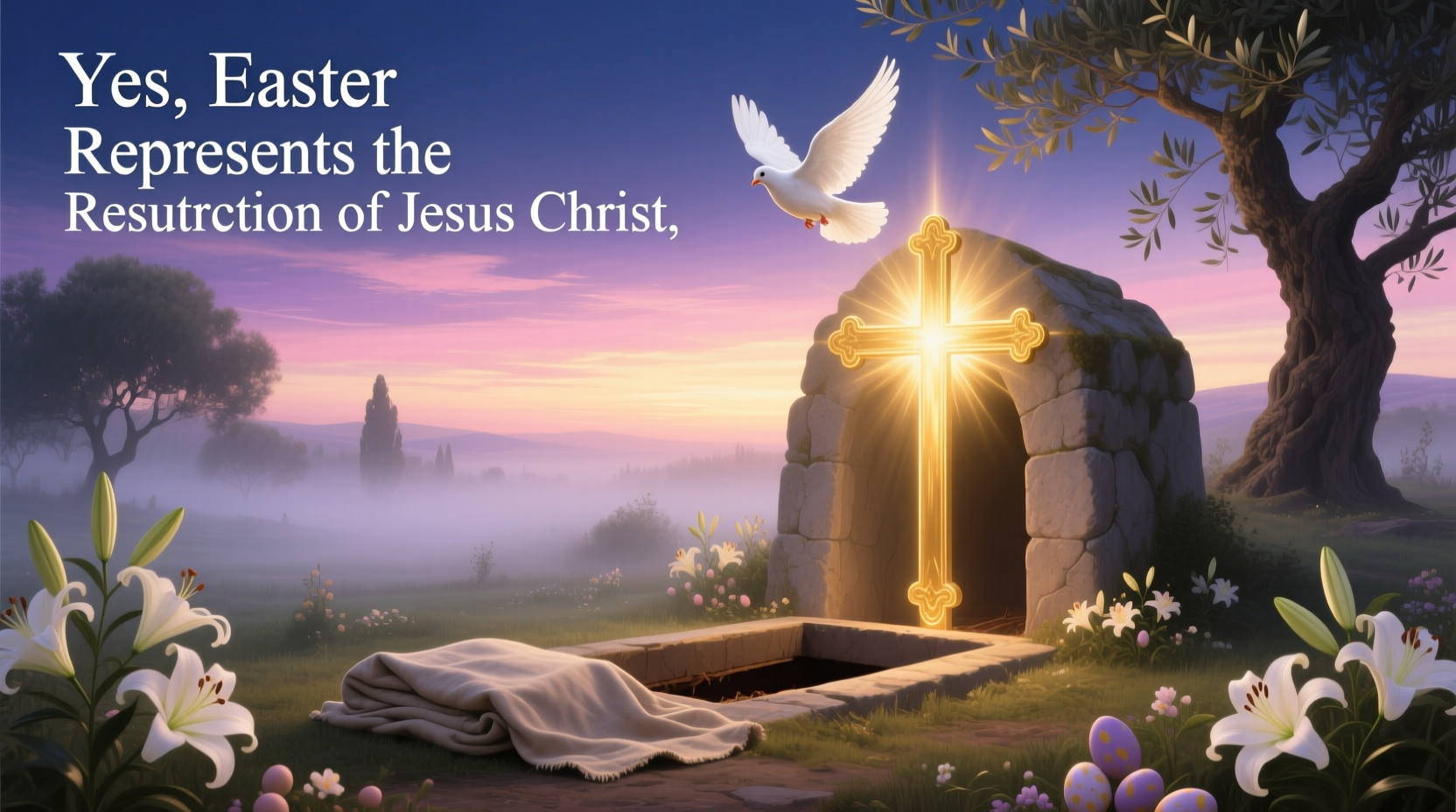
Yes, Easter represents the resurrection of Jesus Christ from the dead, which is the foundational belief of Christianity. This event, described in the New Testament, occurred three days after Jesus was crucified and buried. The phrase 'does Easter represent the resurrection' reflects a common inquiry into the religious significance behind this widely observed holiday. Indeed, Easter Sunday commemorates the moment when Jesus rose from the tomb, fulfilling biblical prophecies and offering the promise of eternal life to believers. As such, the resurrection meaning in Easter is not merely symbolic but central to Christian theology and worship.
Historical Origins of Easter and Its Link to the Resurrection
The roots of Easter trace back to early Christianity in the first century AD. After Jesus’ crucifixion on what is now known as Good Friday, his followers were devastated. However, according to all four Gospels—Matthew, Mark, Luke, and John—women who visited his tomb on the third day found it empty. Angels declared that Jesus had risen, and he subsequently appeared to numerous disciples over a period of 40 days before ascending into heaven.
Early Christians began gathering weekly on Sundays—the day of resurrection—to worship and break bread, establishing a rhythm centered around the victory over death. By the second century, annual celebrations specifically dedicated to the resurrection emerged, eventually formalized during the Council of Nicaea in 325 AD. At this council, church leaders unified the date calculation for Easter, ensuring it would be celebrated on the first Sunday after the first full moon following the vernal (spring) equinox. This decision linked Easter both astronomically and spiritually to renewal and rebirth, reinforcing its connection to the resurrection narrative.
Theological Significance: Why the Resurrection Matters
To understand why Easter represents the resurrection so profoundly, one must examine its theological implications. In Christian doctrine, Jesus’ death served as an atonement for human sin, while his resurrection demonstrated God’s power over death and validated Jesus’ divine identity. The Apostle Paul emphasized this point in 1 Corinthians 15:17: 'If Christ has not been raised, your faith is futile; you are still in your sins.'
This verse underscores that without the resurrection, Christianity loses its core message. Therefore, Easter is more than a cultural or seasonal festival—it is a proclamation of hope, redemption, and new life. Churches around the world hold special services at dawn to symbolize the light of Christ emerging from darkness, echoing the Gospel accounts of the empty tomb at sunrise.
How Different Christian Denominations Observe the Resurrection
While all major Christian traditions affirm the resurrection, their practices vary slightly:
- Roman Catholic Church: Observes Holy Week with Palm Sunday, Holy Thursday (Last Supper), Good Friday (crucifixion), and the Easter Vigil on Saturday night, culminating in Easter Sunday Mass.
- Eastern Orthodox Church: Follows the Julian calendar, often celebrating Easter later than Western churches. Their Pascha (Easter) service includes midnight liturgies, candlelight processions, and the greeting, 'Christ is risen!' answered by 'Truly He is risen!'
- Protestant Denominations: Include Lutheran, Anglican, Baptist, Methodist, and others who emphasize preaching on the resurrection, baptisms, and joyful hymns like 'Christ the Lord Is Risen Today.'
Despite differences in ritual, all focus on proclaiming the resurrection as the climax of salvation history.
Cultural Expressions of the Resurrection Theme
Over time, Easter has incorporated various cultural symbols, some directly tied to the resurrection, others more loosely connected. Common elements include:
- Easter Lilies: Symbolize purity and new life, often used in church decorations to reflect the empty tomb and spiritual rebirth.
- Sunrise Services: Held outdoors or in sanctuaries at dawn, these gatherings reenact the discovery of the risen Christ and emphasize renewal.
- Hymns and Music: Classic compositions like Handel’s Messiah and contemporary worship songs reinforce the joy of resurrection.
- Baptisms and Confirmations: Many churches schedule these rites on Easter to signify personal participation in Christ’s death and resurrection (Romans 6:4).
These traditions help believers internalize the resurrection's impact beyond a single day of celebration.
Common Misconceptions About Easter and the Resurrection
Despite its centrality, several misconceptions persist about whether Easter truly represents the resurrection:
| Misconception | Clarification |
|---|---|
| Easter is primarily about bunnies and eggs. | While secular symbols exist, the original and primary meaning is the resurrection of Jesus Christ. |
| Easter was invented by the Romans to replace pagan festivals. | Though timing overlaps with spring festivals like Eostre, historical evidence shows early Christians independently celebrated Passover-linked resurrection events. |
| The resurrection is just a metaphor. | Christian orthodoxy holds it as a literal, physical event; otherwise, faith collapses (1 Cor. 15:14). |
| All Christians celebrate Easter on the same date. | Differences between Gregorian and Julian calendars cause variations, especially affecting Eastern Orthodox dates. |
Secularization vs. Sacred Meaning: Balancing Traditions
In modern society, commercial influences have shifted public attention toward candy, egg hunts, and family meals. Retailers promote pastel colors, chocolate bunnies, and toy sales, often overshadowing religious observance. However, many families integrate both aspects—attending church in the morning and hosting gatherings later.
Parents can use these moments to teach children that the Easter bunny is a fun tradition, but the real story is about Jesus rising from the grave. Age-appropriate books, videos, and discussions help clarify that does Easter represent the resurrection? Yes—and that truth gives lasting meaning to the holiday.
Global Observance: Where and How Easter Is Celebrated
Easter is observed in over 100 countries, though the extent of religious observance varies:
- United States, Canada, Australia: Public holidays with church services, family dinners, and community events.
- Latin America: Countries like Mexico and Brazil feature processions, passion plays, and elaborate reenactments of the crucifixion and resurrection.
- Europe: Italy, Spain, and Greece host grand liturgical celebrations, while northern nations blend Christian customs with folk traditions.
- Philippines: Known for intense penitential rites on Good Friday, followed by joyful Easter Sunday masses.
- Africa: Vibrant worship services with music, dance, and testimonies highlight the resurrection’s transformative power.
Even in secularized regions like Western Europe, many people retain cultural ties to Easter, attending services occasionally or participating in traditional meals.
How to Deepen Your Understanding of the Resurrection This Easter
If you're wondering whether Easter truly represents the resurrection and want to engage more deeply, consider these practical steps:
- Read the Resurrection Accounts: Spend time reading Matthew 28, Mark 16, Luke 24, and John 20–21. Compare details and reflect on their significance.
- Attend a Good Friday and Easter Service: Experience the emotional arc from sorrow to triumph through liturgy and preaching.
- Participate in a Bible Study: Join a group exploring the meaning of the resurrection in Christian life.
- Volunteer or Serve: Embody the spirit of new life by helping others in need during the Easter season.
- Limit Commercial Distractions: Set boundaries on consumerism to keep focus on spiritual reflection.
Verifying Local Practices and Dates
Because Easter’s date changes annually (between March 22 and April 25), and because local customs differ, it's wise to verify specific details:
- Check your local church website for service times, especially sunrise or Easter Vigil schedules.
- Review school and government holiday closures if planning travel or activities.
- For international travelers, research whether Easter Monday is a public holiday (e.g., in the UK, Australia, Canada).
- Confirm retail operating hours—some stores open late or remain closed on Easter Sunday.
Frequently Asked Questions
- Does Easter always fall on the same date?
- No, Easter falls on the first Sunday after the first full moon following the spring equinox, so it ranges from March 22 to April 25.
- Why do some churches celebrate Easter on a different date?
- Eastern Orthodox churches use the Julian calendar instead of the Gregorian, leading to a different calculation and often a later date.
- Is the Easter Bunny related to the resurrection?
- No, the Easter Bunny is a secular symbol originating from German folklore and has no direct link to the resurrection of Jesus.
- Can non-Christians celebrate Easter?
- Yes, many people enjoy Easter as a cultural or family holiday, though the resurrection remains its core religious meaning.
- What is the best way to explain Easter’s meaning to children?
- Use simple language: 'Jesus died for our sins and came back to life on Easter Sunday, showing that He is powerful and loves us very much.'
In conclusion, the answer to the question 'does Easter represent the resurrection' is unequivocally yes. From its earliest origins to present-day global observance, Easter stands as a testament to the Christian belief in Jesus’ victory over death. While cultural expressions evolve, the heart of the holiday remains unchanged: Christ is risen, and because of that, millions gather each year to celebrate hope, forgiveness, and eternal life.





 浙公网安备
33010002000092号
浙公网安备
33010002000092号 浙B2-20120091-4