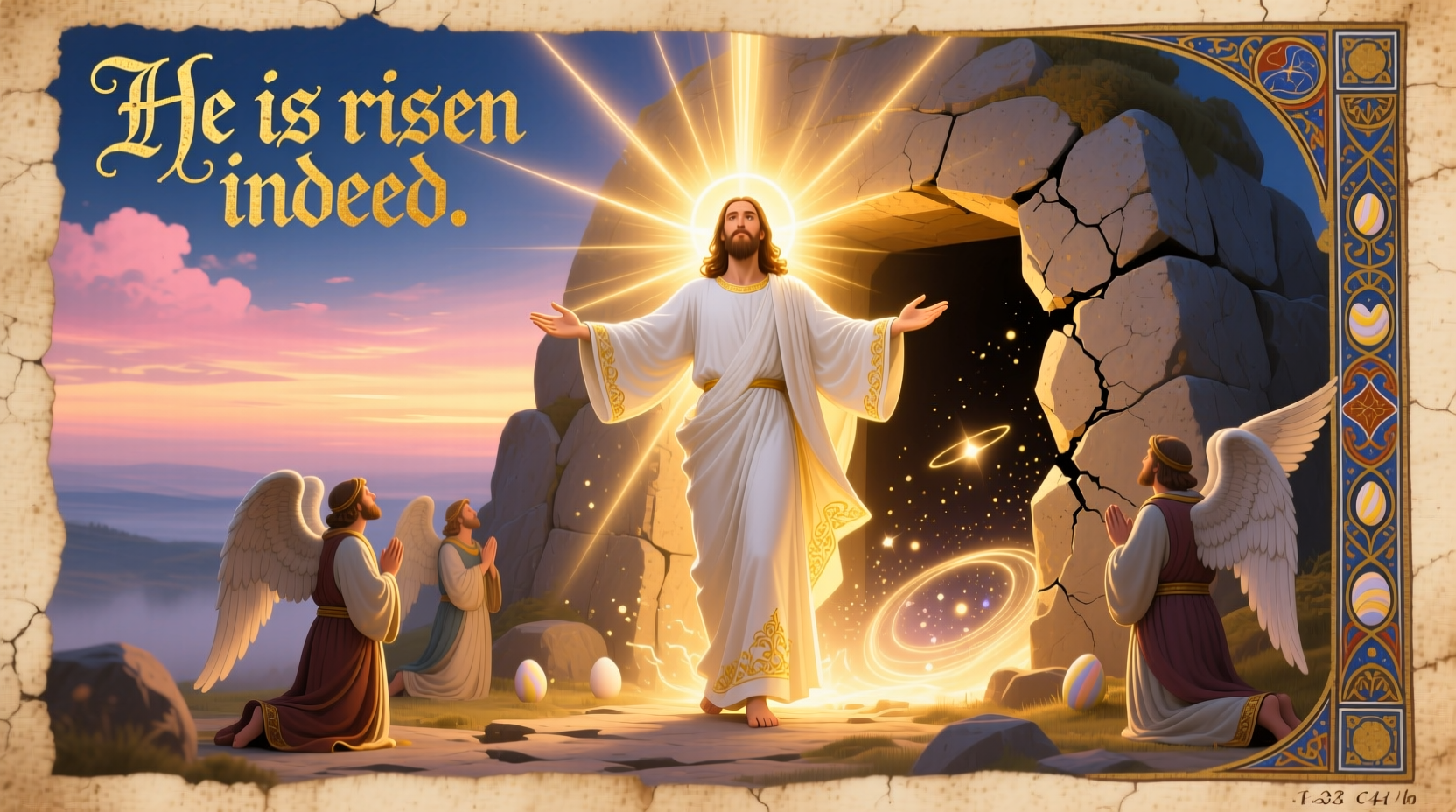
The central scripture for Easter is Matthew 28:1–10, which narrates the resurrection of Jesus Christ—an event that defines the Christian faith and fulfills biblical prophecy. This passage, often read during Easter Sunday services, describes how Mary Magdalene and the other Mary visited Jesus’ tomb at dawn, only to witness a great earthquake and an angel descending from heaven, rolling back the stone. ‘He is not here; he has risen,’ the angel declares, delivering a message of hope, redemption, and eternal life. This moment—the cornerstone of Christian theology—embodies the promise of salvation and is the foundation of Easter celebrations across the globe. As one of the most powerful scripture readings for Easter, Matthew 28 encapsulates the triumph over death and the fulfillment of God’s redemptive plan.
Why Matthew 28 Is the Defining Scripture for Easter
While several Bible passages speak to the resurrection, Matthew 28:1–10 stands as the most widely recognized scripture for Easter due to its vivid narrative and liturgical prominence. It begins with the women arriving at the tomb, symbolizing devotion and continuity in worship. The dramatic imagery—the earthquake, the radiant angel, the rolled-away stone—creates a scene of divine intervention and cosmic significance. The angel’s command to “Come and see the place where he lay” invites believers into a personal encounter with the reality of the resurrection.
This passage also emphasizes the role of witnesses. In a culture where women were often excluded from legal testimony, the Gospels highlight Mary Magdalene and the other Mary as the first to see the empty tomb and receive the angelic announcement. This detail underscores the transformative nature of the Gospel message—breaking social norms and elevating faithful discipleship over status or gender. Their mission to tell the disciples becomes the first act of evangelism after the resurrection, reinforcing the idea that every believer carries the good news.
Other Key Scriptures Read During Easter Services
Though Matthew 28 is central, Easter worship incorporates multiple resurrection accounts from the Gospels, each offering unique theological insights:
- Mark 16:1–8: Focuses on fear and awe, ending with the women fleeing in silence—a reflection of human uncertainty in the face of divine mystery.
- Luke 24:1–12: Includes the appearance of two angels and Peter’s visit to the tomb, emphasizing verification and personal response.
- John 20:1–18: Features Mary Magdalene’s emotional encounter with the risen Jesus, who calls her by name—highlighting intimacy and recognition in faith.
- 1 Corinthians 15:3–8: A creedal statement summarizing the resurrection appearances, affirming their centrality to Christian doctrine.
These passages are often included in lectionary readings during Holy Week and Easter Sunday, allowing congregations to engage with the resurrection from multiple scriptural angles. Together, they form a composite picture of hope, transformation, and divine victory.
The Historical Context of the Resurrection Narrative
To fully appreciate the scripture for Easter, one must understand its historical and cultural backdrop. First-century Judea was under Roman occupation, and crucifixion was a common punishment for political dissidents. Jesus’ execution would have been seen as a public humiliation and final defeat. Yet, the resurrection narratives subvert this expectation, transforming shame into glory.
Scholars note that the earliest Christian preaching, as recorded in Acts and Paul’s letters, centered on the resurrection. Within weeks of Jesus’ death, followers proclaimed his rising from the dead—even in the same city where he was buried. The rapid spread of this belief, despite persecution, suggests a deeply held conviction among early Christians that something extraordinary had occurred.
The empty tomb itself is significant. Unlike spiritualized interpretations that emerged later, the Gospels insist on bodily resurrection. Jesus appears eating fish (Luke 24:42–43), invites Thomas to touch his wounds (John 20:27), and walks alongside disciples on the road to Emmaus. These details counter claims that the resurrection was merely symbolic or visionary.
Theological Significance of the Easter Scripture
The resurrection is not just a miraculous event—it is the linchpin of Christian theology. As Paul writes in 1 Corinthians 15:17, “And if Christ has not been raised, your faith is futile; you are still in your sins.” Without the resurrection, Christianity loses its power and purpose.
Key theological themes include:
- Victory over sin and death: The resurrection demonstrates Jesus’ authority over evil and mortality, offering believers the hope of eternal life.
- Justification and new creation: Romans 4:25 states that Jesus “was delivered over to death for our sins and was raised to life for our justification.” His rising signifies not only forgiveness but the beginning of a renewed humanity.
- The inauguration of God’s kingdom: The resurrection marks the start of God’s promised restoration of all things, foreshadowing the future resurrection of believers.
These truths shape Christian ethics, worship, and mission. Because Christ lives, believers are called to live courageously, love sacrificially, and proclaim hope boldly.
Cultural Expressions of the Easter Scripture
Around the world, the message of Matthew 28 inspires diverse traditions that reflect local cultures while maintaining biblical fidelity. In Greece, midnight church services culminate in the proclamation “Christos Anesti!” (“Christ is Risen!”), answered with “Alithos Anesti!” (“Truly He Is Risen!”). In Latin America, processions reenact the journey to the tomb, blending solemnity with vibrant music. In Africa, communal feasts follow Easter worship, celebrating both spiritual and physical nourishment.
In Western countries, children hunt for eggs symbolizing new life, while families gather for meals echoing the joy of the resurrection. Though some customs have secular overtones, many churches use these moments to teach the original scripture for Easter, connecting cultural practices to their theological roots.
How Churches Prepare to Proclaim the Easter Scripture
Pastors and worship leaders spend weeks preparing for Easter Sunday, knowing that many people attend church only once or twice a year. Sermons based on Matthew 28 aim to be accessible yet profound, explaining the historical reliability of the resurrection and its personal implications.
Common elements of Easter services include:
- Dramatic readings of the resurrection account, sometimes performed by actors.
- Choral anthems like “Christ the Lord Is Risen Today,” reinforcing the triumphal tone of the scripture.
- Baptisms, symbolizing dying and rising with Christ (Romans 6:4).
- Communion services, linking the Last Supper with the ongoing presence of the risen Lord.
Churches also create welcoming environments for guests, providing bulletins with the scripture printed clearly and offering brief explanations of key terms like “resurrection” or “tomb.”
Common Misunderstandings About the Easter Scripture
Despite its familiarity, the resurrection narrative is often misinterpreted. Some view it as a metaphor for springtime renewal rather than a historical event. Others believe the disciples stole the body or that Jesus merely “fainted” on the cross. However, these theories fail to account for the consistent testimony of multiple eyewitnesses, the transformation of skeptical figures like James and Paul, and the willingness of early Christians to suffer and die for their belief.
Another misconception is that the Gospels contradict each other. While details vary—such as the number of women or angels—these differences reflect independent accounts rather than falsehoods. In legal terms, minor variations actually strengthen credibility, suggesting authenticity rather than collusion.
How to Reflect on the Easter Scripture Personally
Beyond corporate worship, individuals can deepen their engagement with the scripture for Easter through personal study and reflection. Here are practical steps:
- Read Matthew 28 slowly, imagining yourself present at the tomb. What emotions arise?
- Compare all four Gospel accounts side by side to gain a fuller picture.
- Meditate on the phrase ‘He is not here; he has risen’ throughout the day, letting it shape your perspective on challenges.
- Write a letter to the risen Jesus, expressing gratitude, doubts, or hopes.
- Share the story with someone who may not know it, using simple language.
Journaling responses can help internalize the message and track spiritual growth.
Resources for Teaching the Easter Scripture
Parents, teachers, and youth leaders can use age-appropriate tools to convey the meaning of Matthew 28:
- Children’s Bibles with illustrated versions of the resurrection.
- Videos and animations from reputable Christian publishers.
- Resurrection gardens, small dioramas made with rocks, fabric, and figurines.
- Easter devotionals with daily readings leading up to Sunday.
When discussing the scripture with children, focus on God’s love, Jesus’ power, and the joy of the good news. Avoid overly graphic descriptions of the crucifixion unless asked.
Looking Ahead: The Ongoing Relevance of the Easter Scripture
In an age of skepticism and distraction, the message of Matthew 28 remains urgently relevant. It speaks to those grieving loss, assuring them that death is not the end. It challenges injustice, declaring that evil does not have the final word. It offers hope to the broken, promising healing and new beginnings.
As global conflicts, pandemics, and personal struggles continue, the resurrection stands as a beacon of light. The same power that raised Jesus from the dead is available today—to transform hearts, renew communities, and restore dignity.
| Scripture Passage | Key Theme | Common Use in Easter Worship |
|---|---|---|
| Matthew 28:1–10 | The angelic announcement and women as first witnesses | Main Gospel reading in many denominations |
| John 20:1–18 | Jesus appearing to Mary Magdalene | Favored in services emphasizing personal encounter |
| Luke 24:1–12 | Peter’s verification of the empty tomb | Used to emphasize evidence and belief |
| 1 Corinthians 15:3–8 | Apostolic witness to the resurrection | Common epistle reading during Eastertide |
| Acts 10:34–43 | Peter’s sermon on Jesus’ resurrection | Lectionary reading for Year A Easter Sunday |
Frequently Asked Questions
What is the most important scripture for Easter?
Matthew 28:1–10 is widely regarded as the most important scripture for Easter because it records the discovery of the empty tomb and the angel’s declaration: “He is not here; he has risen.”
Why do different Gospels have different resurrection accounts?
Each Gospel writer emphasizes different details and audiences, but all affirm the core truth: Jesus physically rose from the dead. Variations in secondary details actually support the authenticity of independent eyewitness testimony.
Is the resurrection mentioned outside the Gospels?
Yes. Paul references the resurrection in 1 Corinthians 15, listing appearances to Peter, the Twelve, and over 500 people. Early sermons in Acts also center on Jesus’ rising from the dead.
How can I explain the resurrection to a child?
Use simple language: “Jesus died on the cross to show God’s love, but three days later, God brought Him back to life! That means death isn’t the end, and we can have eternal life with God.”
Does the resurrection have historical evidence?
Historians note the empty tomb, the transformation of the disciples, the rise of Sunday worship, and the rapid spread of Christianity as strong indicators of a real event behind the resurrection claims.





 浙公网安备
33010002000092号
浙公网安备
33010002000092号 浙B2-20120091-4